
CCTV AI Safety Systems for Workplace Visibility


In every modern industrial facility, safety teams work incredibly hard, yet serious injuries continue to occur. Forklift-pedestrian near misses, line-of-travel violations, blocked aisles, and unsafe loading practices all hide in the blind spots between manual audits. Even the best EHS forklift safety systems struggle with one fundamental truth:
You cannot prevent what you cannot see.
For decades, organizations have tried to close this visibility gap with solutions like forklift pedestrian detection systems, RFID-based forklift proximity warning systems, and on-vehicle collision avoidance devices. These tools are valuable, but each covers only a fraction of real-world risk.
Today, that is changing.
A new category of technology, CCTV AI Safety Systems, is turning existing security cameras into real-time safety intelligence platforms. These systems detect unsafe conditions, analyze behavior, score risk, and help teams correct issues before they escalate into serious injuries or SIFs.
And for many organizations, this gives them unprecedented insight into what's happening on their floor.
"Blind spots don't cause incidents: unseen risk does. And AI safety platforms now shine a light on what humans can't always catch," according to Riodatos.
Why Serious Injuries Still Happen
Even in Strong Safety Programs, Hidden risk is everywhere
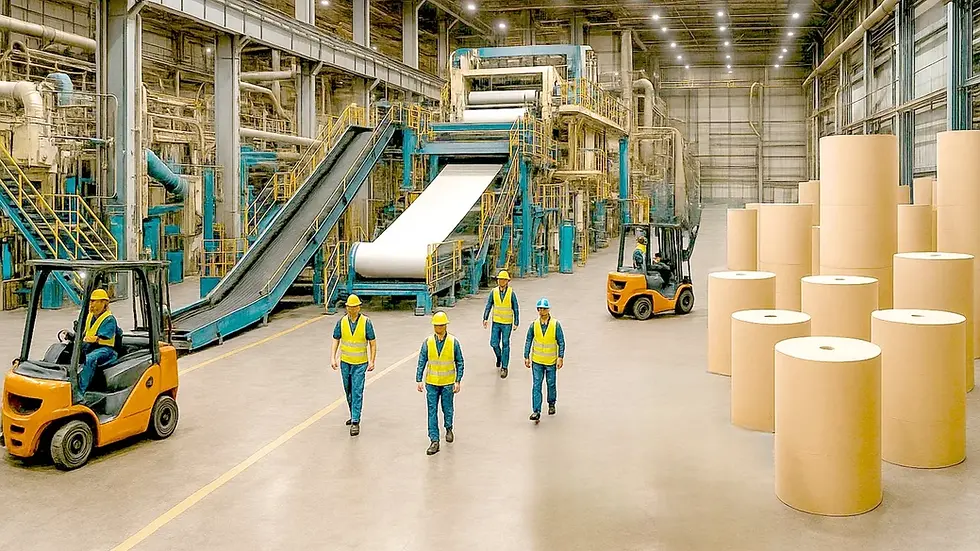
Walk into any warehouse, distribution center, or manufacturing floor, and you'll find a fast-moving environment. Forklifts maneuver through aisles, teams work around loading docks, and temporary labor moves in and out of high-risk zones. Supervisors cannot monitor every intersection and every task.
Manual audits catch what's visible in the moment and nothing more.
Critical risks happen between those observations:
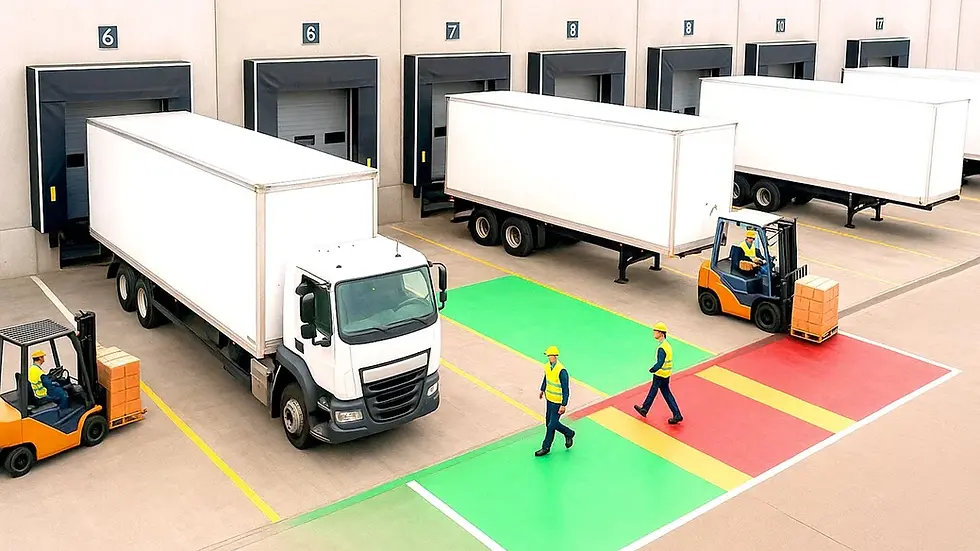
A pedestrian cuts across an active loading zone.
A forklift backs into a blind corner.
PPE is forgotten during a busy shift.
Congestion builds around docks.
A worker takes the quickest path instead of the safest.
Most precursors to SIFs go completely unseen.
Lagging indicators keep everyone reactive
Incident logs, near-miss reports, and shift summaries come after the risk has occurred. By then, behavior patterns are entrenched, and root causes remain unclear.
Workplace risk has outpaced traditional visibility. Human limitations are not moral failures. Workers are not careless — they're human. Humans take shortcuts. Humans get busy. Humans become complacent. Without continuous visibility, risk builds silently.
Why CCTV AI Safety Systems
Becoming the New Standard in Industrial Safety
Unlike forklift proximity warning systems or AI EHS pedestrian detection hardware, CCTV AI Safety Systems don't rely on adding more devices to machines or people. Instead, they transform your existing camera network into a real-time AI-powered safety platform.
No new hardware, no forklift downtime, no wearables
CCTV AI Safety Systems connect directly to cameras already mounted in:
Warehouses
Docks
Yards
Aisles
Back-of-truck loading zones
Manufacturing cells
They deploy in days, not months. And because they're camera-based, they cover everyone:
Employees
Contractors
Visitors
Temp workers
Drivers
Vendors
A full-site safety intelligence layer
Zero wearables. Zero compliance challenges. Zero operator burden.
AI models continuously analyze:
Pedestrian–vehicle interactions
Unsafe behaviors
Line-of-travel violations
Congestion and dwell times
Blocked loading or staging zones
PPE compliance
Area-specific behaviors (ladder use, mounting trucks, overhead loads)
Slip/trip hazards
High-risk patterns across shifts
This transforms passive CCTV into the facility's digital nervous system: every camera becomes a sensor feeding real-time insight to EHS teams.
Predictive safety, not reactive alarms
Instead of simple collision alerts, the AI helps teams understand:
Why people enter forklift paths.
When congestion begins forming.
How workflow patterns create risk.
Where workarounds are becoming normalized.
Which behaviors repeat daily.
What conditions lead to SIF precursors.
It's a shift from "What happened?" to "What's about to happen?"
How CCTV-Based AI Safety Platforms Work
Step 1: Connect
The platform integrates with existing IP cameras and maps out:
High-risk intersections
Pedestrian corridors
Forklift routes
Docks and staging areas
Blind corners
Yard perimeters
This creates an immediate baseline of visibility.
Step 2: Deploy
AI models are configured for the facility's top safety risks, including:
Unsafe human-forklift interactions
Violations of pedestrian paths
Entry into restricted or hazardous zones
PPE compliance failures
Unsafe mounting/dismounting behaviors
Suspended load risks
Forklifts reversing into pedestrian areas
Queue and dwell time escalation
Slip, trip, and housekeeping hazards
Instant alerts notify teams of critical events.
Step 3: Protect
The AI continuously monitors behavior and conditions, automatically:
Scoring risk
Highlighting patterns
Finding root causes
Recommending corrective action
Showing context-rich video clips
Sending notifications based on severity
Delivering automatic shift/daily/weekly reports
This turns fragmented observations into a unified, always-on safety program.
"CCTV AI safety systems turn surveillance into foresight. And that foresight gives teams the power to prevent the preventable," according to Riodatos

Beyond Forklift Cameras and RFID:
Closing the Visibility Gap
CCTV AI Safety Systems do not replace forklift pedestrian detection systems or an on-vehicle forklift collision avoidance system. They complement them and close the visibility gaps that other systems cannot reach.
Forklift cameras have limited angles
On-vehicle AI cameras are powerful, but they:
Only see what's in front of the forklift
Get blocked by pallets
Shake, vibrate, or get dirty
Lose coverage when the forklift is parked
They protect the operator, not the environment.
RFID and UWB systems rely on human compliance
Footwear tags get forgotten. Visitors arrive without badges. Temporary staff skip tag distribution. RFID alone cannot deliver full coverage, especially in the busiest seasons.
CCTV AI sees what other systems simply cannot
It covers every forklift, not just one
It monitors every person, not only tagged workers
It reveals root causes, not just proximity
It detects behavioral drift
It identifies system-level patterns
Real-Time Operational Flow Intelligence
This is the missing piece that ties all safety technologies together.
CCTV AI isn't just about safety: it improves operational flow in ways traditional systems never could.
Movement clarity
Watch forklifts, doors, staging zones, and aisles update live. See flow issues as they arise.
AI-estimated dock completion times
AI predicts door completion based on activity and load movement.
This enables:
Faster staging
Cleaner hand-offs
Less idle equipment
Fewer unexpected delays
Dwell and queue time analytics
AI identifies:
Door congestion
Aisle bottlenecks
High dwell times
Queue buildup
These conditions often cause the unsafe pedestrian shortcuts and risky interactions EHS teams fight daily.

CCTV AI removes the guesswork.
AI-Powered Safety Intelligence: Turning Video into Foresight
This is where CCTV AI delivers particular value: not in detection, but in understanding.
Ask questions in natural language
Modern AI-driven safety platforms allow teams to ask:
"Show me last week's near misses around Dock 7."
"Where are pedestrians entering forklift zones most often?"
"What caused the congestion between 2 p.m. and 4 p.m.?"
"How did PPE compliance change this month?"
The AI instantly generates:
Dashboards
Heatmaps
Trend lines
Video summaries
Action recommendations
Video context = no more guesswork
Every unsafe moment comes with the why:
A blocked aisle forcing a shortcut
A forklift waiting idle too long
A pallet placed in a pedestrian path
A congested dock creating risky foot traffic
A team member repeatedly exposed to overhead loads
This clarity shortens investigations from hours to seconds.
Workers learn from their own behaviors
Empowering People, Reducing Complacency, Improving Culture
When people see themselves taking risky shortcuts, something shifts:
Awareness becomes self-correction.
Short clips replay the reality:
Stepping under suspended loads
Walking too close to moving forklifts
Forgetting a ladder
Entering an active loading zone
Skipping PPE during rush
Using the shortest path, not the safest
Teams begin coaching themselves. Supervisors stop micromanaging. Behavior change becomes natural, not forced.
A culture free of complacency
AI shows risks without blame. Workers respond with pride, not resistance. Safety becomes a shared responsibility.
This represents an important evolution in EHS:

AI provides the ongoing visibility
Rapid Deployment: From Installation to Insight in Days
CCTV AI Safety Systems work with:
On-premise networks
Hybrid cloud
Full cloud
And deploy extremely quickly:
Connect existing cameras
Configure rules and zones
Train models on site patterns
Begin receiving insights (usually within hours)
Most organizations start with a few cameras and expand to full-site coverage once they see the results. Learn more about implementation services.
The Future of AI in EHS
Predictive, Preventive, Human-Centric
Workplace safety is entering a new era: the early stages of a Fifth Industrial Revolution where AI partners with humans, rather than replacing them.
The future is clear:
AI handles the analysis
People handle the decisions
Together they prevent incidents that were once considered "unavoidable"
CCTV AI Safety Systems are increasingly becoming a key component of:
Forklift pedestrian detection programs
SIF prevention strategies
Real-time operations monitoring
Cultural improvement initiatives
Enterprise safety governance
The technology continues to evolve rapidly, with early adopters already seeing strong results.
"Safety improves not just when rules are enforced, but when risks are understood. AI makes that understanding continuous, unbiased, and actionable," according to Riodatos.

Conclusion: Visibility Determines Safety Outcomes
Every serious injury starts with a moment no one saw. CCTV AI Safety Systems reveal those moments. They turn blind spots into clear, actionable insight. They bring safety, operations, and culture into one connected view. And they give every team member (from the frontline to the executive) the clarity to prevent incidents before they happen.
When safety depends on visibility, CCTV AI Safety Systems deliver one of the most meaningful advancements available today. It is a truly meaningful step forward for workplace safety.

About Riodatos
Riodatos helps organizations across the U.S. integrate modern AI-based safety systems that transform existing cameras into real-time risk-detection and operational-visibility tools. We combine CCTV AI analytics with forklift pedestrian detection systems, forklift collision avoidance technologies, and forklift proximity warning system solutions to create safer, more efficient worksites.
Explore our solutions:
Learn more at riodatos.com
Quick Read Summary
CCTV AI Safety Systems for Workplace Visibility
👷♂️ In today's industrial environments, safety teams face one harsh truth: you can't prevent what you can't see. But new CCTV AI Safety Systems are changing the game by transforming passive cameras into real-time safety intelligence platforms.
--
🔍 Here's what you'll learn in the article:
🚧 Why even top safety programs still miss critical risks
🧠 How AI transforms CCTV into predictive safety intelligence
🔄 The power of real-time visibility (no new hardware required)
📊 Operational ROI: queue, dwell, and congestion analytics
💡 How AI empowers behavior change and strengthens safety culture
⚙️ Fast deployment (from connection to insights in just days)
🌍 Why AI-driven EHS is the future of workplace safety and efficiency
--
✅ These systems close the visibility gaps left by RFID tags, on-vehicle cameras, and manual audits and they give safety leaders the insights needed to prevent serious incidents before they happen.
--
👁️🗨️ AI safety isn't just about detection: it's about foresight, culture, and smarter operations.
--


