
RioDatos Blog
19 RFID, UWB & Tag Pedestrian Detection Systems
June 1, 2026 • John Buttery, CEO of RioDatos
A neutral reference for EHS and operations teams evaluating wearable and tag pedestrian detection in industrial vehicle environments.
Prefer no tags? RioDatos is the manufacturer of RioV360, a tagless AI pedestrian detection system. See every category in the 2026 market map.
Introduction
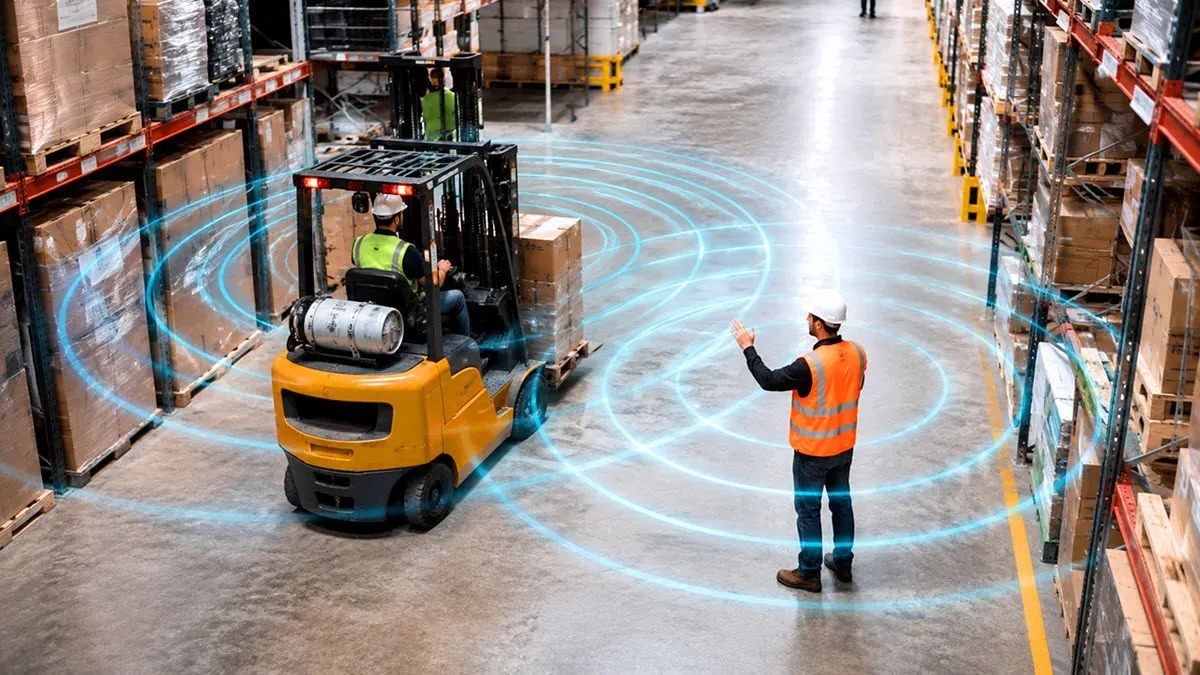
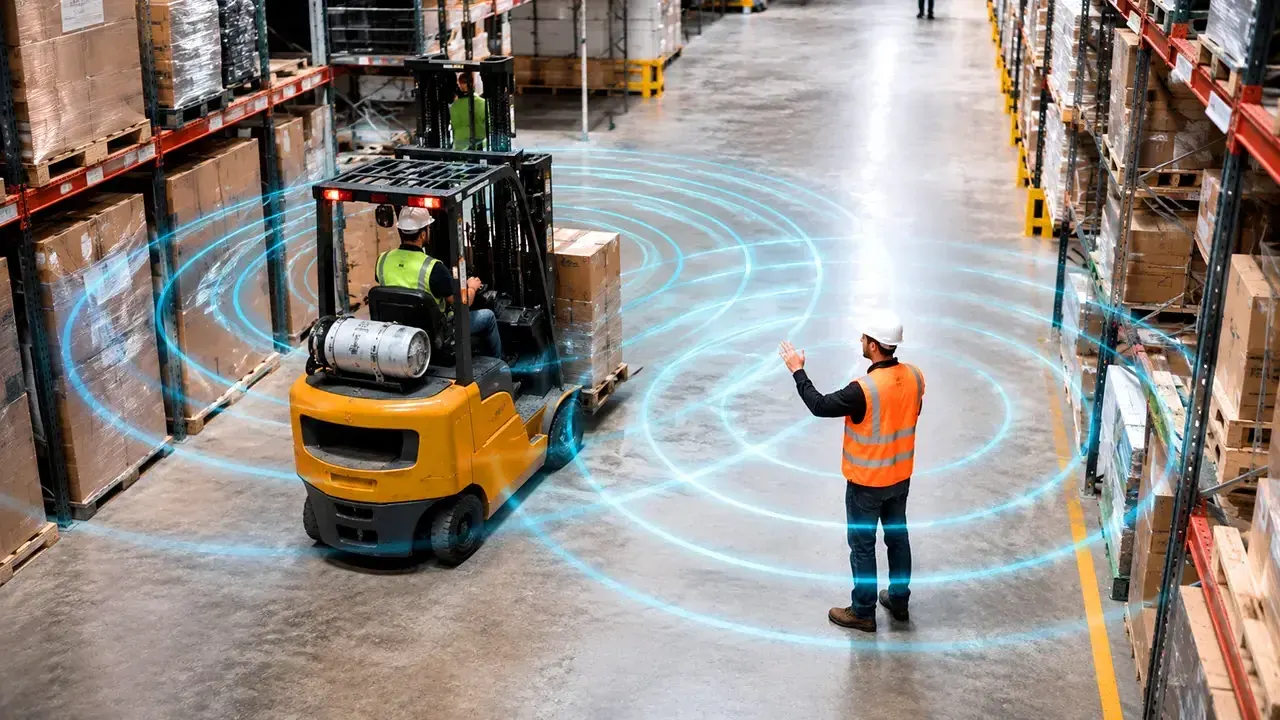
RFID tag pedestrian detection systems solve a problem that cameras cannot. They detect workers through racking, around blind corners, and in conditions where line of sight is blocked or unreliable. Instead of relying on visual recognition, these systems use radio frequency signals between a wearable carried by the pedestrian and an antenna or reader mounted on the vehicle. When a worker enters a configurable safety zone, the vehicle operator receives a visual and audible alert, and in many implementations, the pedestrian's device vibrates or sounds as well.
The tradeoff is enrollment. Every worker who enters a zone with active vehicle traffic needs to carry a tag. That requirement changes the safety management problem: it shifts from equipment configuration to compliance monitoring. In high-turnover operations, contractor-heavy sites, or environments with multiple employers on the same floor, that gap is where incidents happen.
The 19 systems listed here include UWB systems with centimeter-level positioning, RFID and magnetic-field platforms that detect through shelving and walls, lidar backup assistance, hybrid systems that layer tag detection over AI camera coverage, and OEM-integrated solutions built into the vehicle at the factory. Geography spans the United Kingdom, Belgium, Spain, Sweden, Italy, Germany, Turkey, the United States, Canada, China, the Czech Republic, and South Korea.
RFID, UWB and Tag Pedestrian Detection Systems (19 Systems)
RFID and tag systems detect pedestrians through wearable tags or badges that emit or respond to radio signals. Vehicle-mounted readers or anchors detect the tag's presence within a configurable zone and alert the operator. Unlike AI camera systems, these technologies detect through physical barriers, racking, walls, dust, and darkness do not affect performance. The tradeoff is that every worker in the hazard zone must be enrolled and carry an active device.
1. ELOKON (ELOshield): UWB proximity detection creates safety zones around forklifts and industrial vehicles. Part of ELOKON's layered safety platform, which also includes tagless AI camera detection via ELOvision and dual-layer combination via ELOshieldAI. Germany | elokon.com
2. Hexagon Mining Personal Alert: UWB wearable tag integrated with the HxGN MineProtect Collision Avoidance System. Pedestrian detection range up to 50 meters. Designed for surface and underground mining environments with high vehicle density. United States / Sweden | hexagon.com
3. HIT-NOT (Frederick Mobile Instrumentation): Low-frequency magnetic-field proximity alerts between forklifts, pedestrians and vehicles. Vehicle generators and worn personal alarms detect through racking and loads, with configurable zones, area monitors and optional slowdown integration. United States | hitnot.com
4. Jungheinrich Zone Control: Proximity-based safety solution integrated with Jungheinrich forklifts using RFID and UWB technology. Automatic speed adjustments and zone alerts in defined pedestrian areas. Germany | jungheinrich.com
5. KIGIS Technologies: Vision and UWB-based collision avoidance system detecting human presence near mobile equipment using AI cameras and UWB sensors. Dual-layer detection covering both tagless and tag-based pedestrian identification. South Korea | kigistech.com
6. Linde Safety Guard: UWB-based pedestrian and vehicle detection integrated into Linde forklifts. The vehicle-mounted anchor detects wearable tags carried by pedestrians and triggers speed reductions and alerts within configured safety zones. Germany | linde-mh.com
7. Litum: UWB RTLS forklift collision warning system deployed on 15,000+ forklifts across 50+ countries. Modular platform supporting tag-based, tagless, and full RTLS deployments with automatic speed slowdown. United States / Turkey | litum.com
8. Lopos: UWB proximity warning for forklifts, construction equipment, and logistics vehicles. Plug-and-play, no infrastructure changes required, works indoors and outdoors in all weather. Belgium | lopos.com
9. Pozyx: UWB and AI camera forklift collision avoidance sensor. Supports tag-based pedestrian detection, tagless AI camera detection, and full RTLS fleet tracking with heatmapping and incident replay. Belgium | pozyx.io
10. Rombit: UWB-based collision avoidance using wearable Smart Badges and vehicle-mounted anchors. Dynamic danger zones, real-time alerts, driver coaching, and equipment analytics. Belgium | rombit.com
11. SensorZone: Vehicle-to-pedestrian proximity warning with vehicle-mounted hardware and worker-worn tags. Simultaneous operator, pedestrian and area alerts, with cloud reporting on detection events and higher-risk locations. United Kingdom / United States | sensorzone.io
12. Sewio: UWB RTLS providing real-time forklift tracking with up to 30cm accuracy, updated up to 10 times per second. Feeds collision-avoidance and zone-alert systems with precise location data. Czech Republic | sewio.net
13. SICK: Backup Assistance System, a retrofit 2D lidar collision warning for forklifts. One or two scanners monitor obstacles behind the truck while reversing, with configurable warning fields and no pedestrian tags. Germany | sick.com
14. Strata Worldwide: HazardAvert electromagnetic proximity detection for mining and heavy equipment, with pedestrian alerts and automatic machine slow and stop. SafeSITE HazardAI adds machine-mounted AI vision and event recording. United States | strataworldwide.com
15. TROAX Active Safety (Claitec): PAS tag-based pedestrian alert system for forklifts and industrial vehicles. Discriminates between people and objects, detects through walls and shelving, adjustable alert distances from 1 to 6.5 meters. Spain | claitec.com
16. TsingOAL: UWB-based RTLS with centimeter-level accuracy for forklift and pedestrian tracking. Includes geofencing, collision avoidance, SOS alerts, and asset monitoring in industrial environments. China | tsingoal.com
17. Ubiquicom: UWB anti-collision product family (Proximity Smart, Proximity Plus, Third Eye) for forklifts and industrial vehicles, including excavators, cranes, and aerial platforms. Automatic speed reduction on detection. Acquired by ZAPI Group in 2024. Italy | ubiquicom.com
18. Wipelot: Safezone UWB collision warning and tracking for workers, forklifts and equipment, with visual, audible and wearable vibration alerts, configurable zones and optional deceleration. Turkey | wipelot.io
19. ZeroKey: UWB Real-Time Location System with centimeter-level positioning for forklifts, equipment, and personnel. Dynamic safety zones and real-time alerts without relying on fixed infrastructure. Canada | zerokey.com
19 RFID, UWB and Tag Systems: Conclusion
The RFID and tag systems listed here share a common architecture: a wearable carried by the worker, a reader or anchor mounted on the vehicle, and a configurable zone that triggers an alert when the two come within range. What varies significantly is the underlying radio technology, the positioning accuracy, the deployment complexity, and how well the system integrates with existing fleet and safety infrastructure.
UWB systems offer the highest positioning accuracy and support dynamic zone configuration based on vehicle speed or direction. Simpler RFID platforms are easier to deploy and lower in cost, but detection range is shorter and positioning is less precise. Hybrid platforms that layer tag detection over AI camera coverage address the enrollment problem differently: tagless detection fills the gap when workers forget or refuse to carry a device.
For operations with high pedestrian traffic, variable shift composition, or contractor-heavy workforces, the enrollment requirement is the most important implementation variable to evaluate before selecting a system. The technology is reliable. The harder problem is compliance.
Disclaimer
The listings in this directory are compiled on a best-effort basis from publicly available information. I make no representations regarding the completeness, accuracy, or current status of any listing. Product capabilities, company information, and availability are subject to change. Nothing in this directory constitutes an endorsement, recommendation, or warranty of any kind. If you would like your listing removed, contact info@riodatos.com. Corrections and removals are made promptly.
Pilot One Unit: $500 Off
Test RioV360 AI pedestrian detection on your highest-risk machine before a fleet rollout. In-stock units ship from Arizona in 2 business days.
More Articles
November 7, 2026
AI Pedestrian Detection for Ports: What the Numbers Show
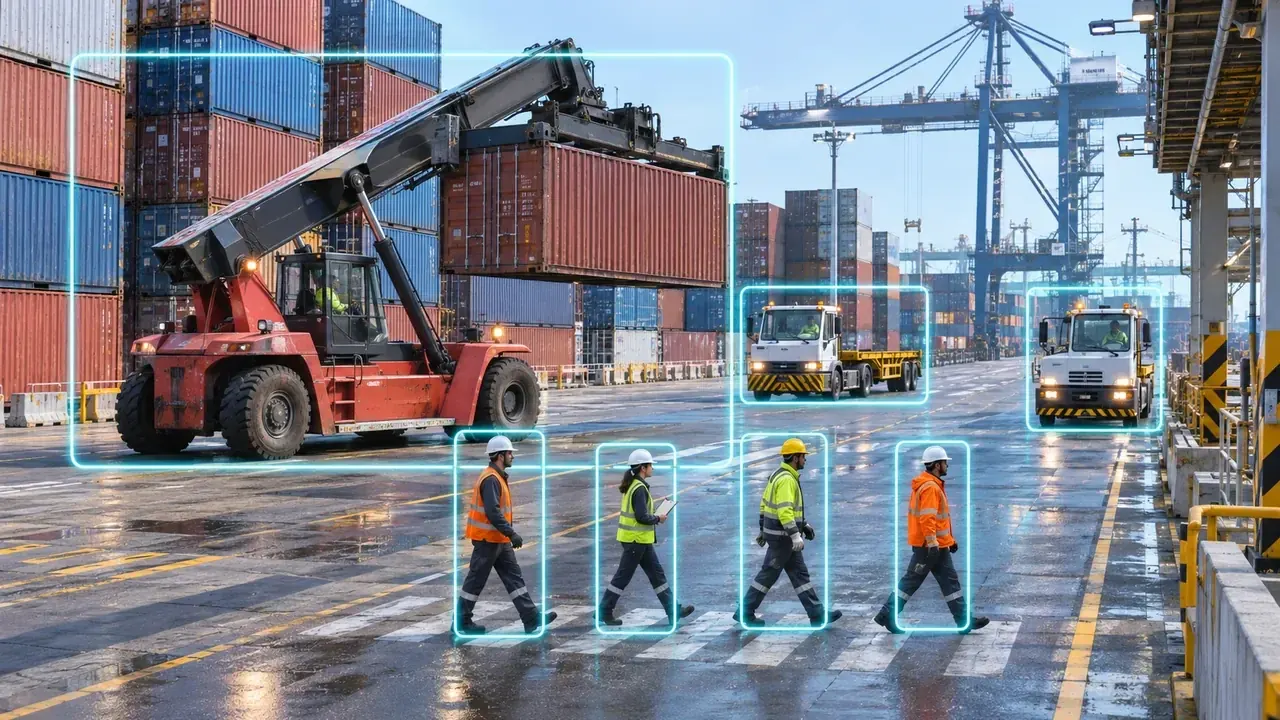
AI pedestrian detection for ports targets the 23% of port deaths from vehicle and pedestrian impact. See the data, machine blind spots and field...
Read more →
November 6, 2026
Wheel Loader Pedestrian Detection for Waste Transfer Stations
Wheel loader pedestrian detection for waste transfer stations: 360° recorded video, AI alerts from 0 to 5 m, and a one-machine pilot for your tip...
Read more →
November 3, 2026
360 Forklift Pedestrian Detection: The New Warehouse Standard
Forklifts are essential in many industrial operations, but they also pose significant safety risks. Blind spots and limited visibility can lead to...
Read more →