
AI Pedestrian Detection for Excavators
- John Buttery

- Apr 28
- 8 min read
How blind spot exposure on excavators becomes a visible, manageable risk

Introduction
Excavators are among the most capable machines on any construction site. They are also among the most dangerous to the people working around them. The rotating upper structure, the sweep of the boom, the limited cab sightlines, These create blind zones that exist whether the operator knows it or not. Most do know it. The problem is that knowing a blind spot exists and being able to see into it are two different things.
AI pedestrian detection for excavators changes that relationship. Not by eliminating the physics of the machine, but by giving operators continuous, real-time awareness of the zones they cannot see from the cab. What was invisible becomes visible. What was uncertain becomes measurable.
This article looks at how blind-spot exposure develops during excavator operations, why it often goes unrecognized until an incident occurs, and what changes when detection technology is installed on the machine.
The Blind Spot Problem on Excavator Operations
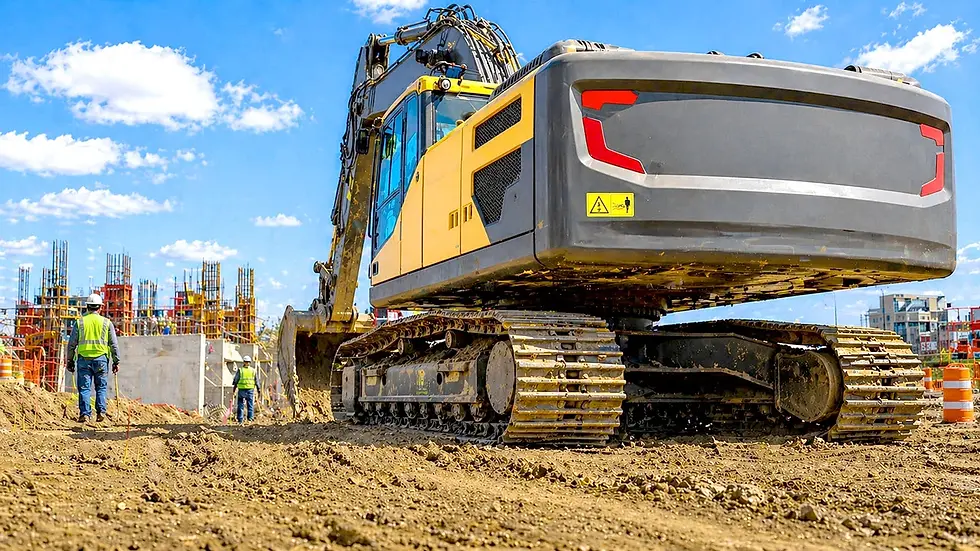
Excavators rotate. That single fact defines most of the pedestrian risk. A machine sitting still poses limited danger. A machine swinging 180 degrees through a work zone. With workers guiding materials, inspecting work, or simply crossing behind, it is a different situation entirely.
The cab position on a standard excavator places the operator high and forward. Visibility directly ahead is good. Visibility to the rear and along the sides of the undercarriage is not. The counterweight, the engine compartment, and the tail-swing geometry all create zones where a person can stand and becompletely invisible to the operator.
"You develop a feel for where people are supposed to be. But construction sites don't always follow the plan."
This is not a training gap. Experienced excavator operators understand their machines. The issue is structural — the blind zones are built into the design. No amount of mirror adjustments or operator awareness can fully compensate for geometry.
Where Exposure Accumulates
Blind-spot incidents on excavators rarely occur in isolation. They develop through repeated exposure — the same ground worker crossing the same zone multiple times per shift, the same swing pattern through a congested area, the same assumption that the area is clear because it was clear last time.
High-exposure patterns tend to cluster around:
Tail swing zones during material placement or trench work
Rear quadrants during repositioning or tramming
Side zones when workers are guiding the bucket or checking the grade
Any area where foot traffic and machine movement share the same ground
The frequency of these interactions, not just their severity, is what creates risk. One near-miss that goes unrecorded is data that never reaches a safety review.
Why It Goes Undetected
Most excavator operations lack a systematic way to measure how often workers enter blind zones. Incidents get reported. Near-misses sometimes get reported. The daily accumulation of high-exposure interactions almost never gets captured.
This means safety reviews are working from incomplete information. The lagging indicators, incident rates, OSHA recordables, reflect outcomes, not the exposure patterns that produced them. By the time the data shows a problem, the problem has already been present for some time.
What organizations typically discover when they deploy detection technology is that exposure frequency is significantly higher than anyone estimated. Not because the site was being run carelessly, but because the interactions were simply not visible before.
AI Pedestrian Detection for Excavators: What It Actually Does
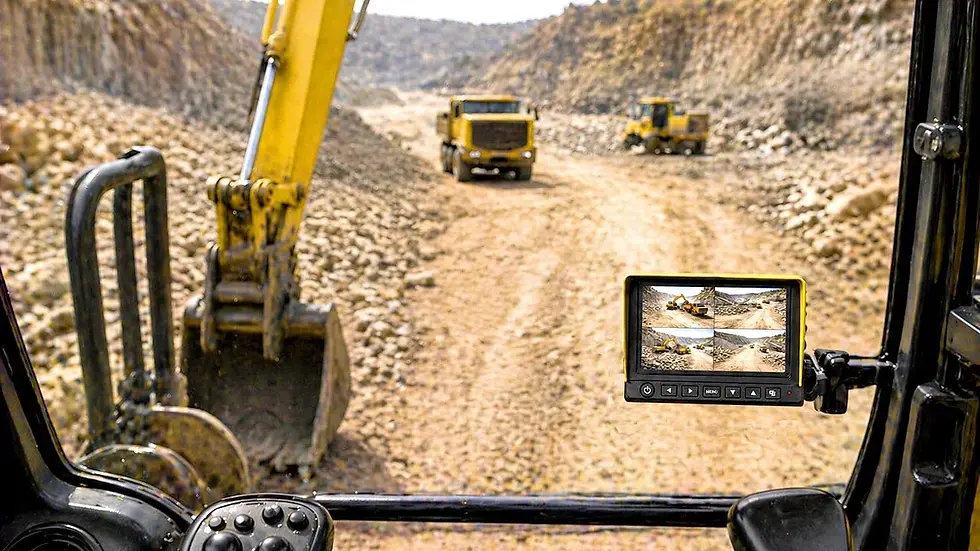
The RioV360 is a four-camera AI pedestrian and vehicle detection system built for heavy construction equipment. On an excavator, four cameras are positioned to provide 360-degree coverage, covering the rear, both sides, and the front approach zone. Each camera captures continuously at 1080p and processes locally on the device.
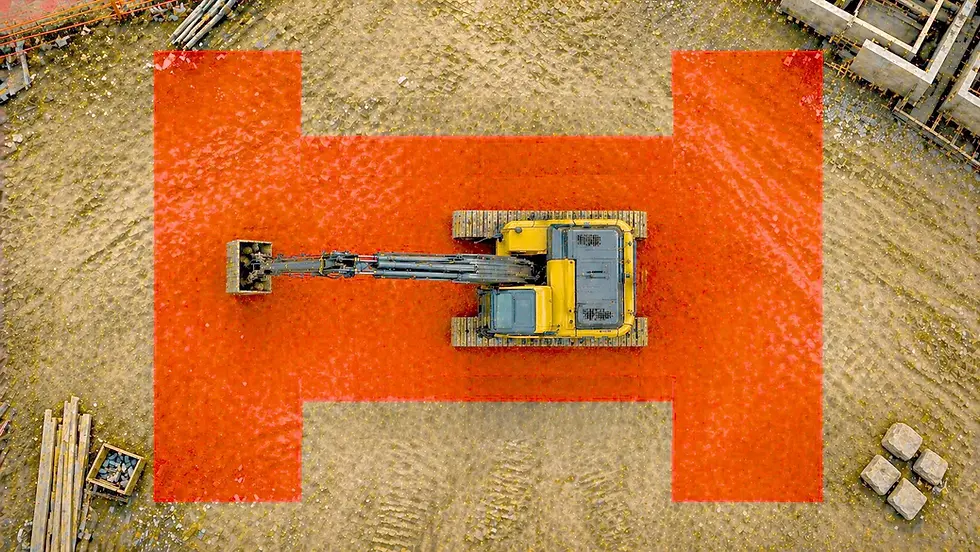
When a person enters a detection zone, the operator receives an audible and visual alert in the cab. The alert is specific — it identifies which zone is active, so the operator knows where to look and can respond appropriately. Response time from detection to alert is under 200 milliseconds.
No Wearables, No Tags, No Infrastructure
RioV360 identifies human forms using AI vision. Workers do not need to carry tags, wear specialized vests, or interact with the system in any way. The system sees people as people — regardless of what they are wearing, how they are oriented, or whether they are aware the system is present.
This matters on excavator sites specifically because the workforce is typically mixed — operators, ground workers, surveyors, inspectors, subcontractors. Requiring all of them to wear and maintain detection tags is an operational burden that rarely holds up in practice. Vision-based detection eliminates that dependency entirely.
The RioV360 processes all video locally on the unit. There is no cloud dependency, no network transmission latency and no reliance on site Wi-Fi or cellular coverage. For excavator operations in remote construction, civil works, or mining environments where connectivity is inconsistent or absent, this is not a minor feature, it is the difference between a system that works and one that doesn't.
All 1080p video is recorded continuously on-device with no subscription required. Footage is available for incident review, operator training, and safety documentation without a portal, a service plan, or ongoing fees.
What Changes Operationally
Detection technology on an excavator does not slow the machine down. Operators continue working. What changes is the information available to them in the cab.
"The camera doesn't make the operator more cautious. It makes them more accurate about where the risk actually is."
Operators report that in-cab visibility, seeing all four zones simultaneously on the monitor, changes how they read the site. Not because they were previously unaware of blind spots, but because continuous visual confirmation reduces the cognitive load of managing uncertainty. They can focus on the work rather than on estimating where people might be.
Visibility as a Leading Indicator
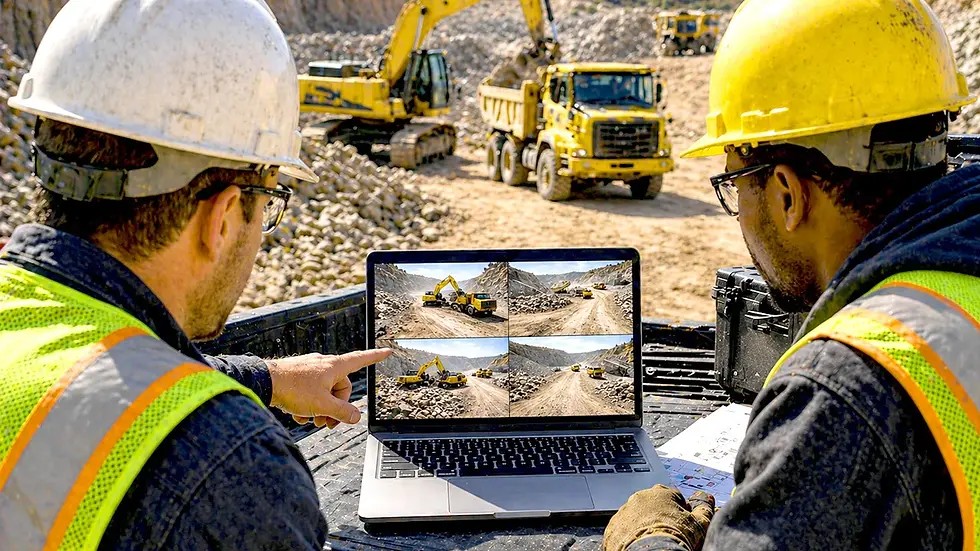
The shift that AI detection enables on excavator operations is not just operational; it is analytical. When every pedestrian detection event is recorded and timestamped, the data becomes a tool for understanding exposure patterns across the site.
Which zones generate the most alerts? Which shifts? Which machine positions? Which interactions between ground workers and the excavator create the highest frequency of close-approach events?
This is the leading indicator data that safety programs consistently lack. Incident rates tell you what happened. Detection event data tells you where exposure is accumulating before anything happens.
Organizations using systematic detection data are beginning to use it the same way they use near-miss reporting, as a signal for intervention, not just documentation. A zone generating repeated alerts becomes a candidate for a procedural change, a physical barrier, or a modified work pattern. The response is proactive because the data arrived before the incident.
What we're seeing across construction operations is that the highest-risk interactions aren't the ones that nearly caused an incident — they're the routine ones that nobody was counting.
Author Perspective
I've spent thirty years in machine control and industrial safety technology. The challenge with excavator blind spots has been consistent across that entire period. Not because the industry doesn't understand the risk, but because the tools available to manage it were always reactive. Mirrors, spotters, exclusion zones: all useful, none of them capable of seeing what the operator cannot see in real time.
What's different now is that the AI has matured to the point where detection is reliable enough to actually be trusted in working conditions. Dusty, variable light, mixed environments, the systems that are worth deploying perform consistently across those conditions, not just in ideal settings. That reliability is what makes the operational case, not just the safety case. For more on my background and thinking on industrial safety, visit johnbuttery.com.
I'm also watching how safety teams use detection data once they have it. The shift from incident review to exposure analysis is happening faster than I expected. Once a safety manager can see that a particular zone generates forty detection events per day rather than zero reported near-misses, the conversation about risk changes entirely. The data reframes what they thought they knew about their own site.
Why This Matters Now for EHS and Operations
Construction fatality data consistently places struck-by incidents near the top of the category. Excavators are involved in a disproportionate share of those events. The combination of rotation, tail swing, and continuous ground-level activity around the machine creates conditions that are genuinely difficult to manage through awareness and procedure alone.
EHS teams are under increasing pressure to demonstrate proactive risk management. Not just compliance documentation, but measurable evidence that high-risk exposures are being identified and addressed. Detection event data from AI systems provides exactly that: a continuous, timestamped record of human-machine proximity that can support safety reporting, insurance documentation, and regulatory review.
The shift from lagging to leading indicators is not just a matter of safety philosophy. It is increasingly what safety auditors, insurers, and site owners expect to see.
Organizations that can show exposure frequency data, not just incident history, are positioning themselves ahead of that expectation.
Evaluating RioV360 on One Excavator
The right way to evaluate any detection system is on your own equipment, in your own conditions, with your own ground crew. A single-machine evaluation surfaces the installation questions, the operator adoption dynamics, and the real performance characteristics that no product sheet can fully convey.
Riodatos supports single-unit evaluations for excavator and heavy equipment operations. The process is straightforward: one machine, live site conditions, full system installed and configured. What you learn from that validation informs a confident decision about fleet-wide deployment, rather than committing to a system based on spec sheets and demos.
The data from one machine will tell you more than any demo ever could.
Conclusion
Excavator blind spots are not a new problem. What is new is the ability to see into them continuously, in real time, without requiring anything from the workers on the ground. AI detection doesn't change the machine's geometry. It changes what the operator knows about who is in those zones, and when.
The operational value compounds over time. Detection events become data. Data becomes visibility into exposure patterns that were always present but never measurable. And measurable exposure can be managed in ways unmeasured exposure cannot.
"The question was never whether the blind spots were dangerous. The question was always whether we could see into them."
About Riodatos
Riodatos is a U.S.-based pedestrian and proximity safety systems company headquartered in Arizona, with domestic inventory and direct support for customers across the Americas.
We are an authorized distributor for Proxicam, ZoneSafe, and Inviol, and the developer of RioV360, our own AI pedestrian detection system built for heavy construction equipment. We supply, configure, support, and install solutions tailored to site-specific equipment, traffic patterns, and operational risk profiles across construction, warehousing, manufacturing, logistics, and mining environments.
Our focus is measurable live performance, operator adoption, and scalable deployment, whether across a single machine or a mixed fleet at multiple sites. Direct pricing, fast U.S. shipping, certified installation, and English/Spanish support allow safety teams to prioritize protection without delays or overseas logistics complications.
Quick Read
⚠️ AI Pedestrian Detection for Excavators. Excavators rotate. That's where most of the pedestrian risk lives — in the tail swing, the rear quarters, the side zones where ground workers and boom movement share the same space.
The operator knows the blind spots exist. The problem is you can't see into them from the cab.
What changes with AI detection on an excavator:
🚜 360° coverage from four cameras, continuous 1080p recording
👷 Workers need no tags, no vests — the system identifies human forms
📊 Every detection event is timestamped — exposure data, not just incident history
🛡️ On-device processing means alerts fire, with or without site connectivity
The data from a single instrumented excavator typically shows far more high-exposure interactions than anyone estimated. Not because the site was being run poorly, but because those interactions were never visible before.
That's the shift. From managing incidents to measuring exposure. From reactive to visible.
One machine. Live conditions. Real data.
---
#excavatorsafety #constructionsafety #pedestriandetection #aipedestrian #heavyequipment #constructiontech #riov360


