


Receive a free PILOT Quote -
Emailed same day
<-- Complete website form or call us directly: (520) 501-0602 or email: info@riodatos.com

Pilot Results You Can Take to Committee
Run a pilot on your own wheel loader, telehandler, or forklift, and walk into the meeting with:
● Instant on-screen and audible alerts the moment a person enters a rear, left, or right blind zone
● Detection zones tuned to that exact machine, adjustable from 0 to 5 meters on each camera
● An external flashing beacon that warns the pedestrian too, not just the operator inside the cab
● Continuous recorded video from every camera, saved to the onboard SD card for review after any event
One pilot unit gives you the video, operator feedback, and footage your safety committee and finance team need.
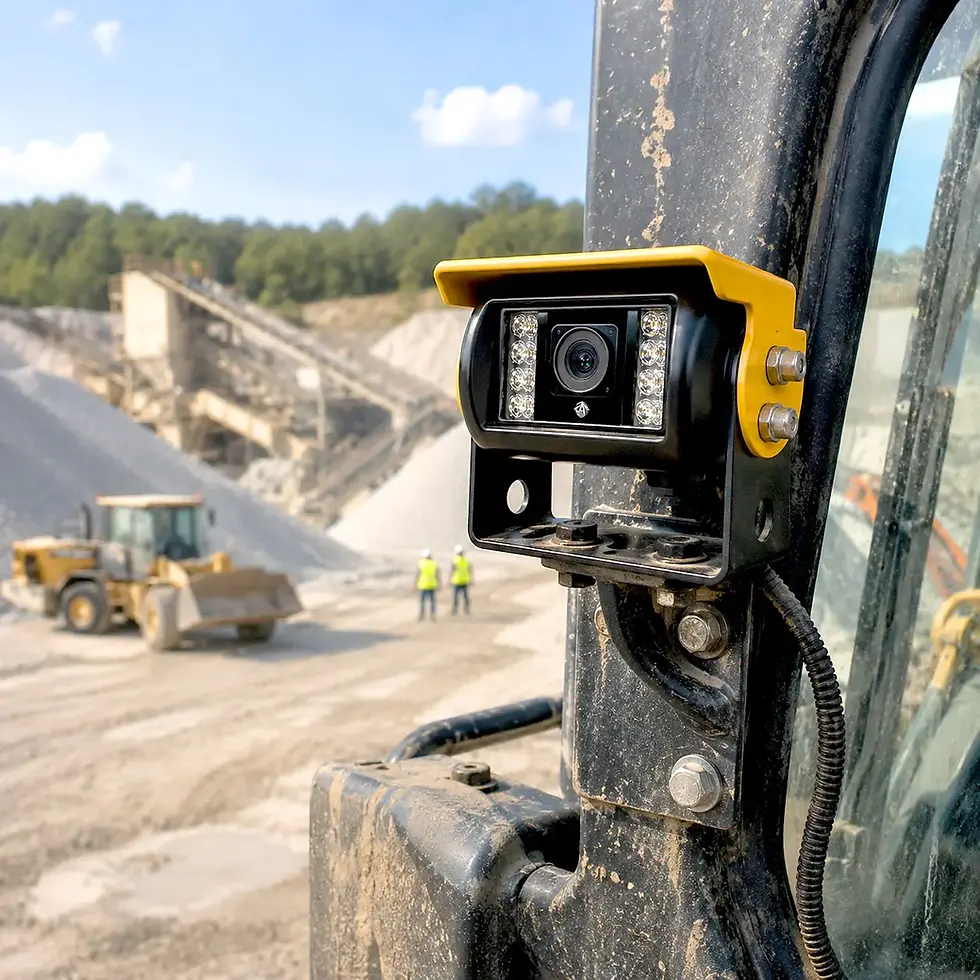
What One Pilot Unit Puts in Your Hands
✳️ Live detection performance on your machine, in your yard, under your conditions
✳️ Operator acceptance data: alert frequency, false positives, real usability
✳️ Recorded video from every camera capturing near-misses and incidents around the machine
✳️ Professional summary ready for safety committee and budget review
EHS and fleet managers want practical exposure to AI detection technology. One pilot unit gives them that experience on their own machine—without a drawn-out sales process or large upfront proposal.
"Data from one machine consistently changes the conversation at the safety committee level."
RioV360 Pilot Unit
A complete 4-Camera 360° AI Pedestrian Detection System ready to install
✓ 4 AI cameras for complete 360° coverage
✓ 7" monitor, external beacon with adjustable volume, and full installation kit
✓ On-board video recording for claims, training, and incident review
✓ Ships complete from Tucson, AZ – ready to install
✓ No subscription, no cloud, no IT setup, no pedestrian tags required
Everything mounts on one machine. No cloud account, no IT ticket, no pedestrian-worn tags.
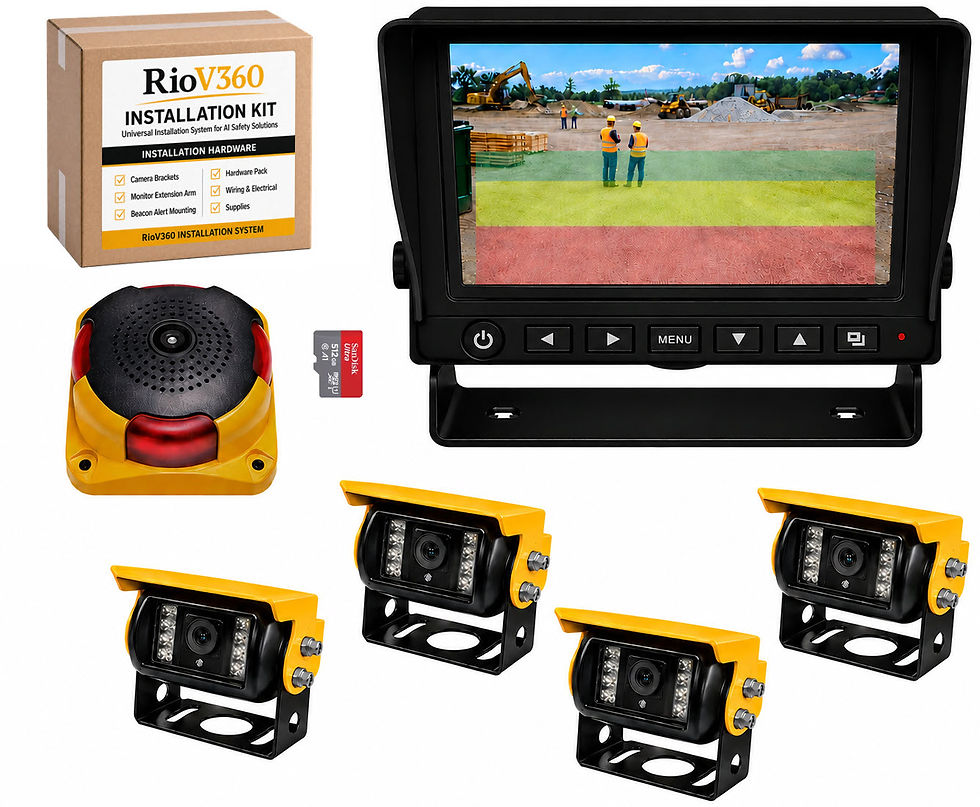
RioV360 Pilot Unit Accessories
● 512GB Storage Upgrade (RV360-STG) — Longer event-recording retention before you pull the card. Good for high-traffic remote machines.
● No-Drill Magnetic Camera Mounts (RV360-MAG) — Zero holes in the machine. Move the whole kit from one unit to the next in minutes. Built for rental equipment and shared fleets.
● Monitor Mount Extension with Clamp (RV360-EXT) — Articulating arm and clamp that puts the 7-inch display exactly where the operator actually looks. Mounts to bars or overhead guards, no factory bracket required.

One machine, real conditions, no fleet commitment
RioV360 fits all machines, makes and models. The universal design allows quick fleet rollout and easy maintenance:
🔹 Wheel loaders
🔹 Skid steers and compact loaders
🔹 Telehandlers and reach stackers
🔹 Heavy-duty yard forklifts
🔹 Excavators and dump trucks
🔹 Other high-risk mobile equipment
You run the unit on one machine in your actual environment. Your operators use it. You watch how it behaves against your real traffic, your real blind zones, your real near-misses. Then you decide on a fleet with data instead of a sales pitch.


Common Questions Answered by the Pilot
✅ “Will operators hate the alerts?” — The detection zones are adjustable. The system can be set to detect pedestrians, vehicles and objects.
✅ “Does it work in dust, rain, and night?” — The pilot runs in your real environment so you see the answer yourself.
✅ “How long does install take?” — Most teams have it running in under 2 hours, The magnet camera mounts and monitor extension with the claw are highly recommended on Pilot units.
✅ “Is it the same as the production system?” — Yes, the Pilot unit is a full RioV360 system. You own the system. No deadlines and no sales pressure.
INSIGHT
I've spent about thirty years in industrial safety and machine control. The pattern never changes. Teams that pilot one unit in their own operation make faster, cleaner fleet decisions than teams that argue over spec sheets for months. So I built the offer around that. One unit, same-day ship, priced to clear a card. Put it on your highest-risk machine and let it earn the fleet.
"The fastest way to learn and gain confidence in AI pedestrian detection is to put one RioV360 system on a high risk machine and allow operators, EHS, safety and fleet managers evaluate the performance. Riodatos' Pilot Unit program makes this possible,"
according to John Buttery, CEO Riodatos. john.buttery@riodatos.com