
Maximizing Safety with 360 Forklift Safety Cameras
- John Buttery

- Feb 15
- 3 min read
Forklift operations are critical in many industrial environments. However, they also pose significant safety risks. Blind spots and limited visibility can lead to accidents, injuries, and costly downtime. To address these challenges, many facilities are adopting advanced safety technologies. Among these, 360 forklift safety cameras have emerged as a powerful tool to enhance operator awareness and reduce hazards.
Why 360 Forklift Safety Cameras Matter
Forklifts operate in busy, often cluttered spaces. Operators must navigate tight aisles, avoid pedestrians, and handle heavy loads. Traditional mirrors and spotters help but have limitations. This is where 360 forklift safety cameras provide a clear advantage.
Eliminate blind spots: Cameras cover all angles around the forklift.
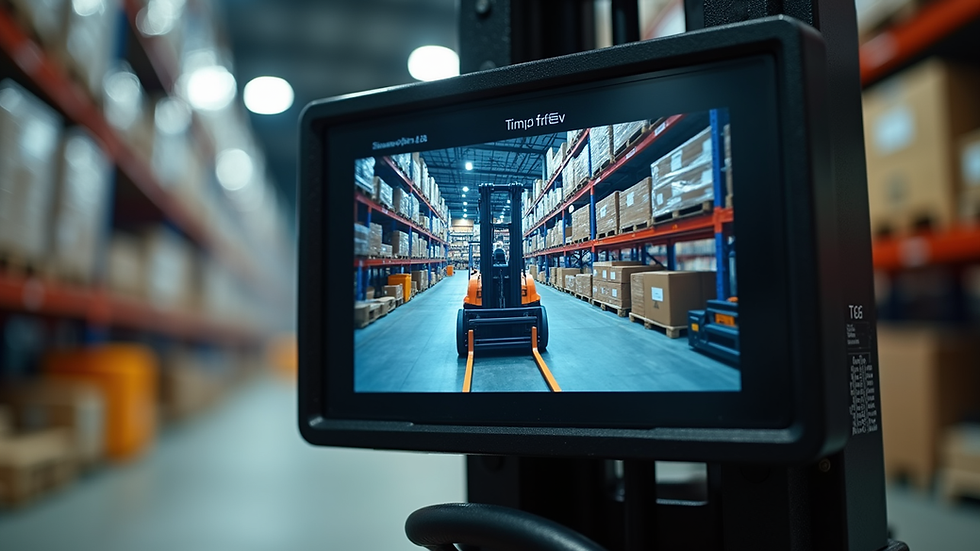
Improve situational awareness: Operators see real-time views on a monitor.
Enhance pedestrian safety: Workers nearby are more visible.
Reduce accidents: Better visibility leads to fewer collisions and injuries.
These cameras integrate multiple lenses to create a seamless, bird’s-eye view. This comprehensive perspective allows operators to make safer decisions quickly.

Features of 360 Forklift Safety Cameras
Understanding the key features helps in selecting the right system for your facility. Here are the main components and benefits:
Multiple high-resolution cameras: Usually four or more cameras cover front, rear, and sides.
Real-time video feed: Displayed on a screen inside the forklift cabin.
Wide field of view: Cameras capture up to 360 degrees around the vehicle.
Night vision and low-light capability: Ensures visibility in dim environments.
Durability: Designed to withstand harsh industrial conditions.
Easy installation: Many systems retrofit existing forklifts without major modifications.
These features combine to provide a reliable, continuous view of the forklift’s surroundings. Operators can detect obstacles, pedestrians, and other vehicles more effectively.
How 360 Forklift Safety Cameras Improve Workplace Safety
Implementing these camera systems leads to measurable safety improvements. Here are some practical ways they contribute:
Preventing collisions: Operators can see objects and people in blind spots before moving.
Supporting compliance: Helps meet OSHA and other safety regulations.
Reducing operator stress: Clear visibility lowers anxiety and fatigue.
Enhancing training: New operators learn safer driving habits with visual aids.
Minimizing damage: Avoiding impacts reduces repair costs and downtime.
For example, a warehouse that installed 360 forklift safety cameras reported a 40% drop in near-miss incidents within six months. This shows the direct impact on operational safety.
Selecting the Right 360 Degree Forklift Camera Systems
Choosing the best system requires careful evaluation. Consider these factors:
Compatibility: Ensure the system fits your forklift models.
Image quality: Look for high-definition cameras with good low-light performance.
Display size and placement: The monitor should be easy to view without distracting the operator.
Installation and maintenance: Opt for systems with straightforward setup and reliable support.
Cost vs. benefit: Balance upfront investment with potential safety and productivity gains.
I recommend reviewing options from trusted suppliers who specialize in industrial vehicle safety. For instance, 360 degree forklift camera systems offer a range of solutions tailored to different operational needs.
Best Practices for Using 360 Forklift Safety Cameras
To maximize the benefits, follow these practical tips:
Train operators: Provide hands-on training to interpret camera views effectively.
Regularly inspect cameras: Clean lenses and check for damage or misalignment.
Integrate with other safety tools: Combine cameras with alarms, sensors, and mirrors.
Encourage feedback: Operators can suggest improvements based on real-world use.
Monitor performance: Track safety metrics to evaluate system impact.
By embedding these practices into your safety program, you can ensure the technology delivers consistent results.
Enhancing Safety Culture with Technology
Safety technology like 360 forklift safety cameras is only part of the solution. It works best when combined with a strong safety culture. Encourage open communication, continuous training, and proactive hazard identification. Use data from camera systems to inform safety meetings and improvement plans.
Investing in these cameras signals a commitment to worker safety and operational excellence. It also supports compliance with evolving safety standards and reduces liability risks.
Implementing advanced safety solutions such as 360 degree forklift camera systems is a strategic step toward safer industrial operations. These systems provide comprehensive visibility, reduce accidents, and support a safer workplace environment. By selecting the right technology and following best practices, you can significantly enhance forklift safety and protect your workforce.


Insightful breakdown of how 360° visibility enhances forklift safety. In practice, combining these systems with a Forkview Camera System helps operators manage elevated loads more precisely, reducing blind spots and product damage in dense warehouse environments: https://sharpeagle.com/product/forkview-camera-system