


Visibility makes Telehandler Safety Challenging
The blind zone moves with the boom. Raise it and a zone opens on the front right. Extend it with a load and the rear sightline changes too. The operator is managing height, angle, and travel simultaneously — checking all four zones isn’t happening.
⚠️ Boom-raised blind zone on the front right — mirrors don’t resolve it.
⚠️ Reversing with a load blocks operator sightline and rear view simultaneously.
⚠️ Workers move toward the machine to guide placement — into the blind zone.
⚠️ Informal sites with no pedestrian lanes and compressed timelines.
"The operator had no way to see him because of the load position."

Telehandler Operators need more Visibility
🔄 Fixed coverage on a moving machine — the cameras don't move with the boom. While the blind zone shifts as the boom raises and extends, the cameras watch the same fixed perimeter, covering what the operator loses sight of at every configuration.
🧍 Detects workers guiding placement — on construction sites and at events, workers move toward the machine to direct the load. That approach into the front-right blind zone is exactly what the detection is built for.
🚜 Detects vehicles in tight lumber and event yards — a forklift moving in the same aisle, a delivery truck positioning nearby. The zone covers all movement, not just people.
🔔 Alert as the boom raises — the front-right blind zone opens as the boom goes up, not when the machine is already in motion. Detection is active before the hazard has fully formed.
📹 Records across every operating environment — construction trailers, farm operations, event venues. No connectivity needed. The footage is on the machine when you need it.
No wearables. No RFID tags. No site changes required.
Where an AI Safety System for Construction Equipment Fails Without Real-World Fit
PILOT Unit - $500 discount offer
Not ready to commit a fleet? Run a pilot on one machine in your own conditions first.
Built for Telehandler
Blind Zones and Agility
AI pedestrian detection for telehandlers has to perform across the full range of environments these machines work in — construction sites, farms, lumber yards, industrial facilities, and event venues where pedestrian traffic is uncontrolled and unpredictable.
🏗️ Construction Sites Active yards where telehandlers move materials through corridors shared with ground crews, subcontractors, and delivery personnel on every shift.
🌾 Agricultural Operations Farms and feed yards where informal traffic patterns dominate, workers move around active machines without defined pedestrian routes, and reversing incidents are a leading cause of fatality.
🪵 Lumber & Building Materials Yards Tight storage aisles, stacked loads that block sightlines, and workers pulling stock on foot in the same lanes the telehandler travels.
🏟️ Events & Venue Setup Temporary sites with high pedestrian density, no established traffic management, and telehandlers moving equipment through crowds of workers on compressed timelines.
🌧️ All-Weather Outdoor Conditions Rain, mud, dust, and temperature extremes are standard. IP69K cameras perform without degradation in the conditions that define outdoor heavy equipment work.
🌙 Low-Light & Early Morning Operations Agricultural and construction starts often happen before full daylight. AI detection performs identically at 5am as it does at noon — no degradation when visibility is lowest.
Telehandlers need more than Mirrors and Spotters
❌ Mirrors don't compensate for a raised boom — the front-right blind spot is a geometry problem, not a mirror adjustment problem.
❌ Spotters lose sightlines when the load is elevated and cannot reliably track workers behind the counterweight.
❌ Neither mirrors nor spotters provide documentation after a struck-by incident.
✅ AI detection watches every camera angle, every direction, every second of the shift.


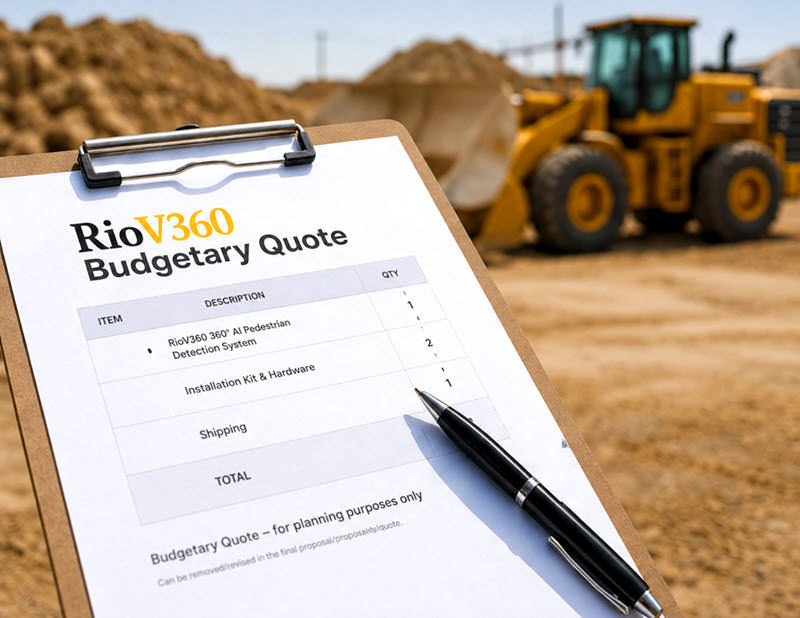


Evaluating Pedestrian Detection for Telehandlers?
Explore RioV360 specifications, request budgetary pricing, or evaluate the system on a high-risk telehandler.
A raised boom creates a blind zone
RioV360 covers the front-right zone before the operator travels or lowers the load. That zone opens the moment the boom raises. The system is watching before the operator knows to look.

Which Riodatos System For a Telehandler?
🟨 RioV360 — 4 cameras, full 360° perimeter coverage. The standard configuration for telehandlers operating in active pedestrian environments across construction, agriculture, and industrial settings where workers approach from any direction.
🟧 RioV360-2 — 2 cameras, front and rear, 260° combined coverage. Built for telehandlers working defined corridors where the primary pedestrian exposure is in the travel directions. Expandable to full RioV360 when you're ready.
Not sure which configuration fits? Start with one unit on your highest-risk machine and validate under real operating conditions before any fleet decision.
RioV360 Specifications —
Telehandler Configuration
✓ 360° pedestrian and vehicle detection — 4 cameras connect directly to the monitor with no separate processing unit. Full perimeter coverage: front, rear, left, and right, including the blind zone behind the boom and the rear arc during a reversing or repositioning cycle. RioD260 is an option for Telehandlers.
✓ 1080p full HD on-device video recording — continuous loop recording stored locally on the machine, no cloud upload, no subscriptions, no IT involvement required.
✓ 7" color LCD monitor with audio and visual proximity alerts — real-time, zone-based detection with adjustable sensitivity. Detects people in any position — standing, crouching, or partially obscured by loads, attachments, or site clutter — no wearables or RFID tags required.
✓ IP69K weatherproof cameras — rated for dust, mud, moisture, high-pressure wash-down, and temperature extremes common to construction sites, agriculture operations, industrial yards, and event staging environments.
✓ Standard Installation Kit included — every bracket, cable, fastener, and mounting hardware in the box.

Onboard Video Recording — Telehandler 'Black Box'
Every RioV360 system records continuous video to a 256GB (Upgradable to 512GB) SD card. The recording is stored on-board the machine. No cloud required, no subscription needed, no IT involvement.
The footage is date and time stamped and organized in daily directories. Access it directly from the in-cab monitor or pull the SD card and review on any laptop. If nothing happens, the footage auto overlaps.
📹 Incident documentation — when a complaint, accident, or near-miss occurs, the footage is there. Date stamped, time stamped, ready.
🎓 Training video — real operating conditions, real proximity events, real machine behavior. More useful than any simulation.
🔒 Theft and damage confirmation — disputed damage claims, unauthorized use, or missing equipment resolved with on-machine footage.
🖥️ Easy access — view from the in-cab monitor on the heavy-duty forklift, or pull the SD card and open on a laptop. No special software required.
🗄️ Automatic loop recording — 256GB (Upgradable to 512GB) holds about 4 workdays of machine-on recording. The 'black box' auto loops so there is always video storage space.
A Flashing Beacon is Essential on a Telehandler
Every system focuses on alerting the operator. RioV360 does that — but the external flashing beacon does something more important. It alerts the worker on foot at 120dB the moment they violate safe separation distance. Voice alert. Audible alarm. Flashing red light. All three simultaneously.
Workers who experience the beacon once change their behavior permanently. They do not run behind the telehandler again. They do not cut through the operating zone. The beacon does not need to fire to do its job — the knowledge that it will is enough. When it is quiet, it is working.
🔴 120dB voice alert + audible alarm + flashing light — all three activate simultaneously on detection
🔌 Plug-and-play — 4-pin aviation connector, connects directly to monitor harness, no configuration required.
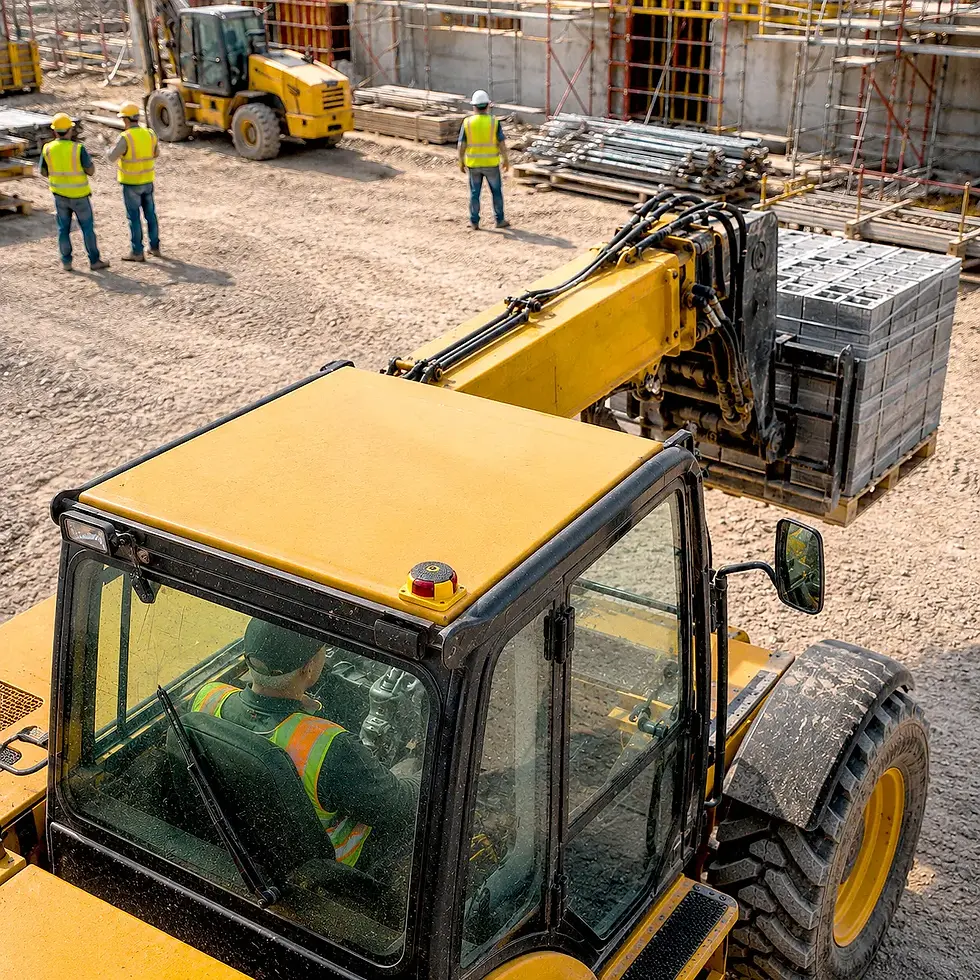
"A beacon is a proactive piece of safety equipment on a telehandler."

Every worker in this yard is visible to RioV360.
The operator focuses on driving while the system watches for people.
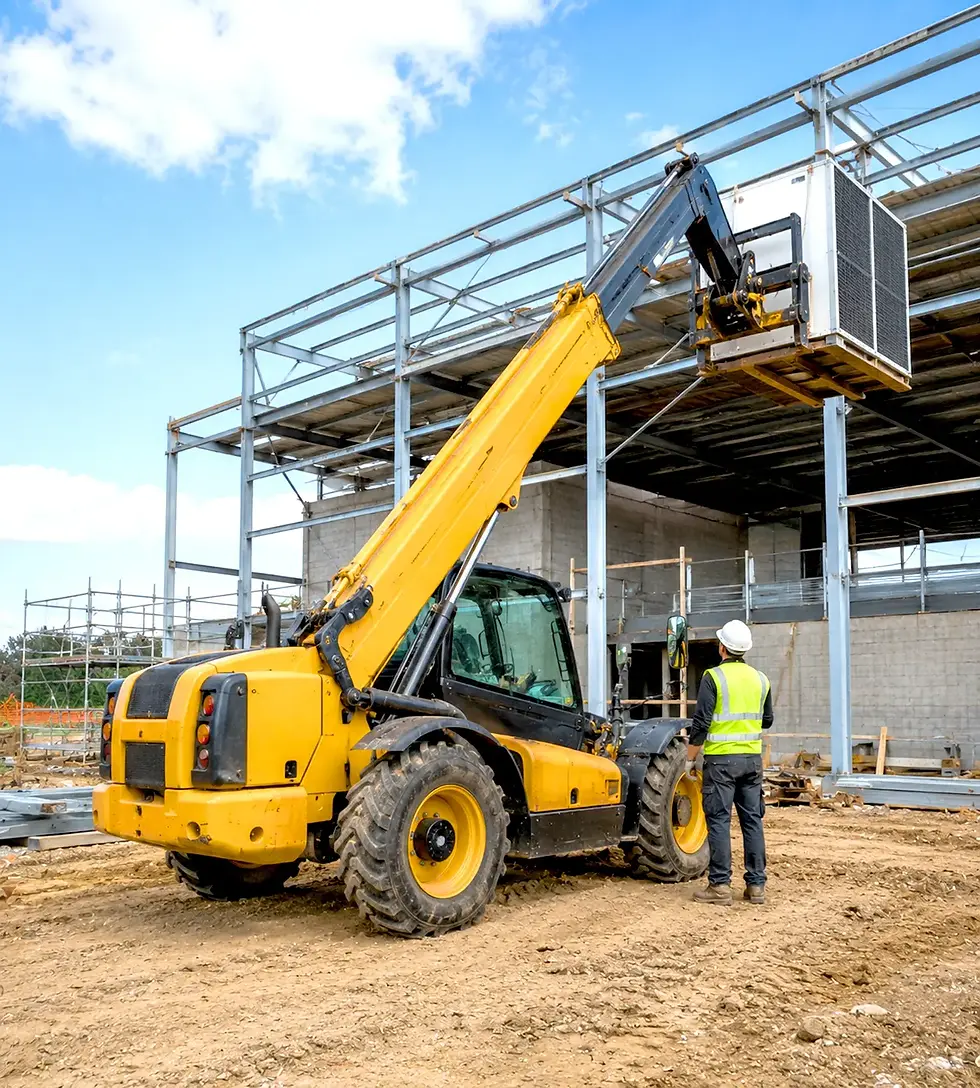
Ready to Validate AI Pedestrian Detection for Telehandlers?
Order one unit. Install it on your highest-risk machine. Run it under real operating conditions. No sales process. No fleet commitment. No pressure.
RioV360 validation is designed for EHS managers, operations directors, and safety committees where pedestrian and vehicle interaction is a documented or suspected risk — and where a full fleet deployment is a significant enough investment to warrant a pilot.
Talk to an Expert about AI Pedestrian Detection for Telehandlers.
Riodatos is based in Tucson, Arizona. We stock, ship, install, and support AI pedestrian detection systems for telehandlers across the Americas. English and Spanish technical and installation support available.
No sales pressure. Just a straight answer to your questions and suggestions for AI pedestrian detection systems.
Questions Before You Order
Call John directly: (520) 501-0602 or Email info@riodatos.com