

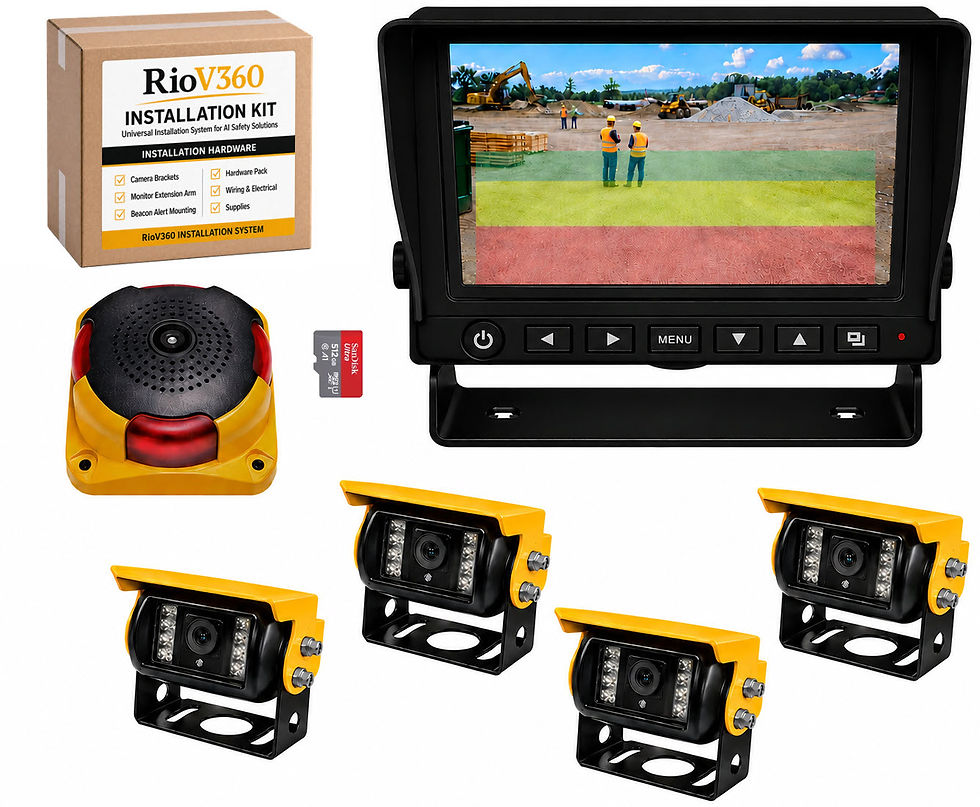
Why RioV360 Is Built for Skid Steers
Four reasons it belongs on a machine that pivots inside its own footprint all day
📷 360° camera coverage focused on the rear engine compartment and side lift-arm blind zones. 1, 2, 3, or 4 cameras.
🔔 In-cab alert the instant someone steps into the pivot or reverse zone.
💾 Onboard recording on a 256GB (upgradable to 512GB) SD card. Pull the card at the end of the shift — no cloud, no IT ticket.
🪨 Built for the dust, vibration, and daily wash-down that skid steers actually live in.
The Machine Is Compact. The Blind Zone Is Not.
A skid steer looks easy to see around. It isn’t. The operator works the attachment from the front while the entire rear half of the machine is hidden by the engine compartment. Lift arms and the attachment itself wall off the side views exactly where ground crew stand to guide or change tools. On a tight site the machine pivots inside its own footprint, so the danger zone moves faster than a person can react. That is a high-risk package in a small frame.
➜ Operators enter and exit from the front and have zero direct sight to anything behind the seat.
➜ The engine compartment completely blocks the rear view the moment the operator sits down.
➜ Raised lift arms and the attachment itself block the side sightlines exactly where ground crew stand.
➜ The machine pivots inside its own length, so the rear counterweight sweeps a full circle in seconds.
➜ Constant backup alarms become background noise and people simply stop reacting to them.


Why Skid Steers Keep Catching Crews Off Guard
Ask any crew which machine worries them and almost no one points at the skid steer. It’s small, familiar, and usually working in the corner. Yet that compact machine pivots on its own axis, the rear counterweight sweeps a full circle, and the operator sits low behind lift arms that erase the side and rear views.
After thirty years around machine control and industrial safety, the pattern is always the same: the operator is locked on the attachment while a groundman steps in behind to change a coupler or guide material. Skid steers invite exactly that behavior because the attachment changes constantly. The operator is watching the work; the danger comes from the pivot into a space everyone had already decided was clear.
Detection That Pivots With the Machine
A skid steer never works inside a fixed safety zone. It reverses, spins in place, and jumps between piles all day. The detection has to move and pivot.

360° Camera Coverage Around the Machine
Cameras mount around the skid steer to cover the rear engine compartment and the side zones hidden by the lift arms. The AI watches those views for people and flags anyone who enters a configured danger zone, so the operator gets an alert the moment the machine pivots someone into a spot they thought was empty.
🔹 Coverage focused on the rear and both sides — the areas the operator truly cannot see.
🔹 Detection zones shaped for the tight pivot radius and attachment work of a skid steer.
🔹 No tags or devices required on the ground crew.
🔹 Purpose-built mounting and zones for skid steers and compact track loaders.
RioV360 Knows a Person From a Bucket or Pallet
A safety alert only works if the skid-steer operator still believes it at 2 p.m. This one fires for people and stays quiet for dust, shadows, blowing debris, and moving material.

AI That Detects People, Not Just Motion
RioV360 is trained to identify people rather than react to movement, so dust from the tracks, shadows from the lift arms, blowing debris, and moving material don’t set it off. When a person enters a configured danger zone, the operator gets a visual and audible warning in the cab, with the camera view showing exactly which corner or side the person is in before the machine pivots.
🔹 Detects people specifically — ignores dust, shadows, and moving attachments.
🔹 Gives a clear visual + audible alert inside the skid-steer cab.
🔹 Highlights which camera (rear or side) picked up the person.
🔹 Lets you shape multiple tight zones around the pivot radius and lift arms.
🔹 Keeps operators trusting the system shift after shift.
The External Beacon Is What Changes Behavior
Most systems only warn the operator. RioV360 does that — and then goes further. The external beacon hits the person on foot with a 120 dB voice alert, audible alarm, and flashing red light the instant they step into the danger zone.
Workers who hear the beacon once change their habits permanently. They stop walking behind a pivoting skid steer. They stop cutting through the operating circle. They move clear the moment the light and voice hit.
🔴 120dB voice alert + audible alarm + flashing light — all three activate simultaneously on detection
🔌 Plug-and-play — 4-pin aviation connector, connects directly to monitor harness, no configuration required

"No one wants to set off the system."
Skid Steers Hide People in Their Own Unique Way
This is not a generic camera kit. Skid steers create a very specific set of blind spots and pivot hazards, so camera positions and detection zones are configured exactly for that machine.
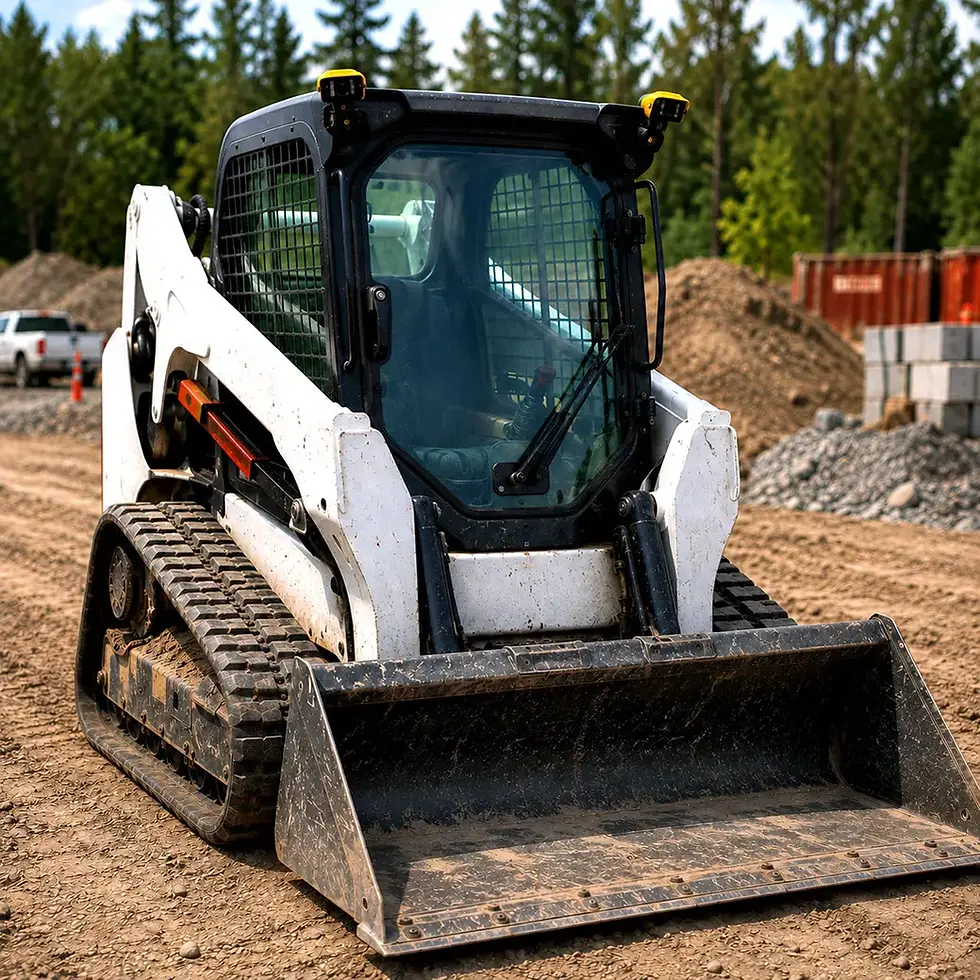
Skid Steers & Compact Track Loaders
The rear and side corners are the trap. The operator works the attachment from the front and then reverses or pivots into space the seat, engine compartment, and lift arms completely hide. A groundman steps in to check a coupler or guide material, and the machine turns inside its own length.
Rear and side cameras keep those exact corners under constant watch while the machine pivots. When a worker enters the danger zone, the operator gets an immediate in-cab alert and the external beacon warns the person on foot before the counterweight or tracks reach them.
Also Used on Other Machines in the Same Fleet
Many contractors run skid steers alongside other equipment. The same RioV360 platform can be configured for your fleet of vehicles.

RioV360 Universal Installation
➡️ Wheel Loaders. Large rear blind spots and tight yard traffic make reversing a major risk. → wheel loader detection
➡️ Dump Trucks. Reversing is one of the highest-risk movements for haul trucks. → dump truck detection
➡️ Excavators. An excavator's cab and counterweight swing a full 360 degrees not just when the machine tracks.→ excavator detection
➡️ Telehandlers. The boom and raised load can hide workers standing near the wheels or machine base. → telehandler detection
➡️ Scrapers. Scrapers are long, fast-moving machines that can be difficult to see around during an active cut. → scraper detection
Built for the Real Life
of a Skid Steer
RioV360 AI Pedestrian Detection System
Specifications only matter when the system survives the daily life of a skid steer — tight quarters, constant vibration, dust, mud, and end-of-day wash-down.
✓ IP69K-rated cameras: Built to withstand pressure washing, driving rain, and demanding outdoor conditions.
✓ Onboard SD recording: Retrieve footage directly at the site without a cloud account or IT ticket.
✓ Wide operating-temperature range: Designed for cold mornings, hot afternoons, and changing seasonal conditions.
✓ No Wi-Fi or cloud required: The system operates on remote sites without dependable network infrastructure.
✓ AI person classification: Detects people specifically rather than reacting to every movement, dust cloud, or blowing object.
✓ Equipment-mounted installation: The system can be fitted across a mixed fleet without requiring devices to be worn by workers.

Prove It on One
Skid Steer First
You do not have to equip the whole fleet to know if it works. Put RioV360 on one skid steer or compact track loader and run it under your real conditions with your own operators.
A single-machine pilot reveals what a specification sheet cannot. You can see whether operators trust the alerts, whether the detection zones fit the work area, whether false alarms remain manageable, and whether the recorded footage provides useful information.
On more than one pilot, the moment that won the crew over was not a near-miss at all. It was pulling the SD card at the end of a shift and seeing, from the machine's own point of view, how often people were cutting through a zone everyone assumed stayed empty.
The pilot also gives your safety team a chance to collect operator feedback and make adjustments before considering a larger deployment.

Before You Buy Any Skid Steer Safety Camera System
Use this checklist to evaluate any system before you put it on a skid steer or compact track loader that works close to people.
✔️ Does it detect people specifically, or does it alarm on every dust cloud, moving bucket, or blowing debris?
✔️ Does it work with zero site Wi-Fi or cellular coverage?
✔️ Can your team pull the SD card on site and review footage without an IT ticket or cloud login?
✔️ Is installation and support available in both English and Spanish?
➜ A skid-steer system has to stay trusted from 7 a.m. to the end of the shift — not just during the demo.
✔️ Can the detection zones be shaped specifically for pivot radius, reverse paths, and attachment changes?
✔️ Can the same platform also cover the wheel loaders and telehandlers in your fleet later?
✔️ Are the cameras and connectors rated for constant vibration, daily wash-down, and heavy dust?
✔️ Can you test one high-risk skid steer before deciding on a larger rollout?
➜ Tell us the model and the highest-risk movement (pivot, reverse, attachment change) and we will map the right starting zones.
Common Questions About Skid Steer
Safety Camera Systems
✅ How does RioV360 handle the dust and changing light that skid steers create?
RioV360 uses AI person classification instead of simple motion detection. Cameras and zones are set specifically so dust from the tracks, shadows from the lift arms, and moving material do not trigger constant false alarms.
✅ Which skid steer should we equip first?
Start with the skid steer that does the most attachment changes or works in the tightest quarters with ground crew nearby. That is almost always the highest-risk unit on the site.
✅ Can the zones actually match the way a skid steer pivots and works?
Yes. Rear zones focus on the engine-compartment blind spot, side zones cover the lift-arm and attachment areas, and corner zones watch the exact path of the pivot. Everything is set for the machine’s real duty cycle.
✅ Does it need site Wi-Fi or a cloud account?
No. Everything — detection, in-cab alerts, beacon, and recording — happens on the machine. You pull the SD card on site. No network or cloud required.
✅ What should we look for during a one-machine pilot?
Watch how operators react to the alerts, how accurate the zones are during real pivots and attachment changes, how it handles dust, and whether the footage is actually useful at the end of the shift. A good pilot proves the system fits your crew and your work before you add more machines.




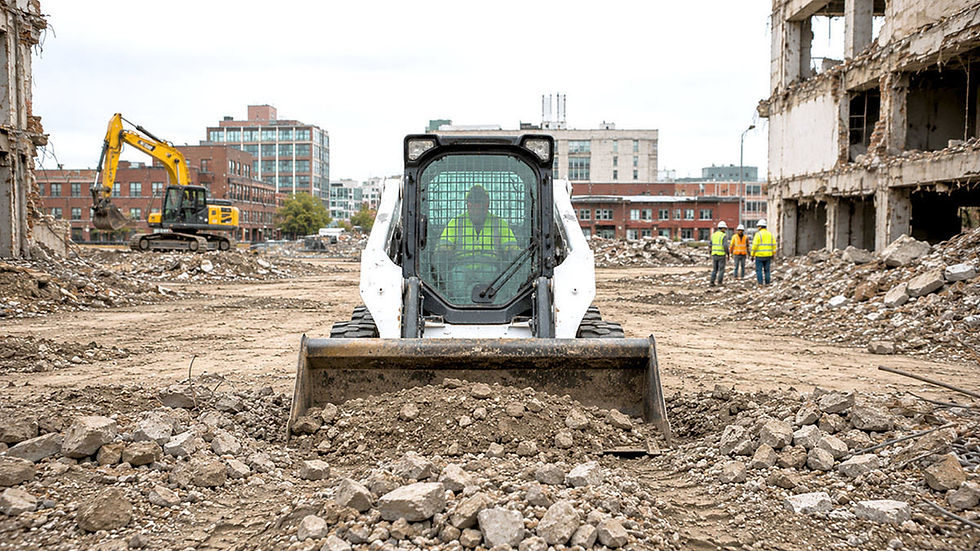

Evaluating a Safety Camera System for Your Skid Steers?
See the complete RioV360 system, request a budgetary quote, or pilot one system on your highest-risk skid steer.
Get a Quote for Your Skid Steer Safety Camera System
.webp)
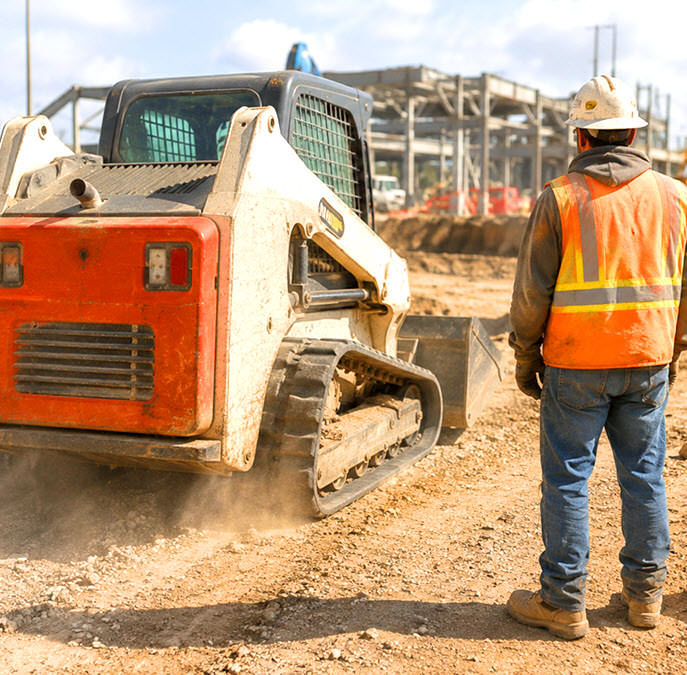
Validate RioV360 During a Real Production Shift
Start with one skid steer or compact track loader. Evaluate the system during reversing, attachment work, tight-quarter maneuvering, shift changes, and yard traffic.
Review the alerts and recorded SD footage with operators and the safety team. Then decide whether the configuration should be adjusted, moved to another machine, or expanded across the site.
Questions Before You Order
Call John directly: (520) 501-0602 or Email info@riodatos.com