
Pedestrian Detection Systems for Mining Need 360° Protection
- John Buttery

- Jun 2
- 8 min read
Why open-pit and surface operations demand detection coverage that mirrors the full blind-spot geometry of heavy mobile equipment.
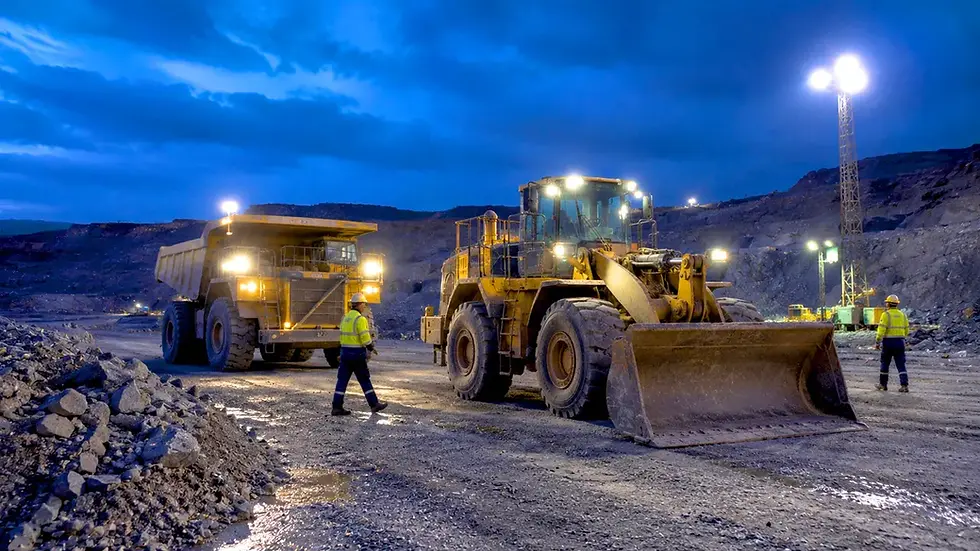
Introduction
A mining site is not a warehouse. It is not a factory floor. The machines are bigger, the terrain changes daily, and the people on the ground are often where they are because something unplanned happens.
Pedestrian detection systems for mining must work in that environment. Not in a clean demonstration, not on a flat surface with predictable lighting, but in the pit, during the shift, in conditions the equipment manual doesn't fully account for. Most detection systems were not designed with that in mind.
The case for 360° coverage in mining is not a product argument. It is a geometry argument. Heavy mobile equipment has blind zones on every side. The incidents that matter, the ones that end careers and investigations, happen in those zones, not in front of the machine where the operator is already looking.
The Blind-Zone Problem Is Not Operator Error
Before any conversation about detection technology, it helps to be clear about what it is solving.
Operators on haul trucks, wheel loaders, excavators, and dozers are not failing to pay attention when a ground incident happens. They are sitting in a cab with a fixed sight line, surrounded by a machine that physically blocks significant portions of their view. No training changes the geometry. No procedure gives them visibility they don't have.
Pedestrian detection systems for mining exist to compensate for a structural limitation of the equipment. That framing matters because it changes how you evaluate what a system needs to do. If the problem is geometry, a system that only covers the rear of the machine is solving part of the problem.
In a surface mining environment, where ground crews approach from any direction and machines maneuver constantly during loading, dumping, and maintenance cycles, partial coverage is partial protection.
"The operator wasn't distracted. The person wasn't careless. The machine simply blocked what either of them needed to see."
Where Exposure Actually Concentrates in Mining
Open haul roads get the most attention in traffic management plans. They are rarely where the highest-exposure interactions happen.
The real concentration points are transition zones: the loading face where a shovel is cycling and ground crew are present for inspections or adjustments, the dump apron where trucks position and reverse, the fueling bay where vehicles queue and people move between machines, the maintenance pull-off where equipment is down and mechanics are working around or beneath it.
These are slow-speed environments. That is precisely why they are dangerous. Slow speed creates a confidence that the situation is controlled. The machine is still large. The blind zones are still there. The difference is that everyone, including the operator, has lowered their guard.
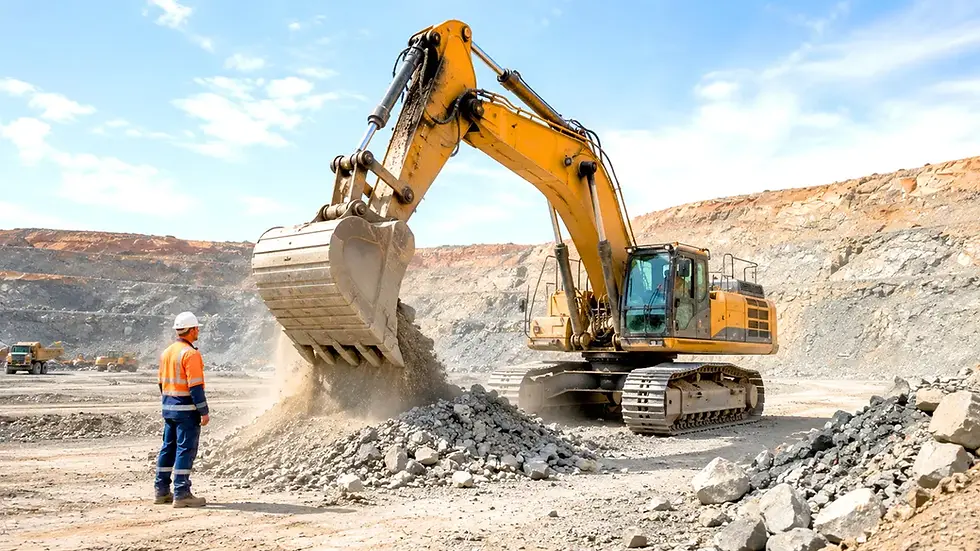
Why Pedestrian Detection Systems for Mining Require 360° Coverage
A rear-only camera helps a truck driver reversing to a dump position. It does not help when a maintenance technician approaches from the passenger side during a pre-shift inspection. It does not help when a dozer is slewing left and a surveyor is walking the bench behind the right track.
360° coverage means the system sees all four quadrants simultaneously and alerts based on proximity regardless of which direction the person approaches from. For mining equipment, which is the baseline. Not a premium feature.
Detection That Works in Mining Conditions
Dust is the first filter a mining detection system has to pass. Not demo-day dust. Shift-long dust from blasting, haul road traffic, and loader operations. Cameras that handle a warehouse environment may degrade or generate false alerts in sustained particulate conditions. IP69K-rated hardware rated for high-pressure wash-downs is the relevant specification, not IP65 or IP67.
Vibration is the second filter. Mining equipment runs rough. Bracket mounts, cable connections, and processing hardware that work on a forklift in a distribution center experience a different stress profile on a haul truck or dozer. Systems that were not designed for that environment tend to reveal it over time through intermittent faults, loose connections, and degraded image quality.
Power is the third. Mining machines run on 12V or 32V systems depending on the equipment class, and voltage fluctuates during high-draw operations. Detection systems need to handle that range without nuisance resets or alert suppression.
Edge Processing Is Not Optional in Mining
A detection system that depends on cloud connectivity to generate an alert will fail in exactly the environments where surface mining operates. Remote pit floors in the western United States, in the Andes, in northern Canada. These are not environments with reliable cellular or Wi-Fi coverage at the working bench level.
Edge processing means the AI runs on the machine. The detection decision happens locally, the alert fires locally, and the footage records locally. No upload. No sync. No dependency on infrastructure that isn't there.
On-device recording matters for the same reason. When a near-miss happens at the bottom of a 300-meter pit, you need footage you can pull on-site, reviewed on a laptop, the same day. That evidence supports incident investigation, operator coaching, and MSHA documentation without waiting for a system that may not have connectivity when you need it.

Dual-Sided Alerts Change the Outcome
Most detection systems alert the operator. That is useful. It is not sufficient.
In a surface mining environment, the person on the ground is often the one with less situational awareness. Focused on a task, working in noise, not watching the machine that is moving toward them. An in-cab alert gives the operator a chance to react. It does not give the ground crew anything.
Dual-sided systems that trigger both an in-cab alert and an external audible warning, simultaneously, change the equation. The maintenance technician hears the machine before the operator has finished processing the alert. Both sides get a warning in the same moment. That parallel pathway is the practical difference in a scenario where the reaction window is two seconds.
What we're seeing across surface mining operations is that ground crews respond to external alerts faster than operators respond to cab alerts, because the person on the ground has direct sensory urgency that a monitor in a cab does not always convey with the same immediacy.
"You can build the best in-cab alert in the industry. If the person walking toward the machine doesn't know it's coming, you've closed half the loop."

Starting With One Machine
Fleet-wide deployment is not where mining operations should start with detection technology. It is where they sometimes end up, but starting there creates evaluation problems that slow everything down.
The right starting point is one machine in one high-exposure zone, running through a normal shift cycle under real conditions. That evaluation tells you things a product demonstration cannot: how operators respond to alerts, whether the detection behavior fits the operational rhythm of that specific zone, how the system holds up in your dust and vibration profile, and what the footage looks like when you pull it.
Organizations typically discover through that single-machine evaluation that the near-miss frequency in their highest-exposure zones is higher than their incident reports suggest. That gap between what gets reported and what happens is the data that justifies broader deployment. It comes from running the system, not from a vendor's case study.
If you're evaluating pedestrian detection systems for mining and want to structure a single-machine evaluation, start here. The same framework applies to mining equipment.
You can also contact Riodatos directly to discuss fit for your specific equipment and site conditions before any commitment.
Author Perspective
I spent several years working with surface mining operations in South America, primarily in environments where the machine-pedestrian dynamic was a daily variable rather than a controlled risk. The operations that managed it well were not the ones with the most elaborate procedures. They were the ones where the people on the ground trusted the systems around them enough to use them without being reminded to.
Detection systems contribute to that trust when they work consistently in real conditions. An operator who receives a meaningful alert in a situation that would otherwise have been invisible starts to rely on the system as part of how they operate. That behavioral shift is where the durable safety gain comes from. Not from the system itself, but from what it changes about how people move around each other on the bench.
More on how I think about field validation and technology adoption at johnbuttery.com.
Book a 30-minute call if you want to talk through what a structured evaluation would look like for your operation.
Why This Matters Now
MSHA continues to cite struck-by incidents involving mobile equipment as a leading cause of serious injuries and fatalities in U.S. surface mining. Regulatory expectations around engineering controls, not just administrative procedures, are increasing, not decreasing.
The shift happening in progressive mining operations is from compliance measurement to exposure measurement. The question is no longer just whether the traffic management plan was followed. It is how many times during a shift a pedestrian came within a dangerous proximity of moving equipment, whether either party knew, and what the pattern looks like over time.
Pedestrian detection systems for mining are one of the few practical tools that generate that exposure data in real pit conditions. High-risk zone mapping, interaction frequency, near-miss patterns: these are leading indicators that lagging incident reports cannot produce. Building a safety program around them requires a system that records what happens, not just what gets reported.
The Riodatos blog covers the frameworks and field observations behind this approach across mining, construction, and heavy industrial applications.
Conclusion
The geometry of heavy mining equipment does not forgive gaps in detection coverage. Blind zones exist on every side of every machine on your fleet. Pedestrian detection systems for mining need to cover all of them. Not the rear, not the front, all of them. And they need to do it in conditions that would degrade or disable a system designed for a cleaner environment.
The operations making real progress on this are the ones that started honest: mapped their actual exposure, put a system on one machine in their highest-risk zone, and let the data tell them what to do next. That is a more useful starting point than a fleet-wide purchase order, and it produces better outcomes.
"The machine doesn't know who is standing behind it. The system's job is to know for it."
About Riodatos
Riodatos is a U.S.-based pedestrian and proximity safety company headquartered in Tucson, Arizona, with domestic inventory and direct support across the Americas. We manufacture and distribute RioV360, a 4-camera 360° AI pedestrian detection system, and are authorized distributors for Proxicam, ZoneSafe, and Inviol: vehicle-mounted AI detection, wearable proximity tag systems, and fixed-camera AI analytics.
Every solution we supply is configured, installed, and supported for site-specific equipment, traffic patterns, and risk profiles. We do not deploy from a standard catalog. Our emphasis is on measurable live performance, operator adoption, and scalable deployment across mixed fleets and multi-site operations.
Direct pricing, fast U.S. shipping, certified installation support, and English/Spanish service let safety teams focus on protection rather than procurement.

Quick Read
⚠️Pedestrian Detection Systems for Mining Need 360° Protection - Haul trucks, loaders, excavators, dozers. Every one of them has blind zones on all four sides. And the highest-risk interactions in surface mining don't happen only on the haul road.
What effective pedestrian detection systems for mining require:
👷♂️ 360° coverage. Not rear-only, not front-and-rear, all four quadrants simultaneously 🚜 Edge processing. No cloud dependency, no pit-floor Wi-Fi required
📊 On-device recording. Footage you can pull and review the same shift, not after an upload
🛡️ Dual-sided alerts. In-cab for the operator and external audible for the ground crew at the same moment
⚠️ IP69K-rated hardware. Built for sustained dust, vibration, and wash-down conditions
The operations making progress on this started with one machine in their highest-exposure zone. Not a fleet-wide rollout. One machine. The near-miss data that came back told them exactly what to do next.
If you're evaluating detection options for a surface mining application, that single-machine evaluation is the right first step.
---

