
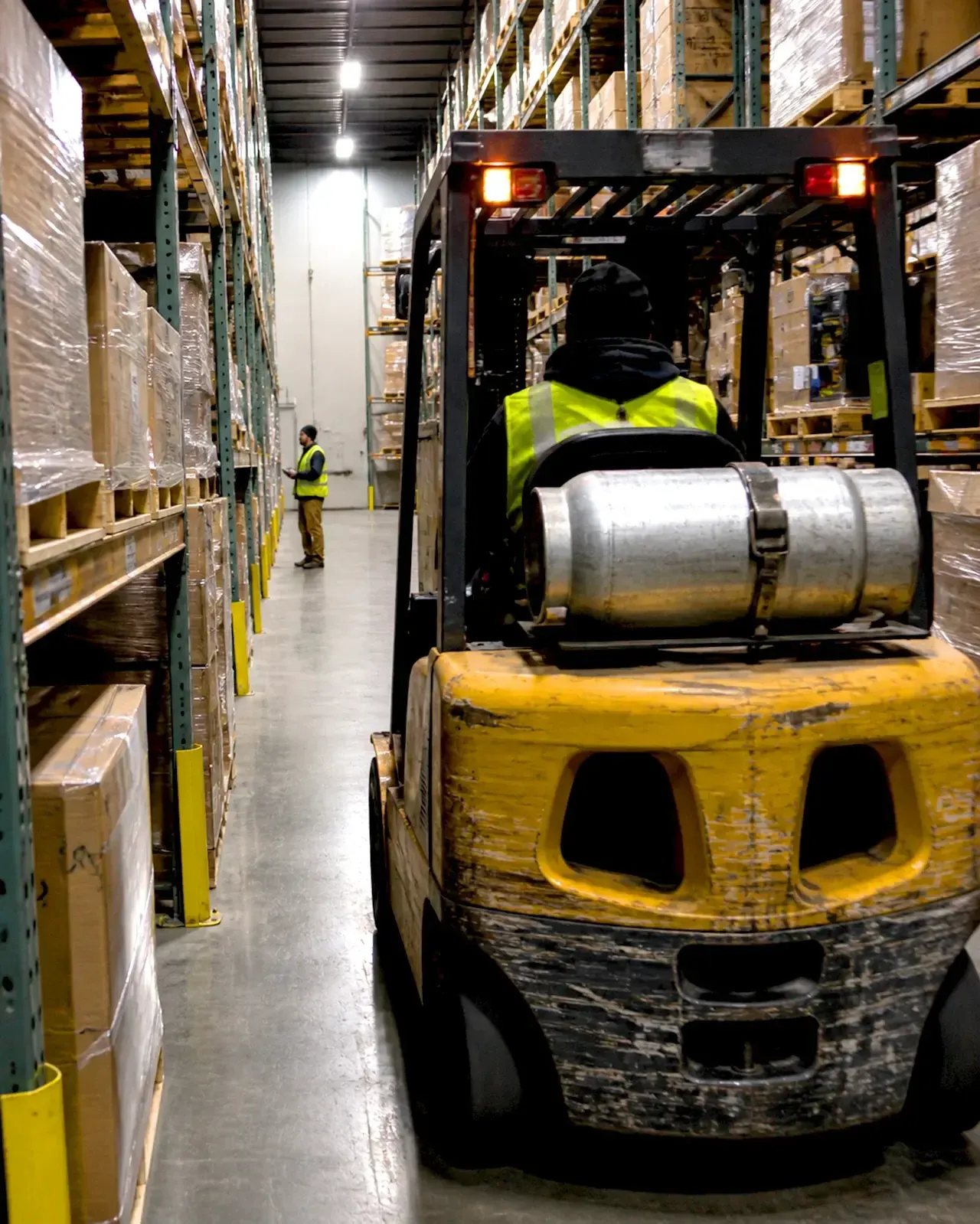
ANSI/ITSDF B56.1 Forklift Safety Standard
The 2020 edition, how OSHA references it, and the related B56 standards.
A plain-language guide to the forklift design and operating standard, and how pedestrian detection supports it.
What ANSI/ITSDF B56.1 Covers
ANSI/ITSDF B56.1-2020, Safety Standard for Low Lift and High Lift Trucks, defines safety requirements for the design, operation and maintenance of low lift and high lift powered industrial trucks controlled by a riding or walking operator and used on compacted, improved surfaces. That is the warehouse and plant forklift.
The standard is written by the Industrial Truck Standards Development Foundation (ITSDF), an ANSI-accredited standards developer. It has separate sections for users and for manufacturers, so it speaks to both the fleet owner and the truck builder.
How OSHA Uses B56.1
OSHA 1910.178(a)(2) requires new powered industrial trucks to meet the design and construction requirements of ANSI B56.1-1969. The construction standard at 1926.602(c) points to the same 1969 edition.
Most trucks sold today are built to a newer edition. In February 2022, OSHA proposed updating its references to the current editions of B56.1, B56.5 and B56.6. Because a proposal is not a final rule, confirm the current status with OSHA before relying on it.
The B56 Family
- B56.1: low lift and high lift trucks, the standard counterbalance and warehouse forklift.
- B56.5: driverless, automatic guided industrial vehicles and automated functions of manned industrial vehicles (2024 edition).
- B56.6: rough terrain forklift trucks used on unimproved terrain and construction sites.
- B56.14: vehicle mounted forklift trucks, the truck-mounted forklifts used for deliveries.
Visibility and Travel Under B56.1
The user section of B56.1 covers operator training and safe operating practices, including traveling with a clear view, yielding to pedestrians and using the horn where vision is obstructed. These match the duties in OSHA 1910.178(n).
The manufacturer section covers design items such as the overhead guard, controls and stability. Visibility from the operator's seat is limited by the mast, the guard and the load, which is why cameras and detection are common add-ons.
Where Pedestrian Detection Fits
B56.1 does not require a specific detection system. A collision warning system like RioV360 supports the clear-view practices in the standard: AI cameras watch the blind zones, the in-cab monitor alerts the operator and a 120 dB beacon warns the person on foot.
Mount cameras without drilling structural members, and see the forklift fitment guides by brand for power and layout by series.
Frequently Asked Questions
What is the current edition of ANSI B56.1?
ANSI/ITSDF B56.1-2020, Safety Standard for Low Lift and High Lift Trucks, published by the Industrial Truck Standards Development Foundation.
Does OSHA enforce the current B56.1?
OSHA 1910.178(a)(2) still references the 1969 edition for design and construction of new trucks. In February 2022 OSHA proposed updating the reference to newer editions. Check the current status before relying on either edition.
Which B56 standard covers rough terrain forklifts?
ANSI/ITSDF B56.6 covers rough terrain forklift trucks. B56.1 covers low lift and high lift trucks used on compacted, improved surfaces.
Does B56.1 require pedestrian detection?
B56.1 does not require a specific detection technology. It sets design requirements for manufacturers and operating practices for users, including safe travel and visibility. Detection supports those practices.
Related Standards Guides
- OSHA 1910.178 Forklift Pedestrian Safety
- ISO 21815 Collision Warning and Avoidance
- MSHA Surface Mobile Equipment Safety Program
- All pedestrian detection standards
This page summarizes public regulations and standards in plain language for planning. It is not legal advice. Read the current text of each rule or standard and work with your safety and legal teams on compliance decisions.
Evaluating Pedestrian Detection?
Tell us your machines and the rules your site works under. Within one business day, we will email pricing, the recommended kit and specs.
Prefer to talk? Call John directly at +1 (520) 501-0602 or email info@riodatos.com.