
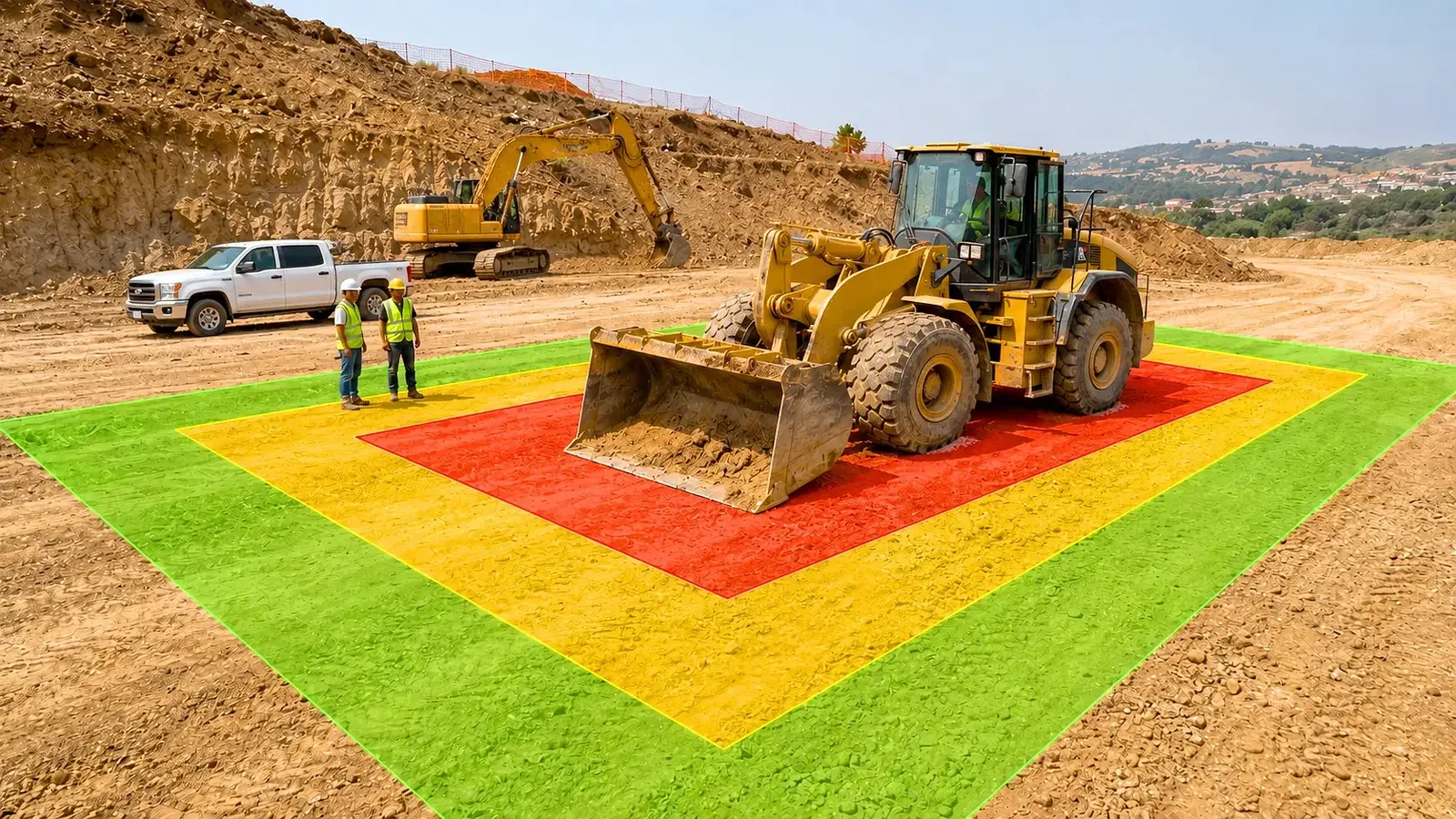
Pedestrian Detection Systems Compared
Tags, reflective sensors, radar, cameras and AI. What each one sees, and what each one misses.
An honest guide from RioDatos, the maker of RioV360, for safety managers choosing a system for forklifts and heavy equipment.
Five Ways to Detect a Person
Every pedestrian detection system answers one question: is a person close to this machine right now? They answer it in different ways, and each one fails in a different way.
Knowing how a system fails matters more than knowing how it works. A system that misses visitors is a problem on a site full of truck drivers. A system that alarms on every pallet gets switched off within a month.
Side by Side
The five main approaches used on forklifts, loaders, excavators and other mobile equipment.
| Technology | What it detects | What workers wear | What it misses | Video record | Running cost |
|---|---|---|---|---|---|
| UWB and RFID tags | A tag worn by a worker | A powered tag | Anyone without a working tag: visitors, drivers out of the cab, dead batteries, forgotten tags | Usually none | Tags to buy, charge, replace and enforce. Software fees are common. |
| Reflective tape sensors | Reflective tape on high-vis clothing | High-vis with reflective tape | People without high-vis, or with dirty or covered tape | Usually none | Low hardware cost. Analytics may be extra. |
| Radar and ultrasonic | Any object in range | Nothing | Cannot tell a person from a pallet, post or wall, so alerts get ignored | None | Low |
| Cameras without AI | Nothing. Shows the operator a picture | Nothing | Whatever the operator is not watching at that moment. No alert | Sometimes | Low |
| AI cameras (RioV360) | People, recognized by shape | Nothing | Needs line of sight, so cameras cover each side of the machine | Yes, onboard 1080p | None. No subscription |
How to Choose
- Visitors, drivers or contractors on site? Avoid systems that need something worn. The person most at risk is often the one who never got a tag.
- Racking, posts and parked equipment everywhere? Avoid systems that cannot tell a person from an object. Nuisance alarms train operators to ignore alerts.
- Need to know what happened after a near miss? Choose a system that records video on the machine.
- Machines that move between sites or rentals? Choose a self-contained kit that needs no site infrastructure.
- Budget has to fit this quarter? Compare total cost: hardware, tags, subscriptions, installation and downtime.
Questions to Ask Any Vendor
- What does your system miss, and how will I know when it happens?
- What will it cost per machine after year one, including software and tags?
- Does anything need charging, pairing or enforcing?
- Can I see a recording of a real alert?
- How long does installation take, and who does it?
- Can I test it on one machine before I buy the fleet?
- Is there a monthly subscription, and what still works if we stop paying?
- Does it need Wi-Fi, a cellular signal or a site network to detect and record?
RioDatos answers every one of these on the RioV360 specifications page.
Where RioV360 Fits
AI Cameras With Nothing to Wear
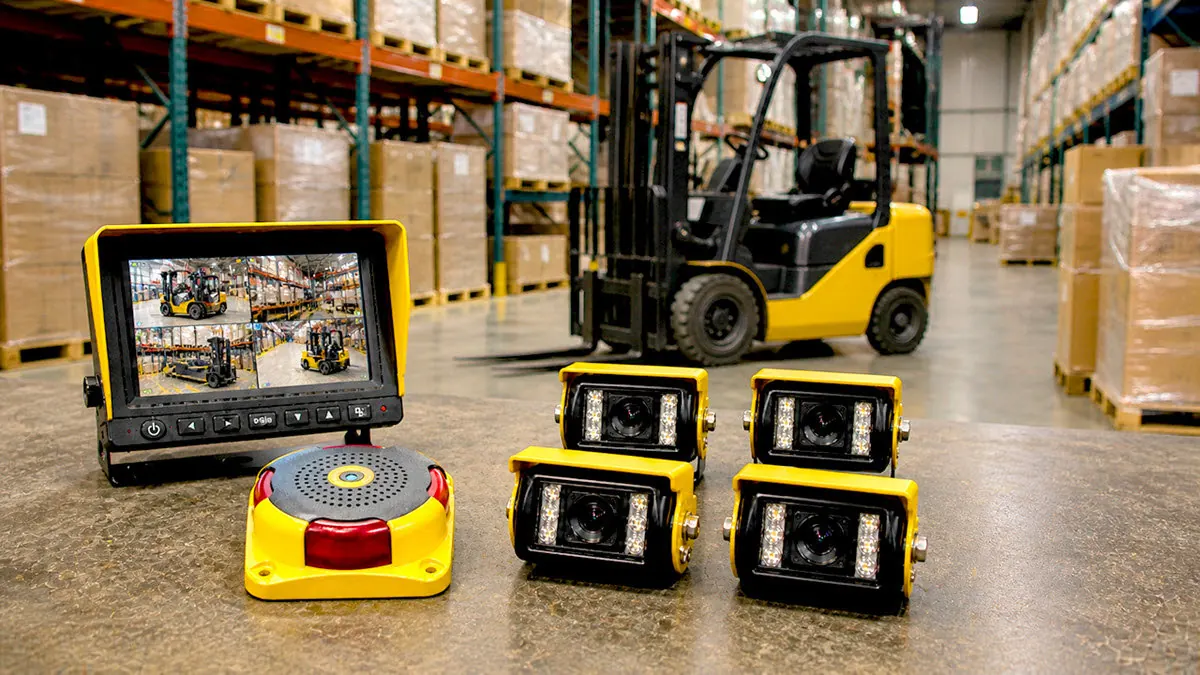
RioV360 is an AI camera system. Four cameras cover every side of the machine and recognize people standing, crouching or partly hidden, in detection zones from 0 to 5 m.
- 7 inch in-cab monitor with visual and audible alerts
- 120 dB external beacon warns the worker on foot
- Onboard 1080p recording on every camera, no cloud
- 8 to 32 V, installs in under 2 hours
- $1,795 per machine, no tags, no subscription
Like any camera, it needs line of sight. That is why the kit uses four cameras, one for each side.
Frequently Asked Questions
What is the most reliable pedestrian detection technology?
No single technology is perfect. Tags miss anyone without a working tag, radar cannot tell a person from an object, and cameras need line of sight. On sites with visitors, drivers and contractors, AI cameras close the biggest gap because they detect anyone, tagged or not.
Do AI pedestrian detection cameras give false alarms?
AI recognizes people by shape, so pallets, racking, dust and shadows do not set off alerts the way radar or simple motion detection can. RioV360 zones are set per side of the machine, from 0 to 5 m, to match how the machine works.
Can I combine detection technologies?
Yes. Some sites use tags in busy pedestrian aisles and AI cameras on outdoor equipment. Start with the gap that worries you most and build from there.
What does a pedestrian detection system cost?
It varies widely. Tag systems add a tag for every person and often software fees. RioV360 is $1,795 per machine with no tags and no subscription, and the PILOT price is $1,295 through December 31, 2026.
Do I need Wi-Fi or a network?
RioV360 does not. Detection, alerts and recording all run on the machine. Some other systems need site infrastructure such as anchors or a cellular connection for their analytics.
Get RioV360 Pricing
Tell us your machines. We will email pricing, the recommended kit and specs within one business day.
Prefer to talk? Call John directly at +1 (520) 501-0602 or email info@riodatos.com.