
RioDatos Blog
AI Forklift Pedestrian Detection: Vision vs UWB vs Radar Safety Systems
November 9, 2025 • John Buttery, CEO of RioDatos
Compare AI computer vision, UWB tags & radar for real-time collision prevention in warehouses, cold storage & outdoor yards.
A forklift rounds a blind corner at 8 mph. A pedestrian steps into the aisle: distracted, unaware.
Traditional proximity alarms can't distinguish a person from a pallet. Backup cameras only help in reverse. Tag-based systems work well when every pedestrian consistently wears an RFID tag, a condition that varies significantly across facilities.
Modern pedestrian detection systems use multiple technologies to address this challenge: AI-powered computer vision, ultra-wideband (UWB) radio frequency systems, and radar-based proximity detection. Each approach has distinct advantages and limitations depending on your facility's environment, traffic patterns, and operational requirements.
This article examines how these systems work, their real-world performance characteristics, and the factors that determine which technology fits specific industrial environments.
Why Traditional Forklift Safety Systems Have Limitations
Most forklift warning devices rely on proximity detection alone: RFID tags, infrared sensors, or ultrasonic beacons. These systems trigger alerts whenever anything enters a detection zone, pallets, racks, doorways, or other forklifts.
The result is alert fatigue. When operators receive constant alarms in high-traffic areas, they may become desensitized to warnings, reducing the effectiveness of legitimate alerts.
AI-based vision systems attempt to address this by distinguishing between object types:
- Pedestrians → High-priority alert
- Pallets & equipment → Filtered or lower-priority warning
- Fixed infrastructure → Ignored after learning period
This classification approach aims to reduce nuisance alarms while maintaining protection. However, it introduces other considerations: camera maintenance requirements, lighting dependencies, and AI accuracy variables.
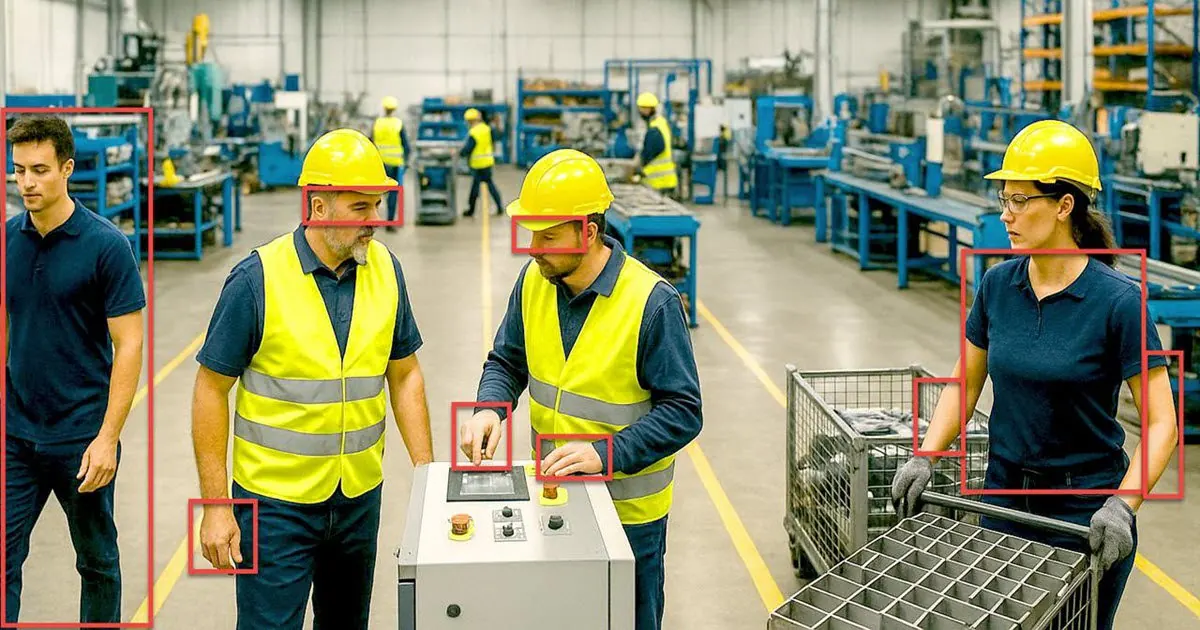
How AI Forklift Pedestrian Detection Technology Works
2. Machine Learning Classification
Neural networks trained on pedestrian datasets identify humans based on body shape, movement patterns, and size ratios. These algorithms process 30-60 frames per second, analyzing each frame for human presence.
The AI distinguishes pedestrians from objects, though accuracy depends on several factors:
- Image quality and lighting conditions
- Pedestrian clothing contrasts against backgrounds
- Partial occlusion (person partially hidden behind objects)
- Distance and camera angle
3. Risk Assessment Algorithms
Advanced systems calculate collision risk by analyzing:
- Forklift speed and direction
- Pedestrian movement trajectory
- Time-to-collision estimates
- Distance between the vehicle and the person
These systems provide graduated alerts rather than binary on/off warnings.
4. Operator Interface
In-cab displays typically show:
- Color-coded risk zones (green/yellow/red)
- Directional indicators showing pedestrian location
- Distance readouts
- Visual warnings are effective in noisy environments
5. Data Logging and Analytics
Enterprise systems may include cloud connectivity for:
- Incident video storage
- Near-miss tracking
- Zone-based risk heat maps
- Compliance documentation
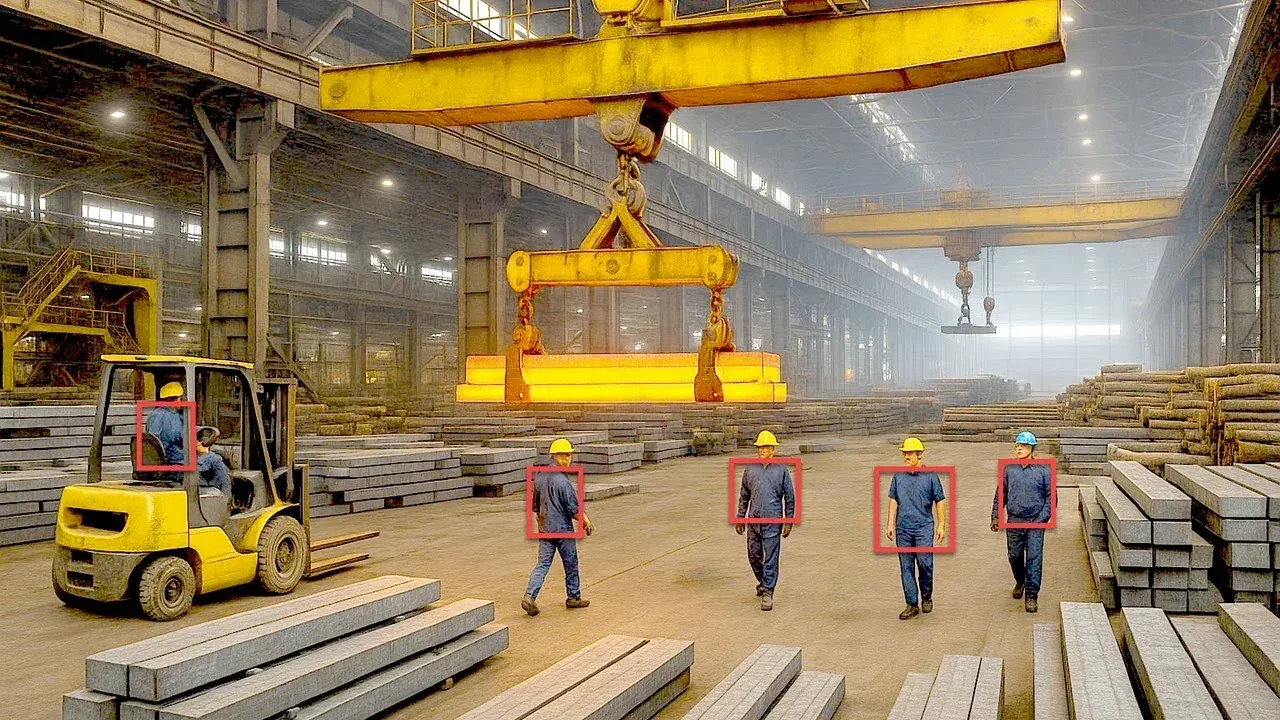
AI forklift pedestrian detection: vision vs UWB vs radar
AI vision systems typically require a calibration period where the system learns the facility's fixed infrastructure. During this time (often 2-4 weeks of operation), the system maps stationary objects like racks, walls, and doorways to reduce false positives in those areas.
Detection accuracy varies based on environmental conditions. Factors that can affect performance include:
- Heavy dust or steam that obscures camera lenses
- Direct sunlight or glare affecting camera sensors
- Rapid changes between bright and dark areas
- Extreme temperatures outside operating ranges
- Lens contamination requiring regular cleaning
Most manufacturers specify accuracy rates of 95-99% for pedestrian detection under optimal conditions, though real-world performance depends heavily on facility-specific factors.
Alternative Technology: Radar-Based Proximity Systems
Radar systems use radio waves to detect objects in the forklift's path, similar to automotive collision avoidance systems.
Radar Advantages
- Work in complete darkness and poor visibility
- Not affected by dust, steam, or weather
- No line-of-sight requirement
- Lower maintenance than camera systems
Radar Limitations
- Cannot distinguish between people and objects
- May trigger false alarms on pallets, equipment, or walls
- Detection zones are typically less precise than vision systems
- Subject to alert fatigue in high-traffic environments
Comparative Technology Assessment
Choosing the Right Technology for Your Facility
The optimal pedestrian detection system depends on your specific operational environment:
Consider AI Vision Systems When:
- Indoor warehouses or manufacturing facilities
- Mixed pedestrian/vehicle traffic areas
- Visitor traffic makes tag compliance impractical
- Reducing false alarms is a priority
- Analytics and video documentation are valuable
Consider UWB Tag Systems When:
- Outdoor yards, ports, or extreme weather exposure
- Cold storage or freezer operations
- Operations in dust, fog, or steam
- Limited visitor access allows high tag compliance
- Temperatures exceed camera operating ranges
Consider Hybrid Approaches When:
- Large facilities have both indoor and outdoor zones
- Some vehicles operate in extreme conditions, others don't
- Budget allows different solutions for different risk areas
For AI forklift pedestrian detection: vision vs UWB vs radar, Many facilities benefit from deploying different technologies across zones rather than a single system-wide facility.

Real-World Implementation: Aldus Manufacturing
The Challenge
Aldus sought to reduce pedestrian collision risk in congested production areas while maintaining productivity. Traditional proximity systems generated excessive false alarms triggered by fixed racks, pallets, and machinery, leading to operator alert fatigue.
The Implementation
The company selected camera-based AI detection that identifies humans specifically, eliminating alarms from fixed infrastructure. The system required no safety vests or RFID tags, addressing compliance challenges associated with tag-based approaches.
Installation and Training
Installation time was 1-2 hours per vehicle with minimal production disruption. The operator interface proved intuitive enough that minimal training was required.
Operational Results
Following the initial learning period, the system eliminated false positives from fixed infrastructure. Operators reported increased confidence in alerts, knowing they indicated actual pedestrians rather than pallets or walls. Management gained video documentation capability for training and incident investigation.
The case illustrates successful AI vision deployment in a complex manufacturing environment, though quantitative incident reduction data was not publicly reported.
Implementation Considerations
System Costs
Pedestrian detection systems typically range from $2,000-$4,000 per forklift, depending on:
- Technology type (vision vs. tag vs. radar)
- Feature set (basic detection vs. analytics platform)
- Installation requirements (self-install vs. professional)
- Scale of deployment (single unit vs. fleet pricing)
For tag-based systems, add ongoing costs for:
- Tag inventory ($50-150 per tag)
- Battery replacement programs
- Additional tags for workforce turnover
Return on Investment Variables
According to Liberty Mutual's 2023 Workplace Safety Index, material handling incidents rank among the top causes of workplace injuries, with serious forklift incidents potentially costing $75,000-$150,000 when including:
- Workers' compensation claims
- OSHA fines and legal costs
- Equipment damage and downtime
- Investigation and administrative time
- Increased insurance premiums
However, actual ROI calculations vary significantly based on facility-specific factors:
- Current incident rate and severity
- Insurance cost structure
- Production downtime impact
- Regulatory compliance requirements
Most facilities evaluate payback periods of 12-36 months, though this depends entirely on the effectiveness of incident prevention.
Testing and Evaluation Approach
Rather than committing to fleet-wide deployment, many safety managers begin with single-unit testing:
- Install one system on highest-risk vehicle
- Monitor performance for 4-8 weeks
- Gather operator feedback
- Review near-miss data and system alerts
- Assess false alarm rate in your environment
- Make deployment decision based on actual facility performance
This approach provides facility-specific data rather than relying solely on manufacturer claims or third-party case studies.
Maintenance and Long-Term Performance
AI Vision System Maintenance
- Weekly or bi-weekly camera lens cleaning (frequency depends on dust levels)
- Periodic software/firmware updates
- Camera alignment checks after impacts or repairs
- Monitor mounting hardware for vibration loosening
- Review cloud storage capacity for video retention
UWB Tag System Maintenance
- Battery replacement program (track tag battery levels)
- Tag inventory management for new hires and replacements
- Receiver mounting inspection
- Tag compliance monitoring and enforcement
- Lost tag replacement budget
System Lifecycle
Most industrial pedestrian detection systems have expected service lives of 5-7 years, though this varies based on operating conditions and technological advances. AI vision systems benefit from software updates that can improve detection algorithms without hardware replacement.
Frequently Asked Questions
Do AI systems work on all forklift brands?
Most aftermarket systems are compatible with Toyota, Crown, Yale, Hyster, Raymond, and other major brands. However, verify specific compatibility with unusual or specialized vehicles.
What happens if someone isn't wearing their tag in a UWB system?
The system cannot detect them. This is why tag compliance is critical, often enforced through workplace policy, reminders, and tag check procedures.
How do vision systems perform in very dusty environments?
Dust degrades camera-based detection. For persistent heavy dust (like cement plants or mining), UWB tag systems may be more reliable. Lens cleaning frequency increases in dusty conditions.
Can these systems be self-installed?
Many facilities with electrical maintenance capabilities install systems themselves. Professional installation is available and recommended for facilities without technical staff or complex mounting requirements.
How secure is cloud-stored video data?
Enterprise systems typically use encryption, role-based access controls, and audit logging. Review specific vendor security certifications and compliance with data protection requirements for your industry.
Do systems work at night or in dark warehouse sections?
Vision systems with low-light or infrared capability work in darkness. UWB and radar systems are unaffected by lighting conditions.
What about extremely cold environments like freezers?
Check operating temperature ranges. Many camera systems operate down to -4°F (-20°C), while UWB systems function to -40°F (-40°C). For colder environments, UWB tag systems are typically more reliable.
How often do false alarms occur after the learning period?
This varies by facility. Well-implemented AI vision systems report very low false alarm rates after calibration. However, new obstacles or changed layouts may temporarily increase false positives until the system adapts.
Understanding Technology Limitations
No pedestrian detection system is foolproof. Effective workplace safety requires multiple layers:
Technology limitations to consider:
- AI systems can miss detections in edge cases (extreme occlusion, unusual poses)
- Tag systems fail when batteries die or tags aren't worn
- All systems require proper installation and maintenance
- Operator response still depends on human attention and reaction time
Complementary safety measures:
- Designated pedestrian walkways and physical barriers
- Traffic management policies and speed limits
- Operator training and certification programs
- Regular safety audits and near-miss reporting
- Facility layout optimization to reduce conflict points
Pedestrian detection technology is a valuable tool in a comprehensive safety program, not a replacement for foundational safety practices.
Related Topics and Resources
For readers researching forklift safety technology:
- Warehouse Pedestrian Detection Systems: Comprehensive comparison of vision, UWB, RFID, and radar technologies
- Forklift Alert Systems: Analysis of audible, visual, and haptic warning systems for high-noise environments
- OSHA Forklift Safety Requirements: Regulatory compliance for powered industrial vehicles (29 CFR 1910.178)
- Proximity Warning System Standards: Industry standards for material handling safety systems
Making Informed Technology Decisions
AI-powered pedestrian detection represents a significant advancement in forklift safety, offering the potential to reduce false alarms while maintaining protection. However, the optimal solution depends heavily on facility-specific conditions.
Key decision factors include:
- Environmental conditions (indoor vs. outdoor, dust, temperature, lighting)
- Traffic patterns and pedestrian compliance capabilities
- Budget for initial investment and ongoing maintenance
- Analytics and documentation requirements
- Integration with existing safety programs
About RioDatos
RioDatos specializes in helping EHS managers evaluate these factors and select appropriate pedestrian detection technology, whether AI vision systems, UWB tag solutions, or hybrid approaches.
For facilities considering pedestrian detection technology, we recommend starting with a thorough assessment of your highest-risk zones and specific environmental challenges before committing to fleet-wide deployment.
About the Author
John Buttery is the CEO of RioDatos and the author of "AI-Powered Safety: Streamlined EHS Operations for Managers," available on Amazon Books.
Mr. Buttery brings 30+ years of experience in industrial safety and AI vision technology. As the founder of RioDatos, he helps EHS leaders evaluate and implement pedestrian detection systems appropriate for their facilities' specific conditions.
Data Sources
- AI pedestrian detection & computer vision: Industry standards for autonomous vehicle safety systems and machine learning classification
- OSHA forklift safety requirements: U.S. Department of Labor 29 CFR 1910.178
- Workplace injury costs: Liberty Mutual Workplace Safety Index 2023
- Operating temperature ranges and environmental ratings: Manufacturer specifications for industrial camera and UWB systems
Pilot One Unit: $500 Off
Test RioV360 AI pedestrian detection on your highest-risk machine before a fleet rollout. In-stock units ship from Arizona in 2 business days.
More Articles
November 7, 2026
AI Pedestrian Detection for Ports: What the Numbers Show
AI pedestrian detection for ports targets the 23% of port deaths from vehicle and pedestrian impact. See the data, machine blind spots and field...
Read more →
November 6, 2026
Wheel Loader Pedestrian Detection for Waste Transfer Stations
Wheel loader pedestrian detection for waste transfer stations: 360° recorded video, AI alerts from 0 to 5 m, and a one-machine pilot for your tip...
Read more →
November 3, 2026
Benefits of 360 Forklift Camera Benefits
Forklifts are essential in many industrial operations, but they also pose significant safety risks. Blind spots and limited visibility can lead to...
Read more →