
RioDatos Blog
How to Test Pedestrian Detection Accuracy on Your Own Floor
November 11, 2026 • John Buttery, CEO of RioDatos
Every vendor has an accuracy number. None of them were measured in your aisles, with your lighting, your dust and your people. Here is how to measure it yourself.
Why Published Accuracy Numbers Mislead
A detection rate measured on a test track or a curated video set says little about a refrigerated dock at 5 a.m. or a quarry at noon. Accuracy depends on camera position, lighting, weather, distance, posture and what else is in view. Two numbers matter on your site:
- Misses: a person in the zone and no alert. This is the dangerous failure.
- Nuisance alerts: an alert with no person in the zone. This is the failure that gets systems ignored or unplugged.
A Field Test You Can Run in One Shift
- Pick the truck. Use your highest-risk machine in its normal work area.
- Mark distances. Tape the floor at 1, 2, 3 and 5 m from each camera.
- Walk the zones. With the machine parked and the brake set, have a person walk into each zone standing, crouching, carrying a box and partly hidden behind a pallet. Log alert or no alert.
- Change the light. Repeat at the darkest and brightest times, and at a dock door with sun behind the person.
- Add clutter. Park next to racking, pallets and another truck. Log any alerts with no person present.
- Run a real shift. Let the operator work normally and count alerts. Review the recorded video to sort real detections from nuisance alerts.

What Good Looks Like
- Every walk-in inside the red zone triggers an alert.
- Crouching and partly hidden people are detected.
- Racking, pallets and shadows do not trigger alerts.
- Operators say the alerts are believable after one shift.
- You can pull video of every alert and see what caused it.
Recording Makes the Test Honest
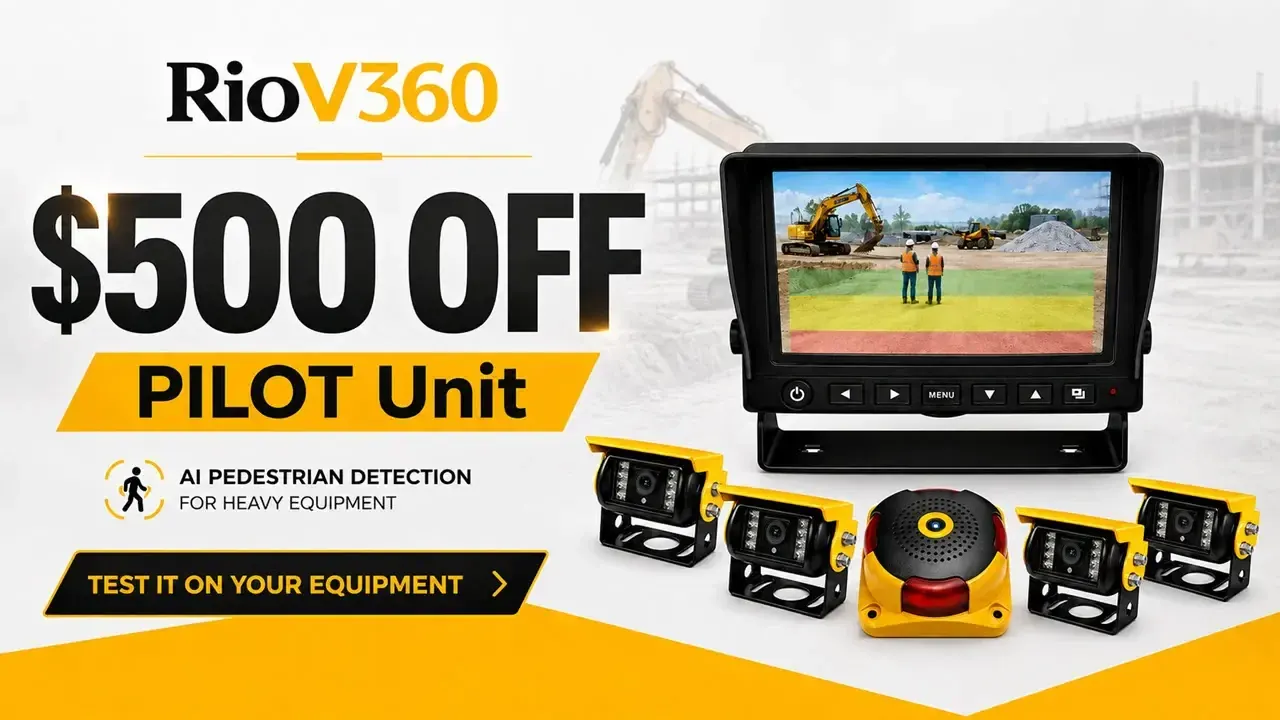
Without video, a field test turns into opinions. With video, every alert can be checked. RioV360 by RioDatos records 1080p on every camera, date and time stamped, so your team can review each detection on a laptop without a login or upload.
That is why RioDatos offers the PILOT unit: $500 off one system so you can run this test on your own machine before you buy a fleet.
Frequently Asked Questions
How accurate is AI pedestrian detection?
It depends on the site. Camera position, lighting, distance and clutter all affect results, which is why a field test on your own machine matters more than a published percentage.
What is a nuisance alert?
An alert with no person in the zone, often caused by racking, pallets or shadows on systems that sense objects rather than people.
How long should a pilot run?
One shift gives a first read. Two to four weeks of normal work with video review gives a reliable picture.
Can I test RioV360 before buying a fleet?
Yes. The PILOT unit program takes $500 off your first system so you can test it on your highest-risk machine.
Pilot One Unit: $500 Off
Test RioV360 AI pedestrian detection on your highest-risk machine before a fleet rollout. In-stock units ship from Arizona in 2 business days.
More Articles
November 7, 2026
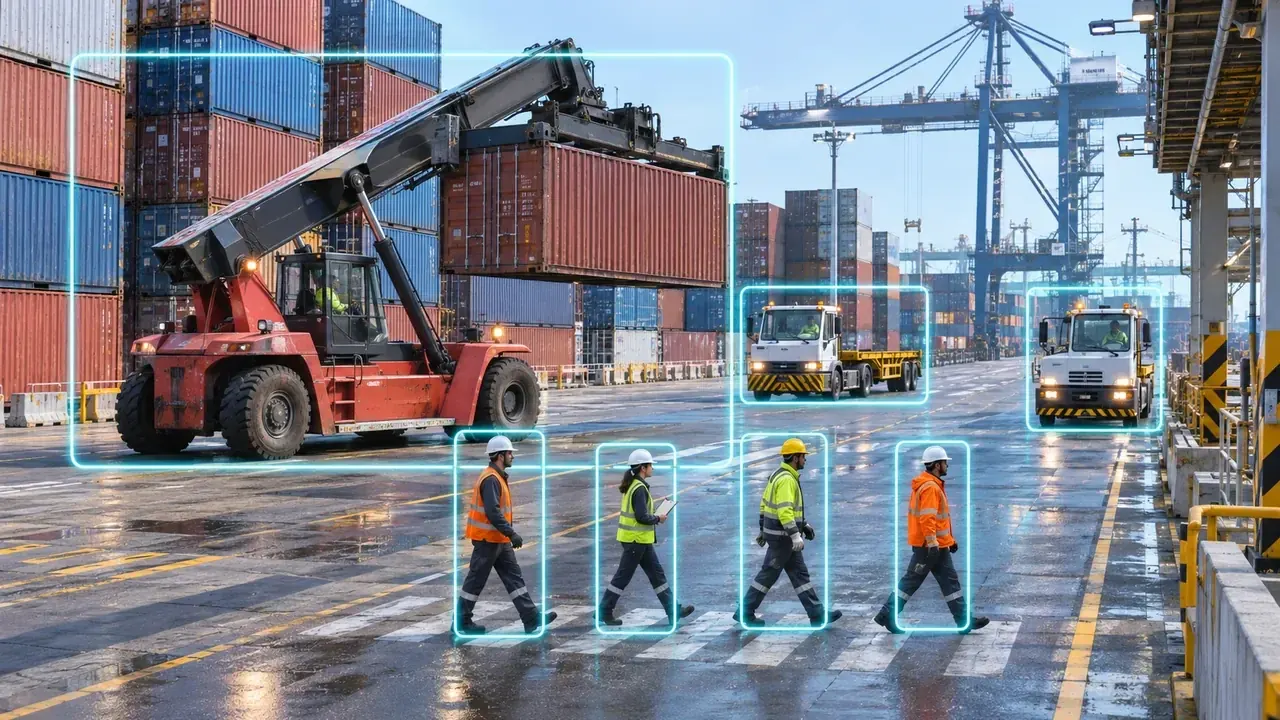
AI Pedestrian Detection for Ports: What the Numbers Show
AI pedestrian detection for ports targets the 23% of port deaths from vehicle and pedestrian impact. See the data, machine blind spots and field...
Read more →
November 6, 2026
Wheel Loader Pedestrian Detection for Waste Transfer Stations
Wheel loader pedestrian detection for waste transfer stations: 360° recorded video, AI alerts from 0 to 5 m, and a one-machine pilot for your tip...
Read more →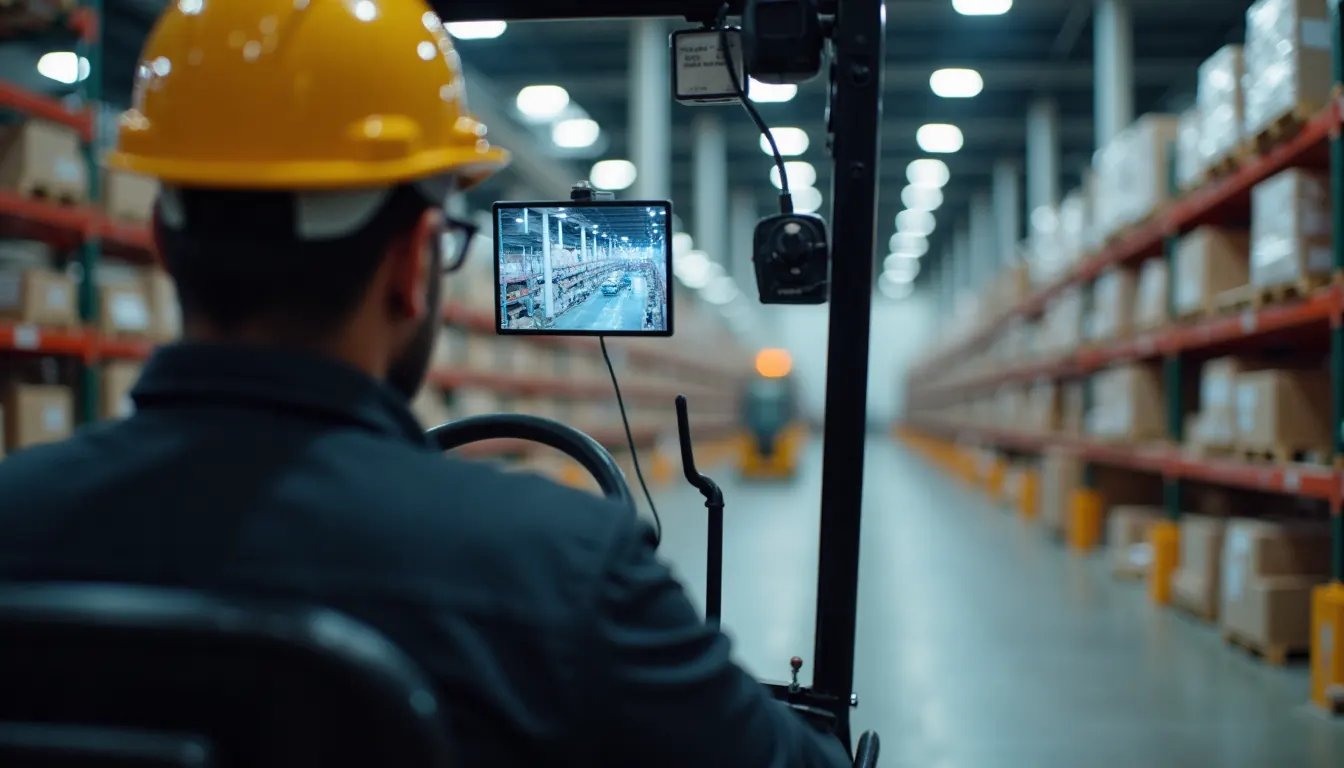
November 3, 2026
Benefits of 360 Forklift Camera Benefits
Forklifts are essential in many industrial operations, but they also pose significant safety risks. Blind spots and limited visibility can lead to...
Read more →