
RioDatos Blog
CCTV Video Analytics for Workplace Safety: How inviol Works
November 20, 2026 • John Buttery, CEO of RioDatos
AI on the cameras you already own, finding near misses before they become incidents
CCTV video analytics for workplace safety turns the cameras you already own into a 24/7 safety monitor. inviol connects to existing CCTV through standard RTSP feeds, runs its AI on a small on-site unit, and flags near misses, exclusion zone breaches, speeding and PPE gaps with timestamped video. inviol says sites can be live in 1 to 2 weeks.
Most facilities already record everything. Hours of it, every day.
Almost nobody watches it until something goes wrong. That’s the gap inviol closes. It reads your existing camera feeds in real time and pulls out the moments that matter.
Why Your Cameras Miss the Near Misses
A standard CCTV system is a forensic tool. Footage gets pulled after an injury, a damaged rack or a complaint. By then the lesson is expensive.
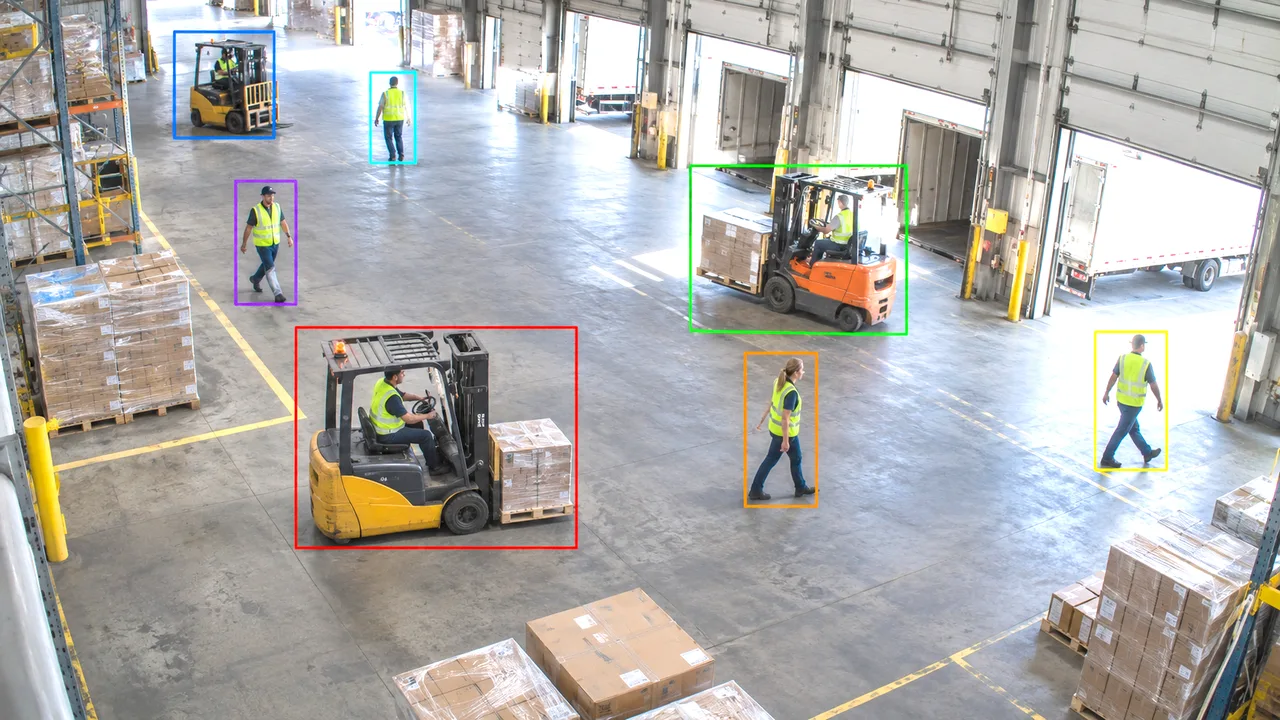
Near misses rarely get reported. A forklift passes a little too close to someone at the end of an aisle. Both people keep working. Nothing gets written down.
What we’re seeing across facilities is the same pattern. The near miss happened dozens of times before the incident. The cameras saw every one of them.
“The footage was always there. Nobody was looking at it.”
How inviol Turns Existing Cameras Into a Safety System
inviol is AI software that connects to the CCTV and surveillance cameras you already have. It finds, logs and categorizes safety events, then delivers clear insights the safety team can use every day.
The setup is simple:
- Connects to existing cameras through standard RTSP feeds
- A small processing unit, leased as part of the agreement, sits alongside your recorder
- AI runs on-site, in real time
- No cameras to replace in 99% of cases, according to inviol
- No sensors to bolt onto forklifts or equipment
- Covers a selection of cameras on your highest-risk areas, not every camera on site
It adapts to your site. Your zones, your policies and your workflows define what “safe” looks like.
What inviol Detects
The detection scenarios inviol lists include:
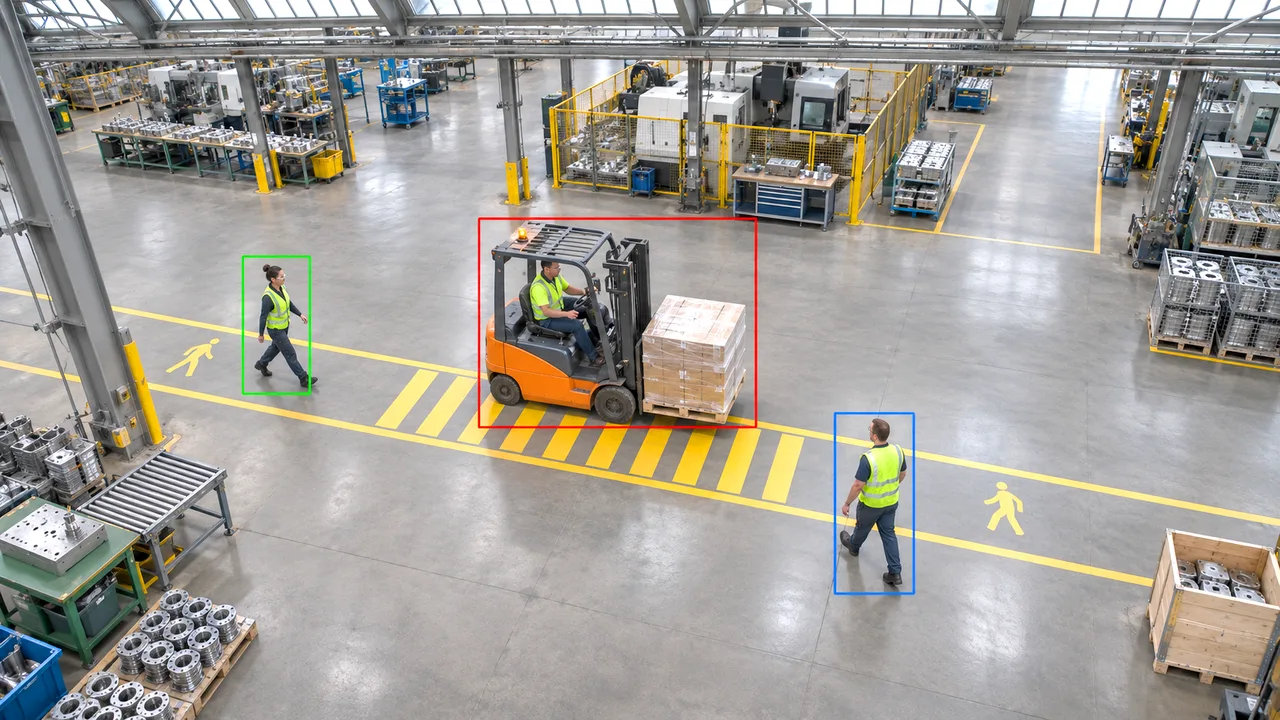
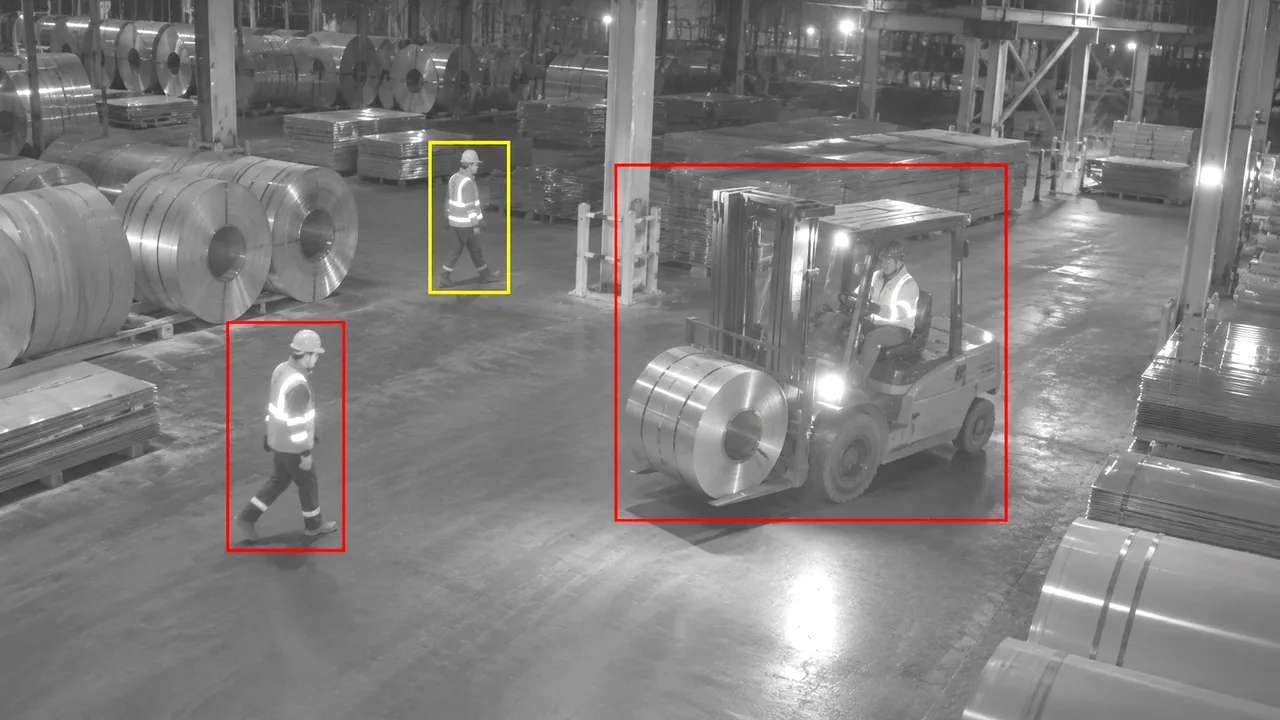
- Pedestrian and forklift proximity breaches
- Exclusion zone breaches
- Dynamic machine exclusion zones that change based on what the machine is doing
- People clear of loading and unloading exclusion zones
- Speed limits set per machine, per location
- PPE detection, including hi-vis safety vests
- Loading zone hazards
Each event is captured with video evidence and a timestamp, then made available to the safety team.
Your Footage Stays On Site
Camera footage is sensitive. Plant managers and IT teams ask about it first.
inviol processes video locally on your premises, so raw CCTV footage never needs to be streamed to the cloud. inviol describes its security program as SOC 2 Type II-led, ISO 27001-aligned and GDPR-ready, with privacy blurring to protect identities while keeping events usable for coaching.
From Near-Miss Video to Coaching
Detection is only half the job. The value shows up in how supervisors use it.
inviol turns real events into short, targeted coaching moments. A supervisor replays the clip with the operator or pedestrian involved. No “he said, she said.” No language barrier. Everyone sees the same ten seconds.
Over weeks, the events become trends: which zone, which shift, which behavior. That shifts the conversation from incident counts to exposure frequency, a leading indicator you can actually manage.
“People change behavior when they see themselves on video, not when they read a policy.”
Where CCTV Video Analytics for Workplace Safety Fits Best
CCTV video analytics for workplace safety works best where people and vehicles share space under fixed camera coverage. In most operations, a handful of high-risk areas carry most of the exposure.
Start with these:
- Loading docks and trailer staging
- Aisle ends and blind intersections
- Pedestrian walkways that cross forklift routes
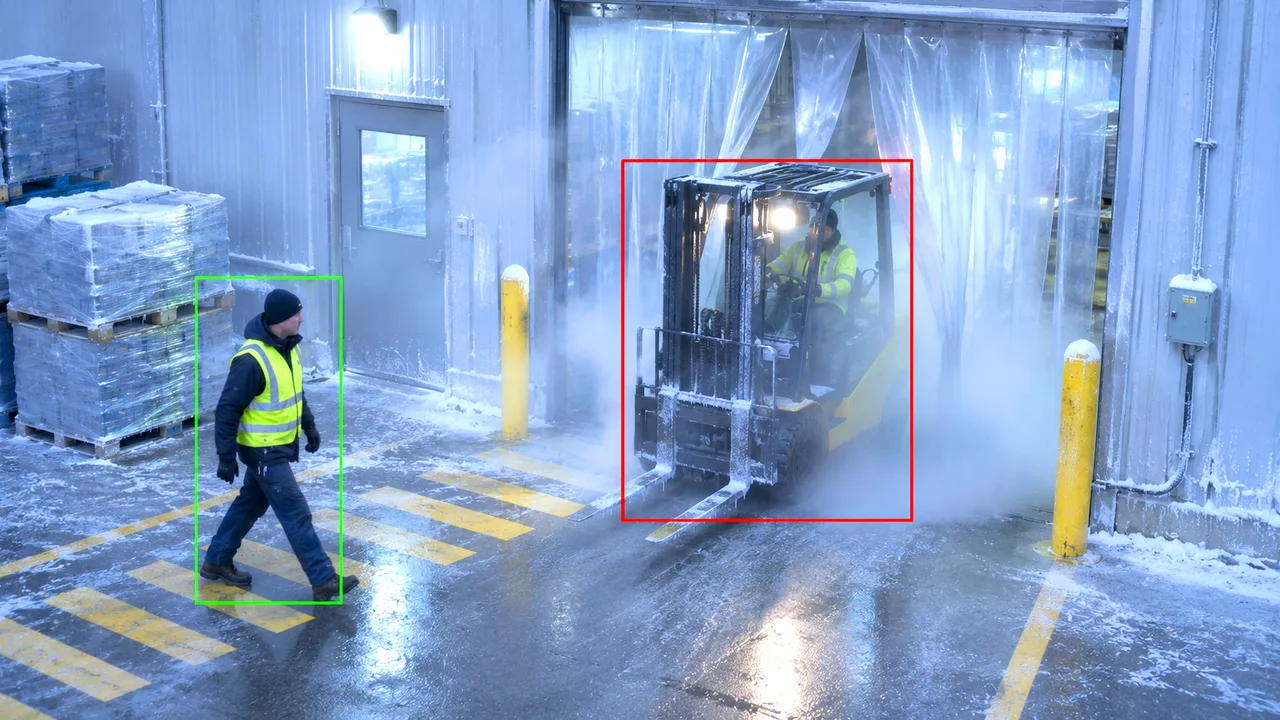
- Cold storage entries and exits
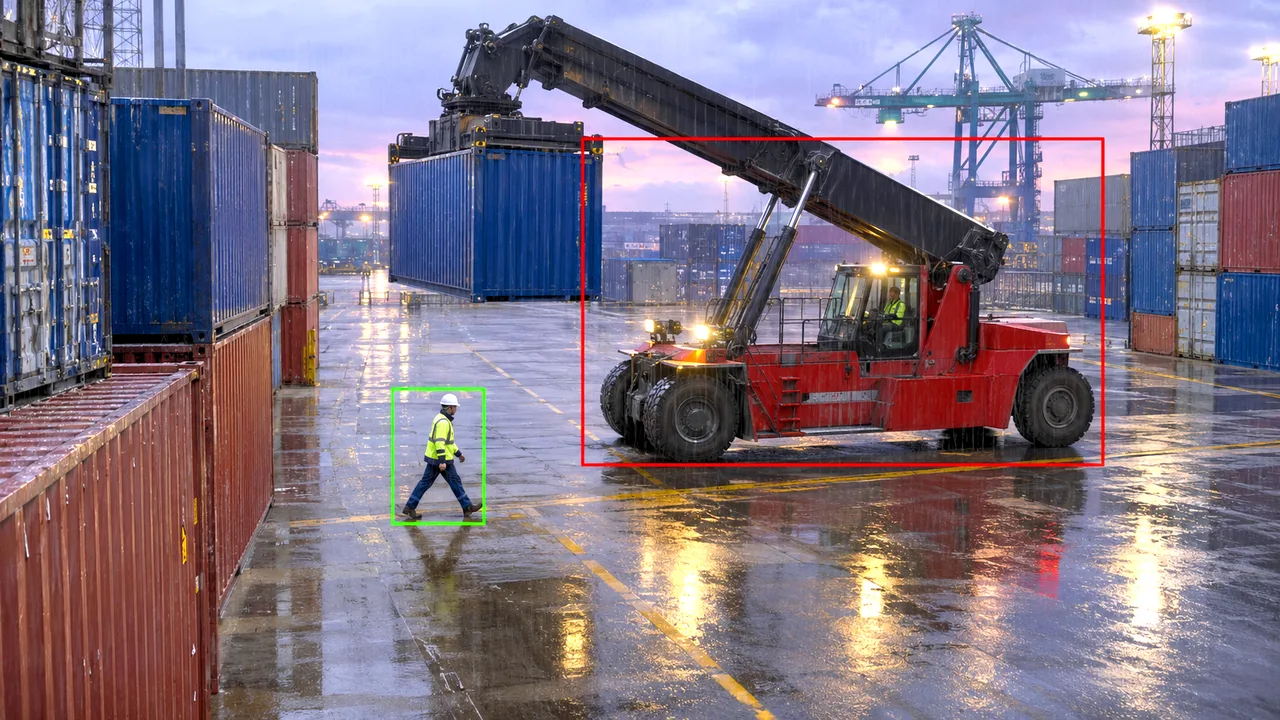
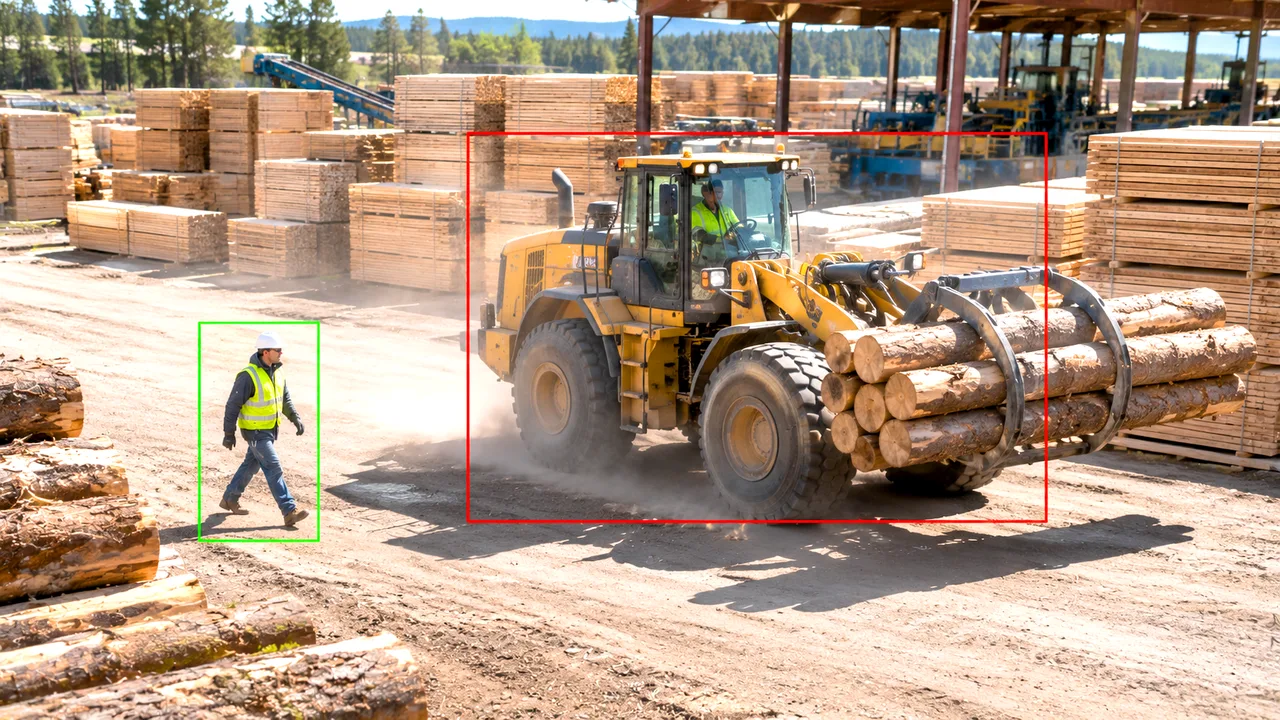
- Shared yards in steel, lumber and recycling operations
Pick the three or four cameras that cover those areas. That’s where the first month of data comes from.
Where CCTV AI Has Limits
Every safety technology has a boundary. Know it before you deploy.
- It only sees what the cameras see. Areas without coverage stay dark.
- Camera angle matters. A camera aimed at a door for security may not frame a forklift crossing well.
- It covers fixed areas. It watches zones of a site, not the space around a moving machine in the field.
- It informs the safety team. It supports alerts and coaching. It is not an in-cab warning for the operator.
None of these is a reason to wait. They shape where you point the system first.
Field Checklist Before a CCTV AI Pilot
- List your top five near-miss locations, from supervisors, not just reports.
- Confirm which cameras cover those areas and how they are aimed.
- Confirm your recorder or cameras provide RTSP feeds.
- Define the zones and rules that matter: walkways, speed limits, PPE, dock exclusion zones.
- Name who receives alerts and who runs coaching.
- Set a baseline week so you can measure change.
Fixed Cameras and Vehicle Cameras Work Together
inviol watches the facility. It sees patterns across zones, shifts and fleets.
The machine is a different problem. On a jobsite, in a quarry or in a lumber yard, the risk moves with the machine, and the operator needs the warning in the cab. That’s where RioV360 fits. It is a 360° AI pedestrian detection camera system mounted on the vehicle, with in-cab alerts and an external beacon.
Fixed cameras give you site-wide insight. RioV360 gives the operator a real-time warning on the machine. Two layers, two jobs.
The inviol 90-Day CCTV AI Safety Pilot
The fastest way to judge CCTV AI is on your own cameras. The 90-Day CCTV AI Safety Pilot runs inviol on your highest-risk areas under live conditions.
Ninety days gives you real numbers: event counts by zone, trends by shift, and coaching clips your supervisors have already used. Then you decide whether to scale across the site or across your other sites.
RioDatos is a U.S. representative for inviol. Contact us to set up a pilot at your facility.
“You can’t manage exposure you have never measured.”
From the Field
I’ve spent about thirty years around machine control, precision positioning and industrial safety. One thing never changes. The data that predicts the next incident usually already exists. It sits in a log, a sensor or a camera that nobody reviews.
CCTV is the clearest example. Most sites paid for the cameras years ago. Putting AI on them is the lowest-friction safety project I know of.
Frequently Asked Questions
What does CCTV video analytics for workplace safety detect?
With inviol, common detections include pedestrian and forklift proximity breaches, exclusion zone breaches, speeding by machine and location, loading zone hazards and PPE gaps such as missing hi-vis vests. Each event is logged with a timestamped video clip.
Do we need new cameras?
Usually not. inviol connects to existing cameras through standard RTSP feeds, and inviol says that in 99% of cases sites keep their existing CCTV.
Does our footage go to the cloud?
No. A small processing unit sits alongside your recorder and runs the AI on-site, so raw CCTV footage does not need to be streamed to the cloud.
Conclusion
Your cameras already see the near misses. The question is whether anyone acts on them before the incident. inviol makes that footage useful every day, without replacing your cameras, and the 90-day pilot proves it on your site first.
“Safety improves when you see the risk early, not when you count the injuries later.”
About RioDatos
RioDatos is an Arizona-based industrial safety technology company specializing in AI pedestrian detection for forklifts and heavy equipment. Since 2019, we have helped safety teams stop struck-by incidents before they happen.
Our flagship, RioV360, is a 360° AI pedestrian detection camera system. It recognizes people around the machine and alerts the operator in the cab. No tags. No vests. RioV360 works on forklifts, heavy-duty forklifts, telehandlers, wheel loaders, excavators, skid steers, dump trucks, and scrapers.
What we deliver:
- RioV360 AI pedestrian detection with 360° vision
- Forklift and heavy equipment safety cameras
- Proximity warning systems
- CCTV safety analytics for site-wide visibility
Industries we protect:
- Construction
- Mining and quarries
- Manufacturing
- Ports and industrial yards
- Lumber, steel, and recycling
Every system is sold, configured, and supported directly from Arizona, with domestic inventory, direct pricing, fast U.S. shipping, and support by phone, email or Teams call.
Start with one RioV360 pilot unit on one machine. Prove it under live conditions. Then scale across your fleet.
Request an inviol Pilot
See inviol running on your own cameras. Tell us a little about your site and we will reply within one business day to set up a pilot.
No new cameras, no sensors on your forklifts and no long contract to start.
More Articles
November 11, 2026
Near Miss Reporting With CCTV AI: Leading Indicators
Near miss reporting with CCTV AI turns unreported close calls into leading indicators. How to measure, review and act on near misses from...
Read more →
November 11, 2026
How to Choose a CCTV AI Safety Platform: 12 Questions
How to choose a CCTV AI safety platform: 12 questions on cameras, on-site processing, privacy, detections, coaching, reporting and pilots...
Read more →November 11, 2026
Building the Business Case for CCTV AI Safety
How to build the business case for CCTV AI safety: the costs it targets, what to measure in a pilot, and how to present results to...
Read more →