
RioDatos Blog
Excavator Proximity Warning System for Utility Trench Crews
November 18, 2026 • John Buttery, CEO of RioDatos
A trench crew works inside the swing radius all day. Here is what changes when the machine can see them, warn them and record the shift.
An excavator proximity warning system for utility trench crews should watch all four sides of the machine, recognize people rather than motion, and record what happened. RioV360 does this with four 1080p AI cameras, alerts from 0 to 5 m in under 400 ms, a 120 dB external beacon, and about 30 hours of onboard video.
Utility work puts people exactly where the machine is busiest. Pipe layers. Grade checkers. A laborer with a tape. The competent person checking the box.
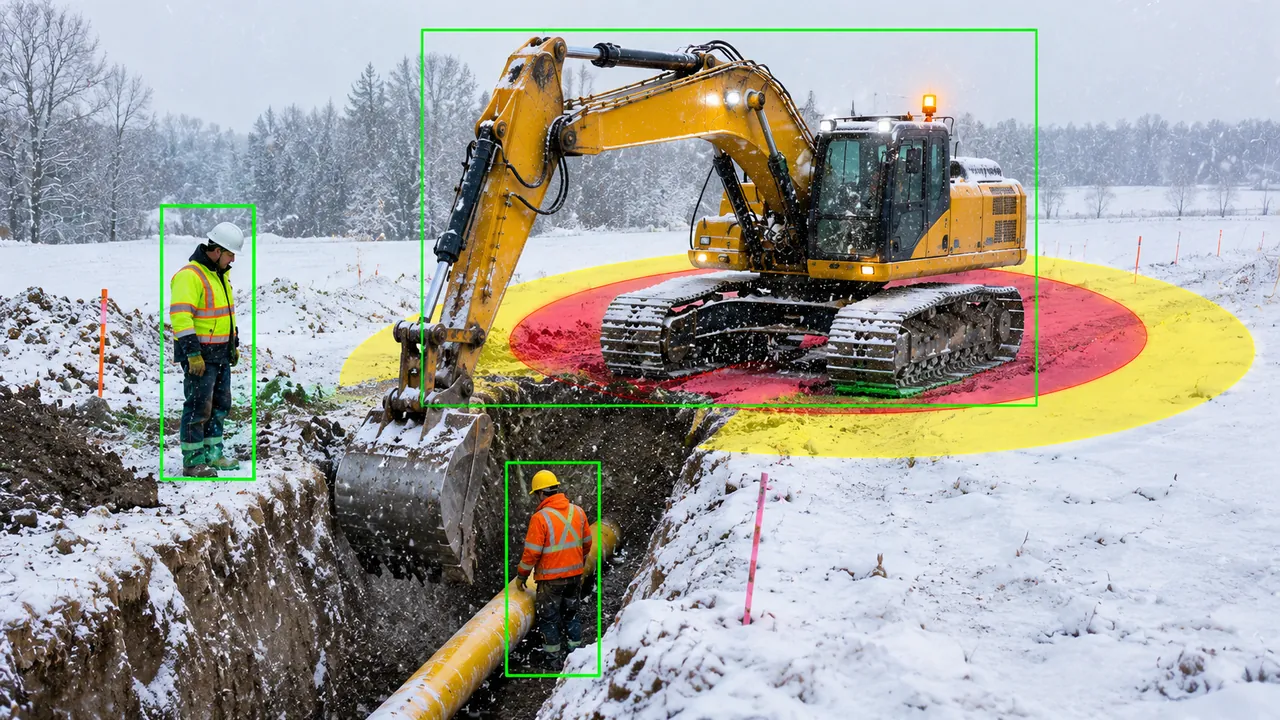
On a trench job the hazard usually isn’t the machine driving into someone. It’s the house swinging, the bucket moving, or the tracks walking while a person stands in the one spot the operator can’t see. A warning system has to cover that whole envelope, and it has to leave a record.
Why Trench Crews Need an Excavator Proximity Warning System
The data has pointed here for years. NIOSH reports that struck-by injuries are the leading cause of nonfatal injuries and the second most common cause of death among construction workers. A Washington State FACE review of construction machinery deaths from 1998 to 2008 found that earth moving, scraping and other excavating machines were involved in 18 of the 33 deaths (Washington State FACE Program, Report 47-17-2009).
OSHA has addressed the swing radius directly. In a January 16, 2003 interpretation letter, the agency said employers must take the necessary precautions to keep workers out of an excavator’s swinging superstructure radius. A barricade is one way to do that, not the only one. NIOSH’s 2022 guidance on excavator struck-by deaths says the same thing in plain terms: keep workers out of the swing radius of both the dipper arm and the superstructure.
An excavator proximity warning system is one practical layer of that protection. It works alongside the barricade, the spotter and the pre-task briefing, not instead of them.
“The person in the trench never sees the counterweight coming. The operator never sees the person.”
Where the exposure lives on a utility job
- The rear counterweight arc, especially when spoil is cast behind the machine
- The bucket and stick while pipe is set or a trench box is moved
- The off side of the cab, where a laborer climbs out of the cut
- The tracks, during the walk to the next joint
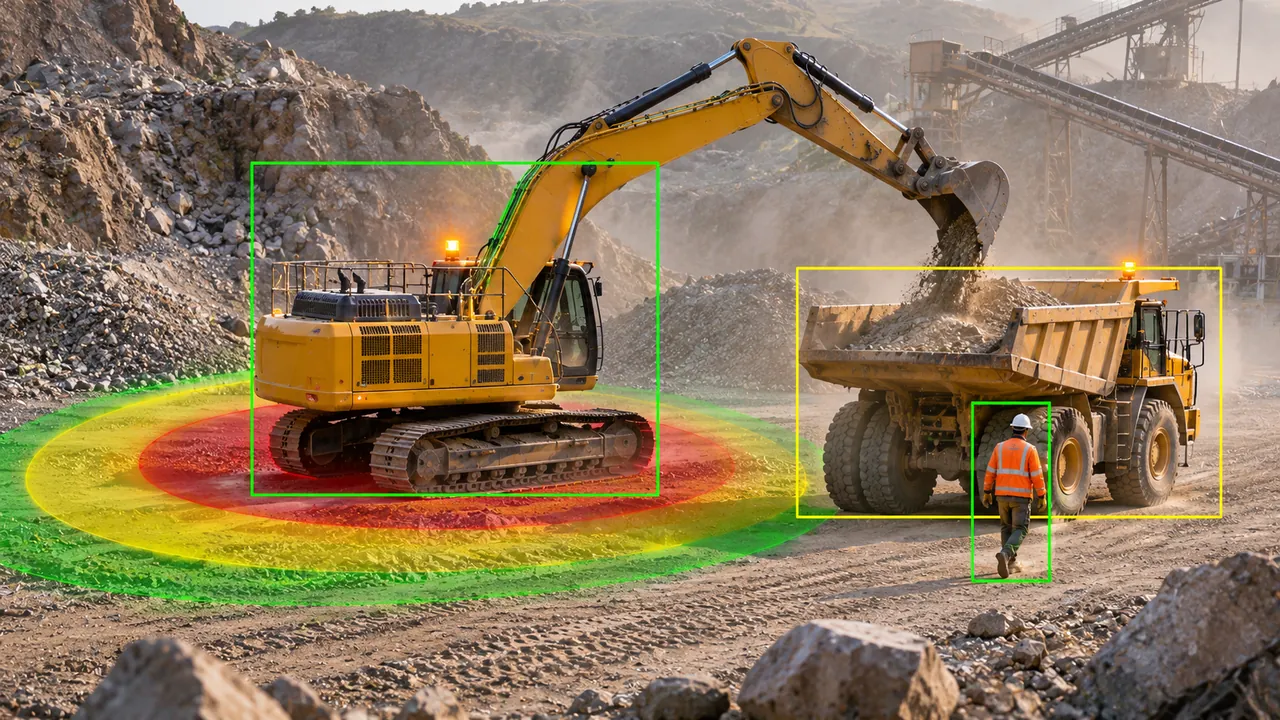
- Truck drivers who step out of the cab to check a load
What we’re seeing across construction fleets is that close calls cluster around transitions: a new pipe joint, a box move, a truck swap. Those moments rarely make it into a near-miss report. They’re leading indicators nobody is counting.
How RioV360 Works on an Excavator
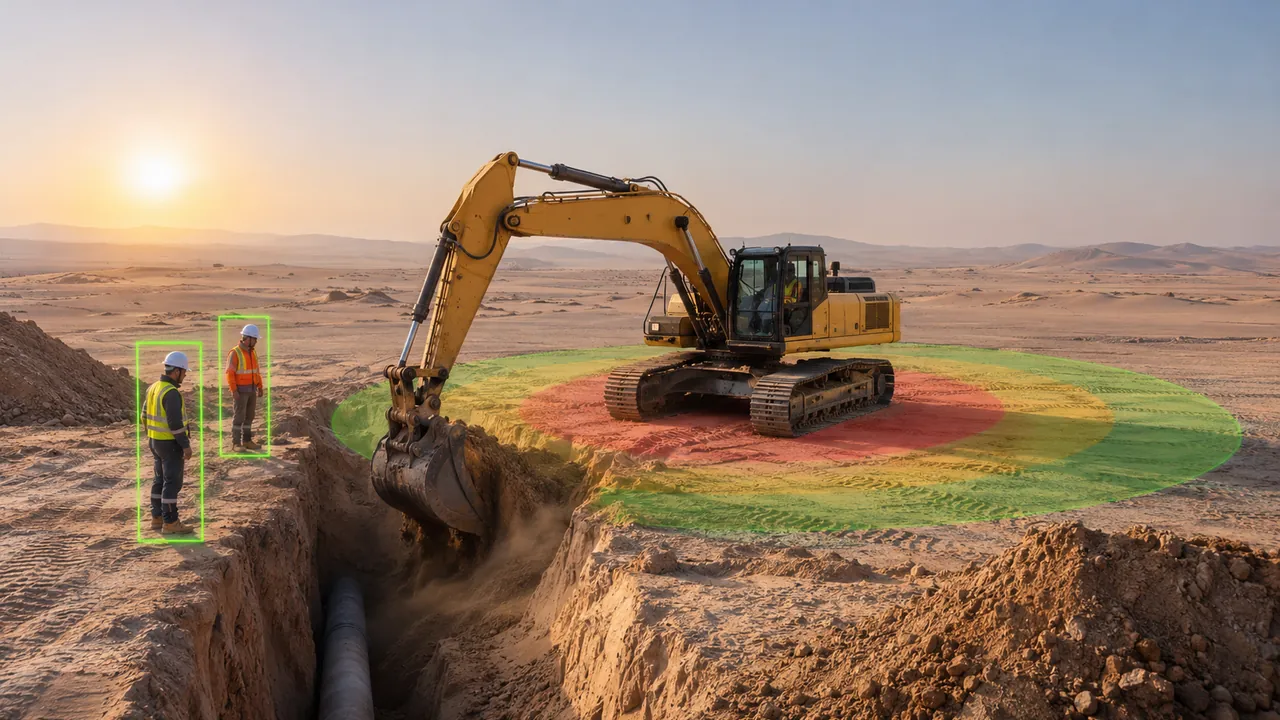
RioV360 is a RioDatos-owned, machine-mounted system. Four AI cameras mount on the four sides of the upper structure, so coverage turns with the house. That matters on an excavator. A fixed zone painted on the ground stops meaning anything the moment the machine swings.
- 4 AI cameras, 1080p, 130° field of view each, full 360° perimeter
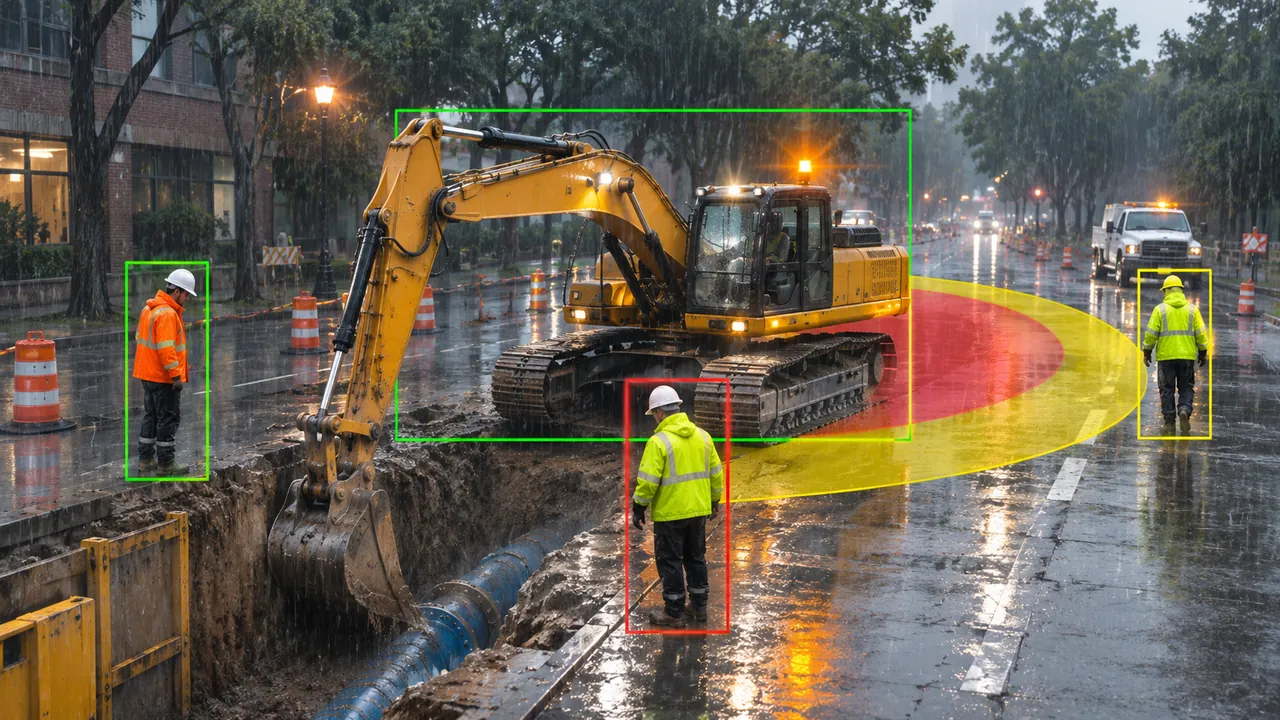
- Detects people and vehicles from 0 to 5 m, configurable per camera and per zone
- Detection latency under 400 milliseconds
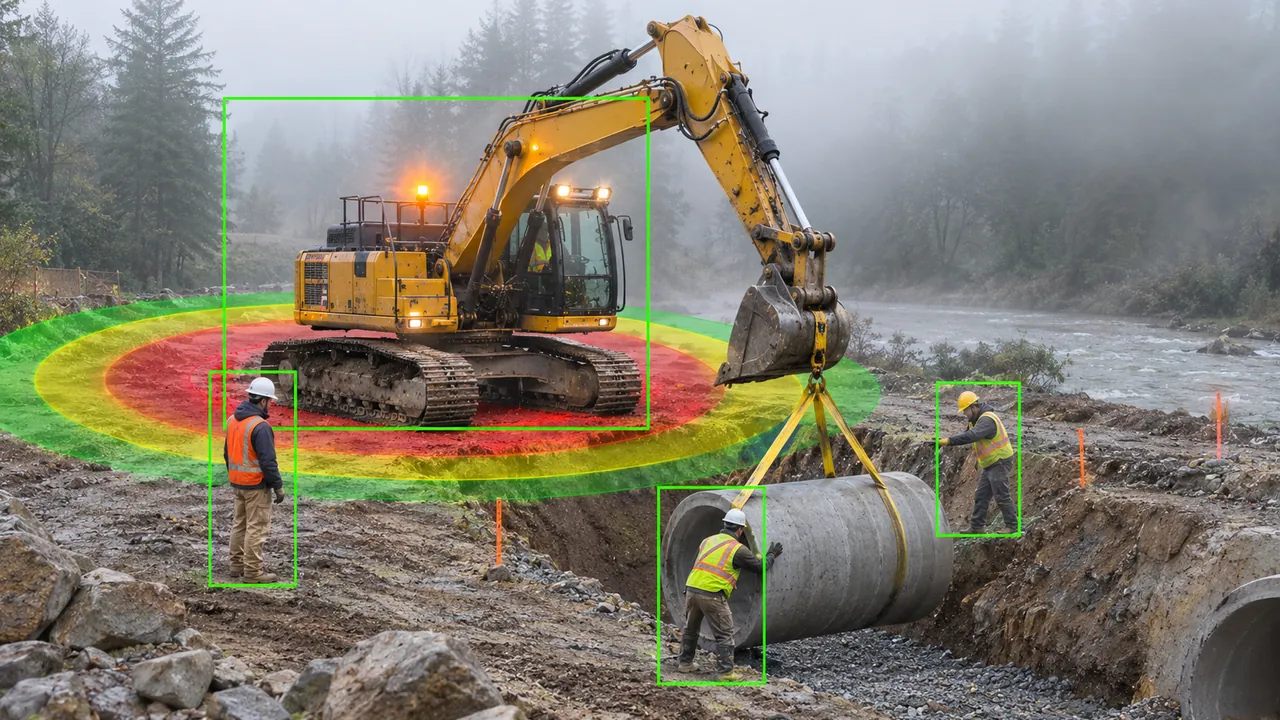
- Single red, red and yellow, or graduated green, yellow and red zones on each camera
- 7-inch in-cab monitor with visual and audible alert
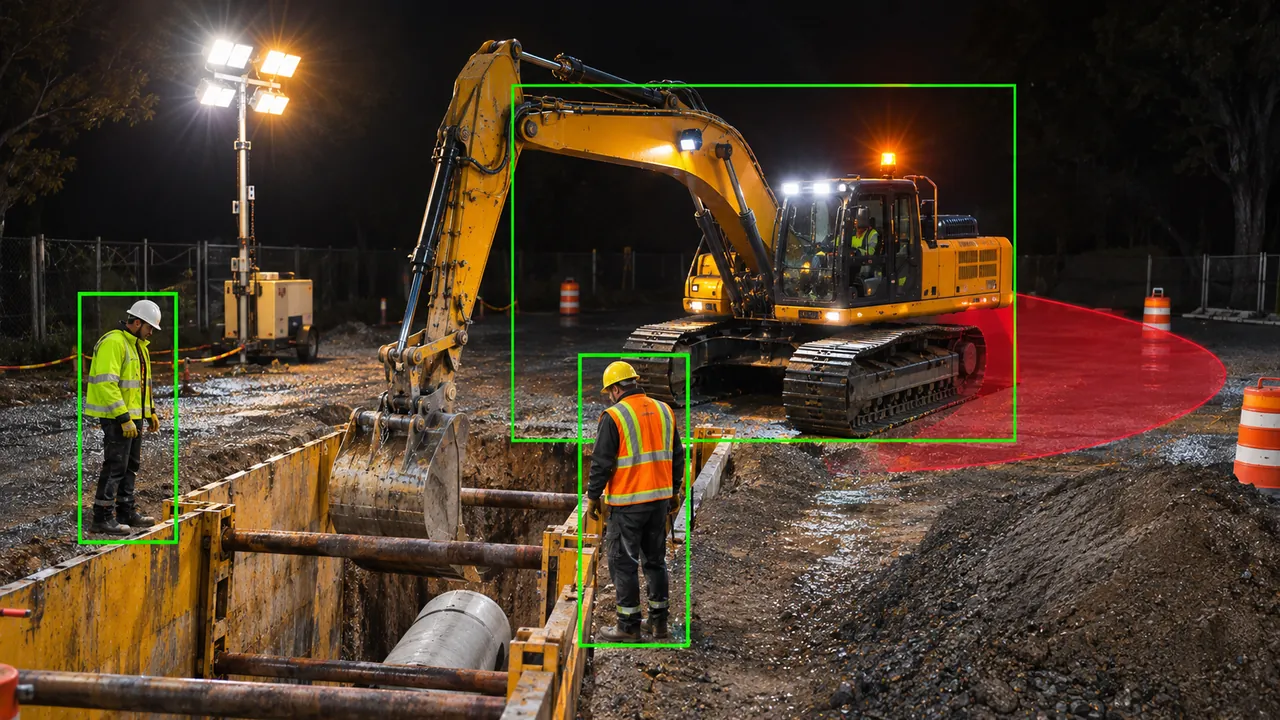
- External beacon: 120 dB voice alert, alarm and flashing red light
- 0 lux night vision with built-in infrared
- IP69K waterproof and IK06 impact rated cameras
- Runs on 8 to 32 V DC, so it fits 12 V and 24 V machines
- Continuous 1080p recording, about 30 hours on the included 256GB card (about 60 hours with the optional 512GB upgrade)
- No tags, no Wi-Fi, no cloud, no subscription
Want the full spec set for your machine model? The complete RioV360 guide lists every number, the excavator fitment guide shows camera positions by machine, or you can request a quote and get pricing by email.
Recorded video comes first
On a trench job, the recording may be the most valuable part. All four cameras record continuously, date and time stamped. When something goes wrong, or almost goes wrong, the superintendent pulls the card and watches four synchronized angles on any laptop. No login. No upload.
A long press on the monitor locks a clip so it survives the loop. That footage settles what happened in an investigation. It also becomes toolbox talk material from your own crew, on your own job.
Alerts for the operator and the crew
The operator gets the alarm on the monitor, with the camera that saw the person highlighted. At the same moment, the external beacon warns the person on foot. A pipe layer bent over a joint can’t watch the counterweight. He can hear 120 dB.
Setting Zones for Trench Work
Zone setup is where most of the value is won or lost. In most operations, the mistake is drawing zones before the cameras are locked in. Use this field checklist:
- Aim and tighten every camera first, then draw the zones.
- Point the rear camera at the full counterweight arc, not the sky.
- Size the rear red zone to cover the tail swing with margin.
- Use medium or low sensitivity outdoors, where spoil and vegetation move.
- Walk-test every side with a person standing, kneeling and partly hidden at the trench edge.
- Confirm the beacon is audible outside the cab over engine noise.
- Brief the crew on what yellow and red mean.
- Pull a sample clip on a laptop before the machine goes back to work.
Limits to Plan Around
RioV360 is a warning system. It doesn’t stop the machine or lock out the hydraulics. In ISO 21815 terms, it warns; it doesn’t avoid.
- Detection reaches 5 m. A long stick at full reach can put the bucket beyond that, so the bucket at reach stays the spotter’s job.
- A worker deep below grade may be out of a camera’s line of sight. Walk-test with someone in the cut.
- Lenses need to be clear. Mud and spoil splash call for a wipe at the start of each shift.
- Any AI system can produce a false alert or miss a detection. The operator and employer stay in charge of the machine.
“A system that tells you its limits is one you can build a procedure around.”
Start With One Pilot Unit
Most contractors don’t need a fleet decision on day one. They need proof on one machine. The RioV360 pilot program puts one pilot unit on your highest-risk excavator, usually the one on the deepest or busiest utility job, with $500 off that system.
Run it through live shifts. Count the alerts. Pull the clips. Then decide. Most crews install it in under 2 hours with the included kit. Request a pilot unit here.
From the Field
After about thirty years in machine control, precision positioning and industrial safety, including precision machine control on excavators for a large earthmoving contractor in the western US and Canada, one lesson stuck. Operators trust what they see on the monitor and what they hear in the cab. Everything else gets tuned out by lunch.
Machine control work put me in excavator cabs and beside trenches more mornings than I can count. The same patterns showed up on almost every job. The grade checker watches the stake, not the counterweight. The laborer climbing out of the cut comes up on the operator’s blind side. Mirrors get set once and then nobody touches them. And the radio carries grade, pipe and trucks, but almost never where people are standing. None of that is carelessness. It’s what happens when everyone is focused on the work in front of them.
That’s why I push for the pilot. A week of footage from your own trench tells your superintendent more than any spec sheet. Send me your machine model through the quote form and I’ll come back with pricing and fit notes.
Frequently Asked Questions
Does an excavator proximity warning system replace a spotter?
No. OSHA 29 CFR 1926.602(a)(9)(ii) still calls for a reverse alarm or a signal person on earthmoving equipment with an obstructed rear view. RioV360 adds 360° detection and recorded video on top of that.
Do workers need to wear tags?
No. The AI recognizes people by shape, so visitors, truck drivers and subcontractors are detected without badges or vests.
Does it work at night and in rain?
Yes. The cameras see at 0 lux with built-in infrared and carry IP69K and IK06 ratings.
Conclusion
On a utility job, the crew can’t watch the machine and do their work at the same time. An excavator proximity warning system that turns with the house, warns both sides of the glass and records every shift closes that gap and turns close calls into data you can act on. Ask for a quote or start with one pilot unit, and see more field articles on the RioDatos blog.
“The trench gets the attention. The swing radius gets the people.”
About RioDatos
RioDatos is an Arizona-based industrial safety technology company specializing in AI pedestrian detection for forklifts and heavy equipment. Since 2019, we have helped safety teams stop struck-by incidents before they happen.
Our flagship, RioV360, is a 360° AI pedestrian detection camera system. It recognizes people around the machine and alerts the operator in the cab. No tags. No vests. RioV360 works on forklifts, heavy-duty forklifts, telehandlers, wheel loaders, excavators, skid steers, dump trucks, and scrapers.
What we deliver:
- RioV360 AI pedestrian detection with 360° vision
- Forklift and heavy equipment safety cameras
- Proximity warning systems
- CCTV safety analytics for site-wide visibility
Industries we protect:
- Construction
- Mining and quarries
- Manufacturing
- Ports and industrial yards
- Lumber, steel, and recycling
Every system is sold, configured, and supported directly from Arizona, with domestic inventory, direct pricing, fast U.S. shipping, and support by phone, email or Teams call.
Start with one RioV360 pilot unit on one machine. Prove it under live conditions. Then scale across your fleet.
Statistics sources: NIOSH Science Blog, struck-by injuries; NIOSH Science Blog, “Preventing Struck-by Fatalities Related to Excavator Quick Couplers, Buckets, and Attachments” (March 10, 2022); Washington State FACE Program, Construction Machinery Fatalities, WA State, 1998 to 2008 (Report 47-17-2009); OSHA Standard Interpretation, January 16, 2003.
Pilot One Unit: $500 Off
Test RioV360 AI pedestrian detection on your highest-risk machine before a fleet rollout. In-stock units ship from Arizona in 2 business days.
More Articles
April 28, 2026
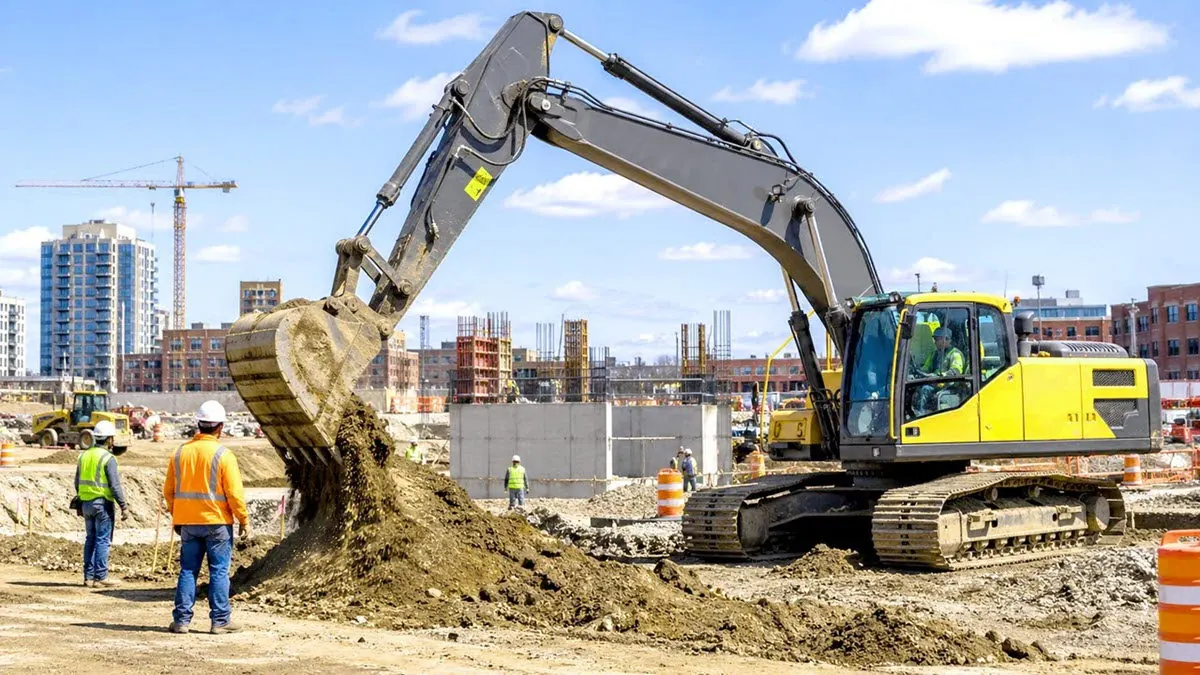
AI Pedestrian Detection for Excavators
360° AI pedestrian detection for excavators reduces blind-spot exposure and provides operators with real-time visibility across all detection zones...
Read more →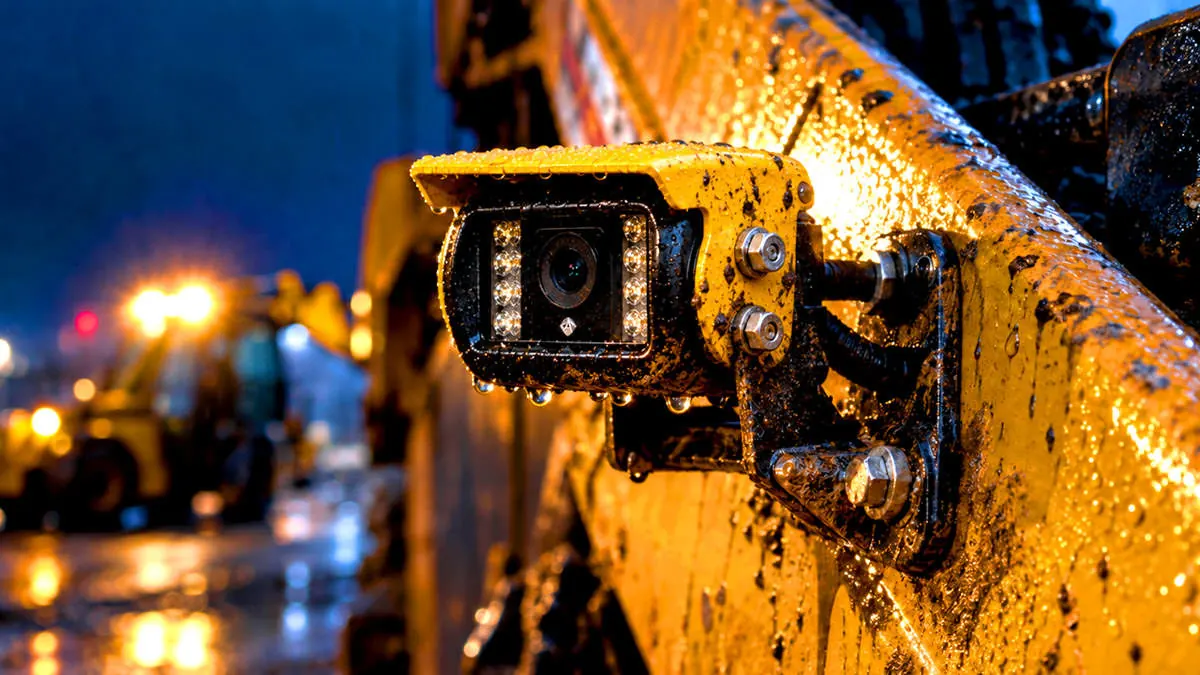
September 18, 2026
AI Pedestrian Detection for Construction Equipment Guide
A field buyer's AI pedestrian detection for construction equipment guide. Judge coverage, alerts, recording, and cost, then pilot one machine before...
Read more →
November 6, 2026
Wheel Loader Pedestrian Detection for Waste Transfer Stations
Wheel loader pedestrian detection for waste transfer stations: 360° recorded video, AI alerts from 0 to 5 m, and a one-machine pilot for your tip...
Read more →