
RioDatos Blog
Heavy Equipment Blind Spot Detection: Match It to the Machine
November 19, 2026 • John Buttery, CEO of RioDatos
Every machine hides people in a different place. Here is how to set up AI detection for loaders, excavators, skid steers, telehandlers and haulers.
Heavy equipment blind spot detection works best when the camera layout and alert zones match how each machine actually moves. A wheel loader needs rear coverage, an excavator needs its swing radius covered, and a skid steer needs the lift-arm sides covered. RioV360 covers all four sides with AI cameras that detect people from 0 to 5 m and alert in under 400 ms.
Most buyers start with the wrong question. They ask which system is best. The better question is where people get hurt around this machine.
“A blind spot is not a feature of the machine. It is a feature of the job.”
Why Heavy Equipment Blind Spot Detection Is Machine-Specific
A forklift and an excavator share almost nothing except a seat and a horn. Their blind zones sit in different places, they move differently, and the people around them behave differently.
That changes three settings on every install:
- Camera placement: which sides get priority, and at what height.
- Zone shape: red only, red plus yellow, or graduated red, yellow and green, set per camera.
- Detection mode: pedestrians only, pedestrians plus objects, or pedestrians, objects and vehicles.
Get those three right and the operator trusts the alerts. Get them wrong and the alarm becomes background noise in a week.
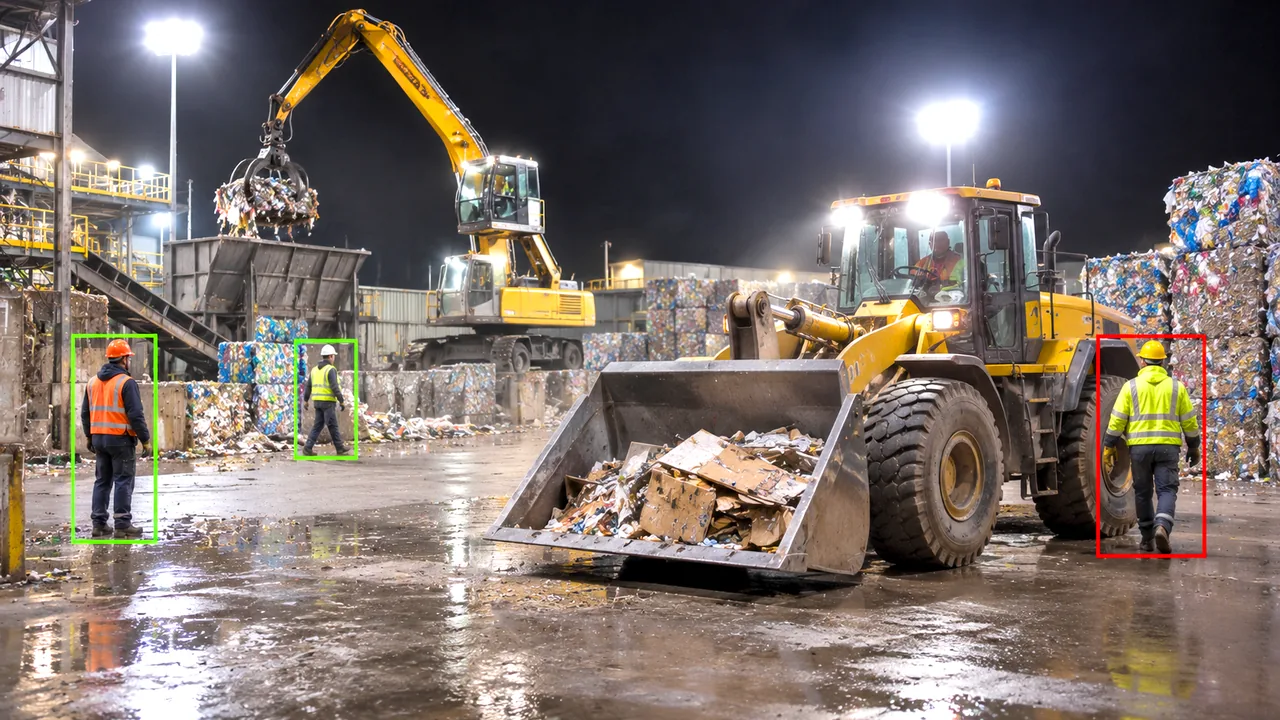
Wheel Loaders: Reversing Is the Exposure
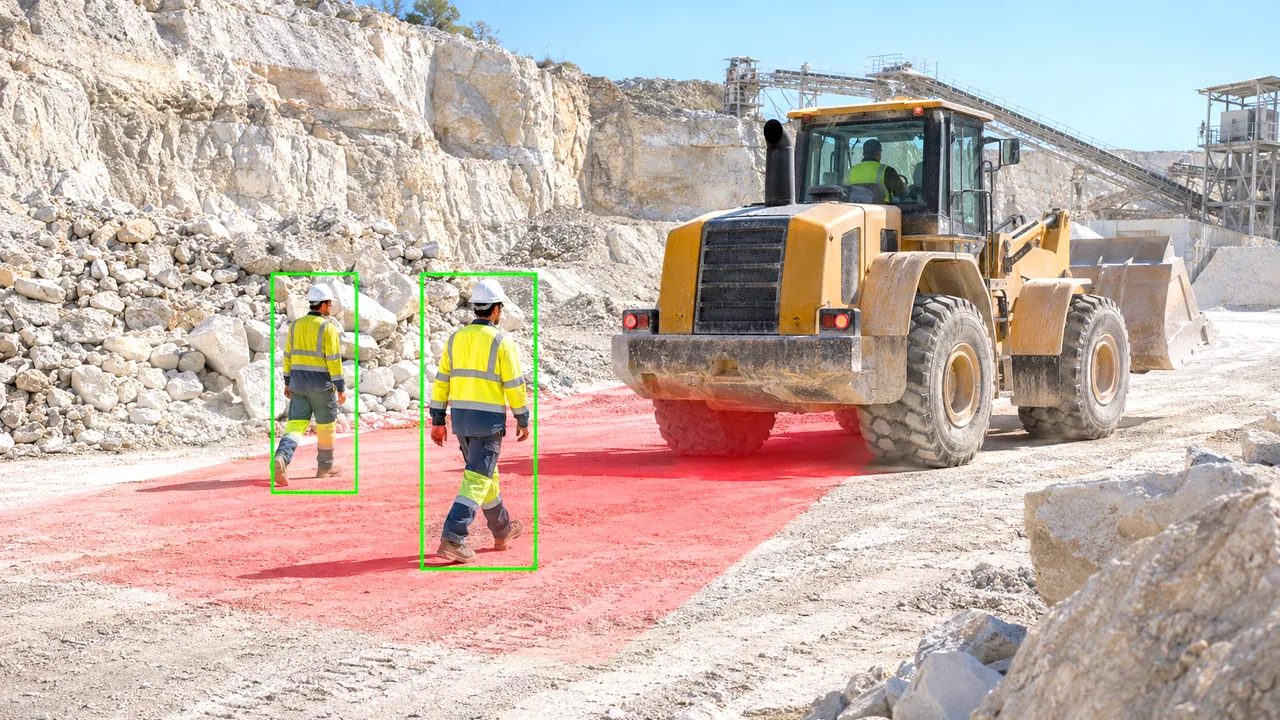
Loaders spend half their shift in reverse. Load, back out, turn, dump, repeat. The rear and rear corners are where the struck-by exposure lives, especially around stockpiles and truck lanes.
Set the rear camera with a deep red zone and a yellow warning band beyond it. Side cameras catch people stepping in during the turn.
Verify on site: walk a person behind the machine at a crouch, not just standing. RioV360 detects people standing, crouching, kneeling or partly obscured, and that is the test that matters.
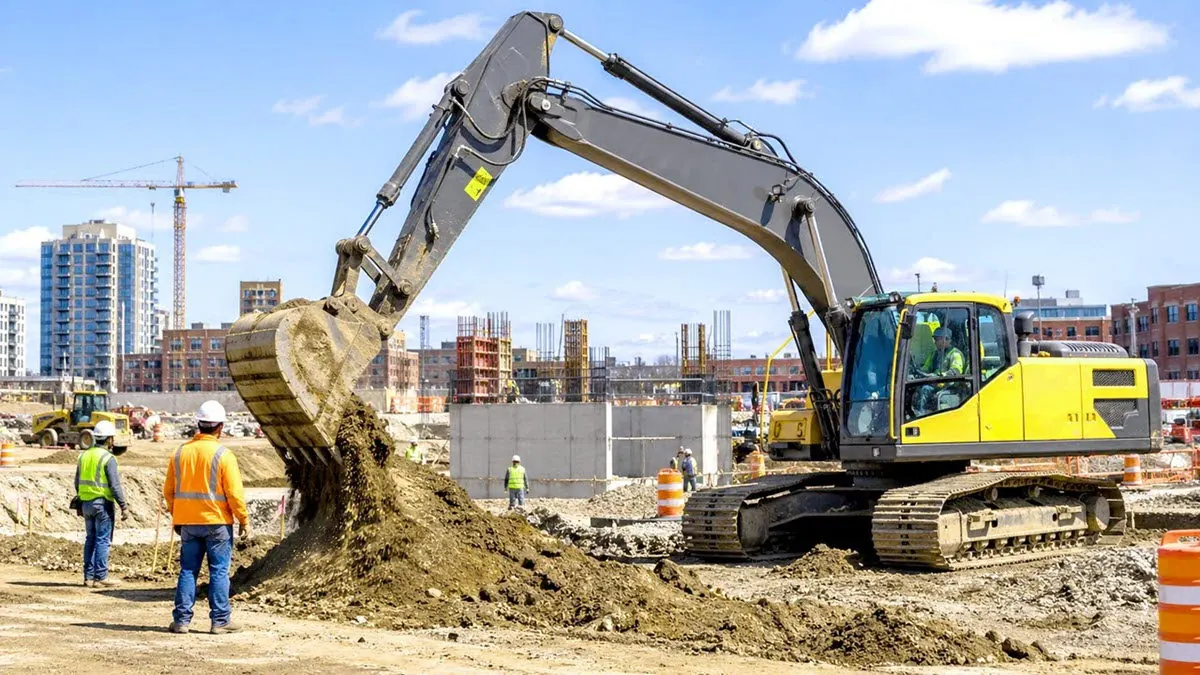
Excavators: The Swing Radius Problem
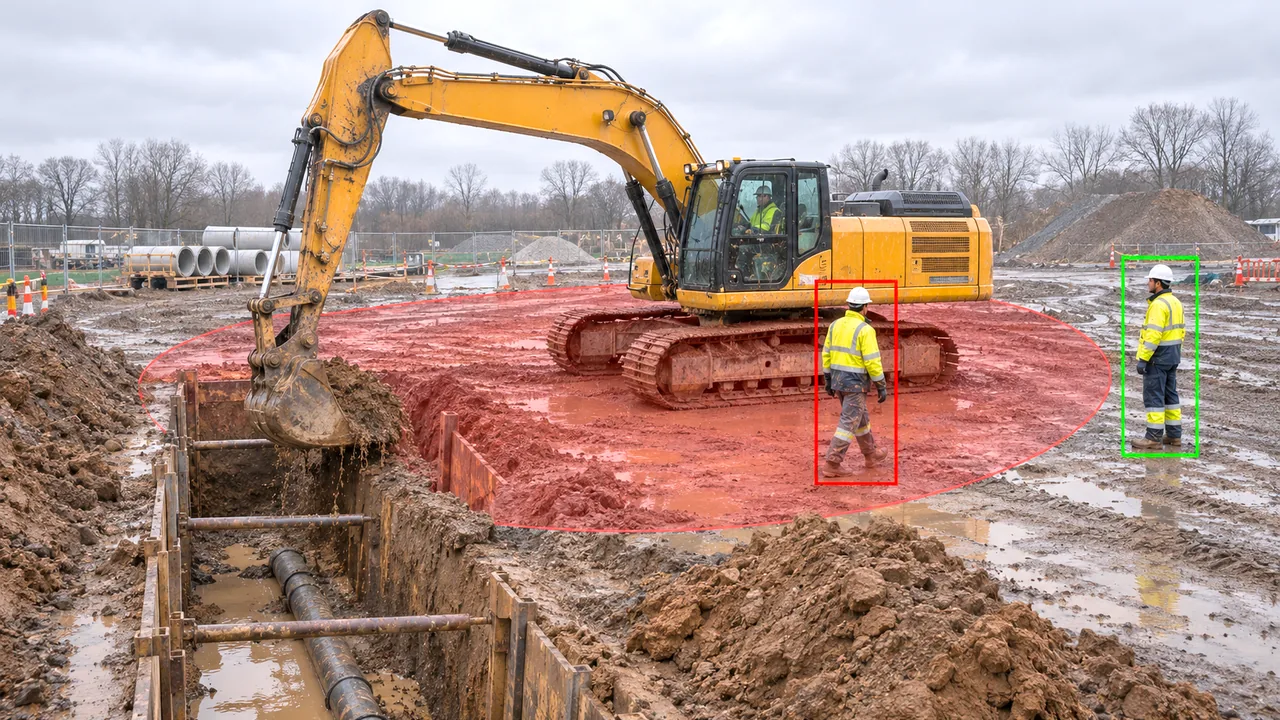
Excavator risk is rotational. The counterweight swings through space the operator stopped watching seconds ago. Ground crews in trenches and on tie-ins step into that arc all day.
Prioritize the rear and the counterweight-side camera. Keep zones tight enough that a laborer working the bucket side does not trigger constant alerts.
Verify on site: run the full swing with a person standing at the edge of the radius. Then adjust zone size and sensitivity until the alert lands before the counterweight does.
Skid Steers and Track Loaders: Lift Arms Block the Sides
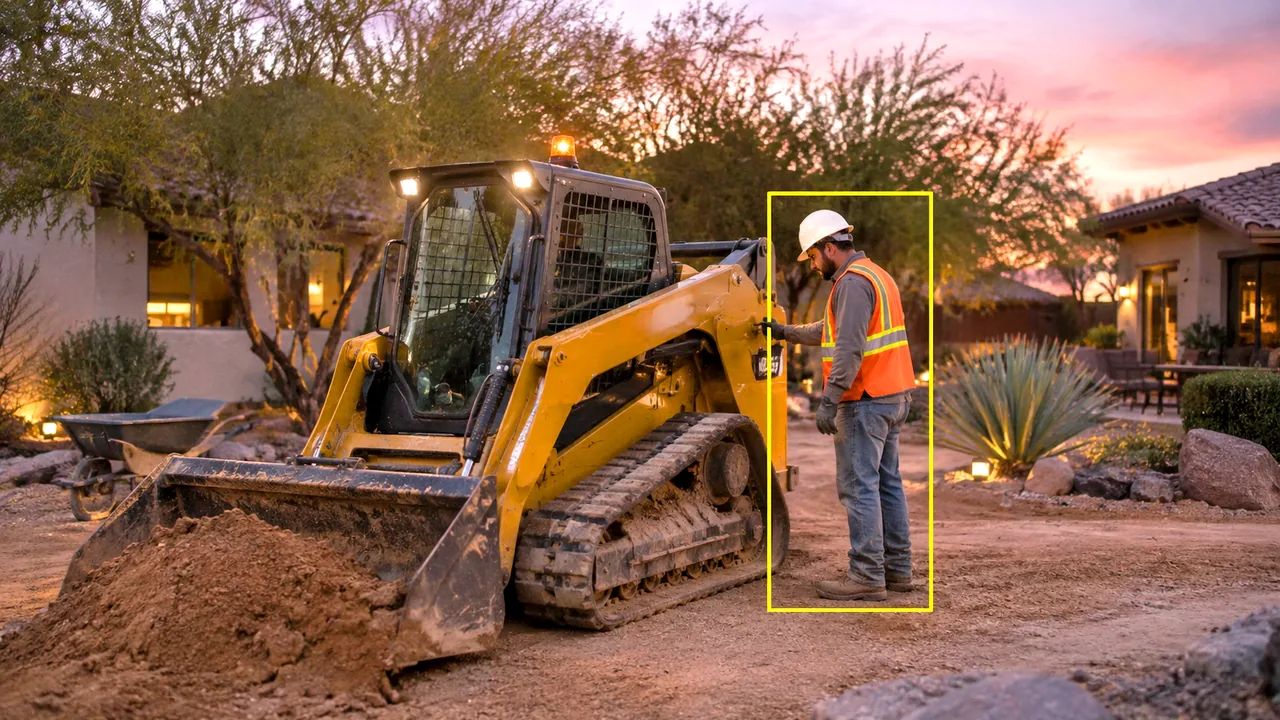
On a skid steer, the lift arms and cab frame block the operator’s side view. The rear view is not much better. Add a busy landscaping or demolition site, and people end up close to the machine constantly.
Cover the sides and rear. The rear view is often the hardest to fit, so plan the mount before install day. Our fitment guides show the layout by machine type.
Verify on site: test with the arms raised and lowered. The view changes, and the zones need to hold up in both positions.
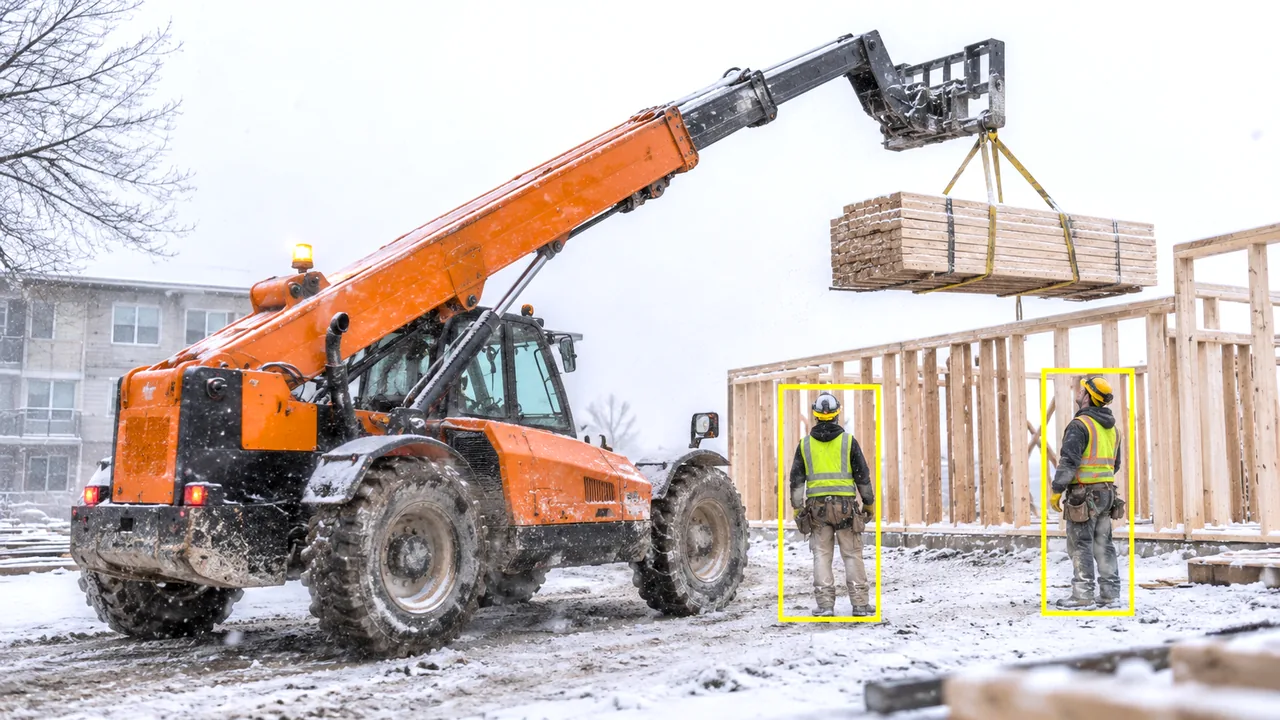
Telehandlers: The Load Hides the Front
Telehandlers carry the hazard out in front. A raised load or extended boom blocks the forward view, and the boom side creates a long blind corridor. Crews on framing and steel jobs walk under and around that boom all day.
This is one machine where the front camera earns its place. Pair it with the boom-side camera and a moderate yellow band.
Verify on site: test with a load on the forks at working height, not an empty carriage in the yard.
Dump Trucks and Articulated Haulers: Long Bodies, Long Backs
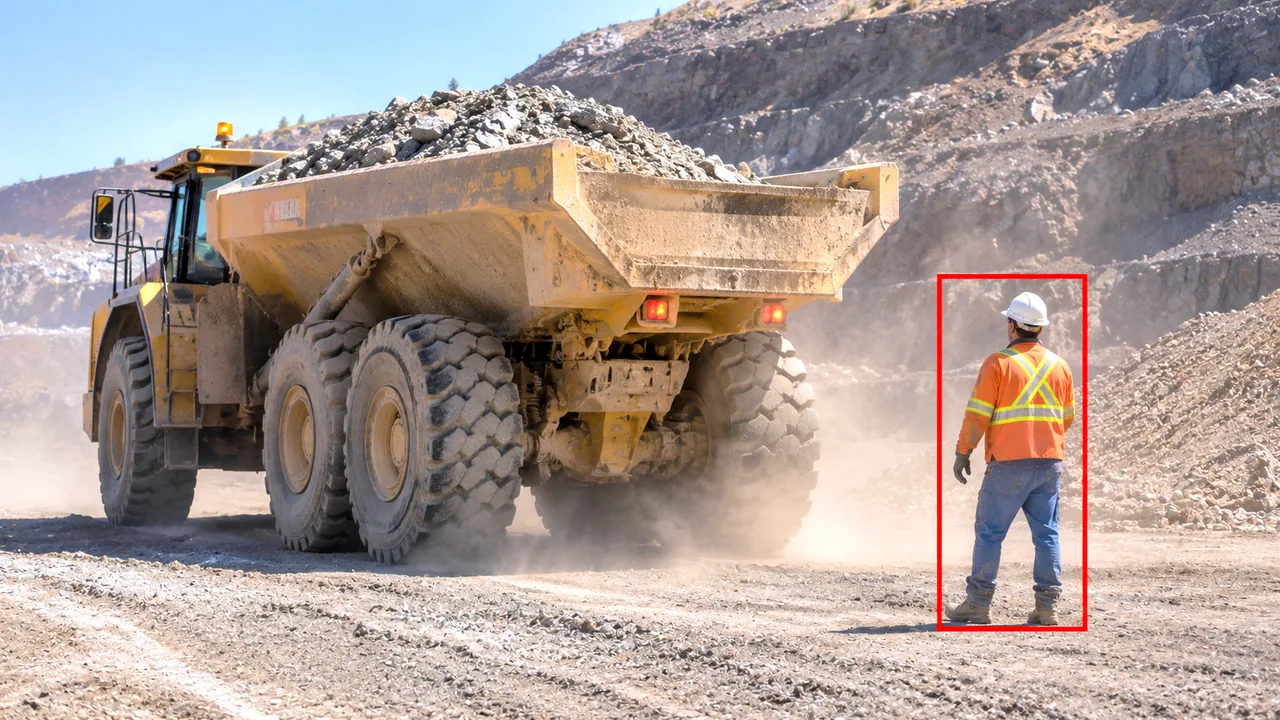
Haulers are long, tall and usually reversing toward a spotter, a dump point or a paver. The rear blind zone is large, and the cab sits far from it.
Extension cables let the rear camera sit at the back of the body, where it belongs. Set a deep rear zone. Spotters need to be detected, not ignored.
Mixed Fleets: One System, Different Settings
What we’re seeing across construction and quarry fleets is that machine types change faster than safety budgets do. A contractor might run loaders, excavators and a telehandler on the same job.
RioV360 is one part number that installs on any machine, any make or model. Each install then gets its own zones and modes. That means one spare kit on the shelf can go on whichever machine comes in for service next.
Organizations typically discover that the setup work is in the zones, not the hardware. Most teams install in under 2 hours. Allow 2 to 4 hours for your first one.
“Same cameras, different machine, different zones. That is the whole trick.”
What Heavy Equipment Blind Spot Detection Does Not Do
Know the limits before you buy:
- Range: detection is 0 to 5 m, configurable by camera and zone. It is a close-quarters system, not a long-range radar.
- No stitched overhead view: the monitor shows the camera views and detection zones, not a bird’s-eye composite.
- It alerts and records: it does not steer or brake the machine. The operator responds to the in-cab alert and the 120 dB external voice alert.
- Recording stays on the machine: a 256GB card holds about 30 hours of four-camera video, upgradable to 512 GB. Pull the card when you need the footage.
A Field Checklist Before You Scale
- Pick the machine with the highest pedestrian traffic, not the newest one.
- Map where the ground crew actually works for one full shift.
- Set zones to match that map, then test standing, crouching and partly hidden.
- Review alert frequency after one week. Too many alerts means the zones are too wide.
- Pull the card and check the footage quality for your conditions: dust, night or rain.
This is exactly why the RioV360 pilot program exists. Put one pilot unit on your highest-risk machine, run it under live conditions, review real alert data, and then decide whether to scale. The pilot unit is $500 off the $1,795 system price.
From the Field
I’ve spent about thirty years around machine control, precision positioning and industrial safety. One lesson keeps repeating. The machine that worries the superintendent is rarely the one with the worst exposure. It’s usually the loader feeding the plant all shift, or the skid steer doing cleanup a few feet from the crew. Those machines run constantly around people, and nobody thinks of them as the risky ones.
That’s why I push every customer to map the ground crew first and buy second. More on my background at johnbuttery.com.
Conclusion
Detection doesn’t fail because of the camera. It fails when the setup ignores how the machine moves. Match the zones to the machine, test them with a person in the real blind spot, and the alerts become something operators trust. Start with one machine. Contact us with your fleet list, and we’ll recommend the layout for each type.
“Map the crew first. Then place the cameras.”
About RioDatos
RioDatos is an Arizona-based industrial safety technology company specializing in AI pedestrian detection for forklifts and heavy equipment. Since 2019, we have helped safety teams stop struck-by incidents before they happen.
Our flagship, RioV360, is a 360° AI pedestrian detection camera system. It recognizes people around the machine and alerts the operator in the cab. No tags. No vests. RioV360 works on forklifts, heavy-duty forklifts, telehandlers, wheel loaders, excavators, skid steers, dump trucks, and scrapers.
What we deliver:
- RioV360 AI pedestrian detection with 360° vision
- Forklift and heavy equipment safety cameras
- Proximity warning systems
- CCTV safety analytics for site-wide visibility
Industries we protect:
- Construction
- Mining and quarries
- Manufacturing
- Ports and industrial yards
- Lumber, steel, and recycling
Every system is sold, configured, and supported directly from Arizona, with domestic inventory, direct pricing, fast U.S. shipping, and support by phone, email or Teams call.
Start with one RioV360 pilot unit on one machine. Prove it under live conditions. Then scale across your fleet.
Pilot One Unit: $500 Off
Test RioV360 AI pedestrian detection on your highest-risk machine before a fleet rollout. In-stock units ship from Arizona in 2 business days.
More Articles
April 28, 2026
AI Pedestrian Detection for Excavators
360° AI pedestrian detection for excavators reduces blind-spot exposure and provides operators with real-time visibility across all detection zones...
Read more →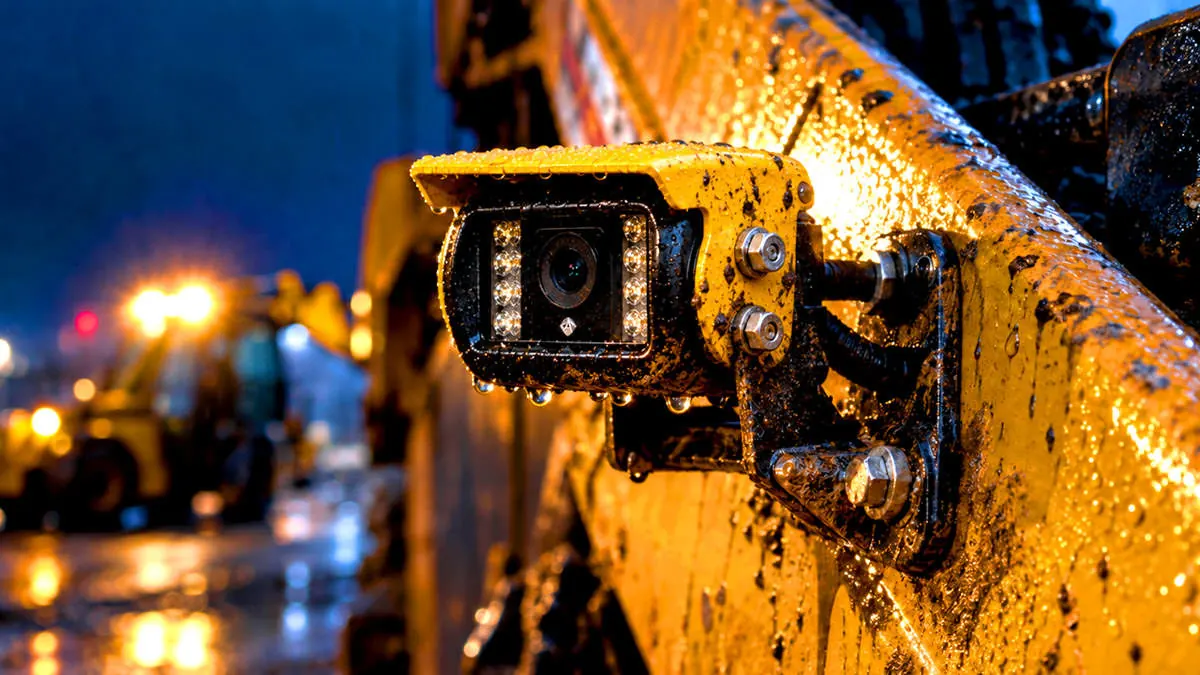
September 18, 2026
AI Pedestrian Detection for Construction Equipment Guide
A field buyer's AI pedestrian detection for construction equipment guide. Judge coverage, alerts, recording, and cost, then pilot one machine before...
Read more →
November 6, 2026
Wheel Loader Pedestrian Detection for Waste Transfer Stations
Wheel loader pedestrian detection for waste transfer stations: 360° recorded video, AI alerts from 0 to 5 m, and a one-machine pilot for your tip...
Read more →