
RioDatos Blog
Recycling Yard Pedestrian Detection for Loaders and Skid Steers
November 20, 2026 • John Buttery, CEO of RioDatos
How 360° AI cameras and onboard video hold up in dust, wash-down and constant foot traffic on the tipping floor and in the yard.
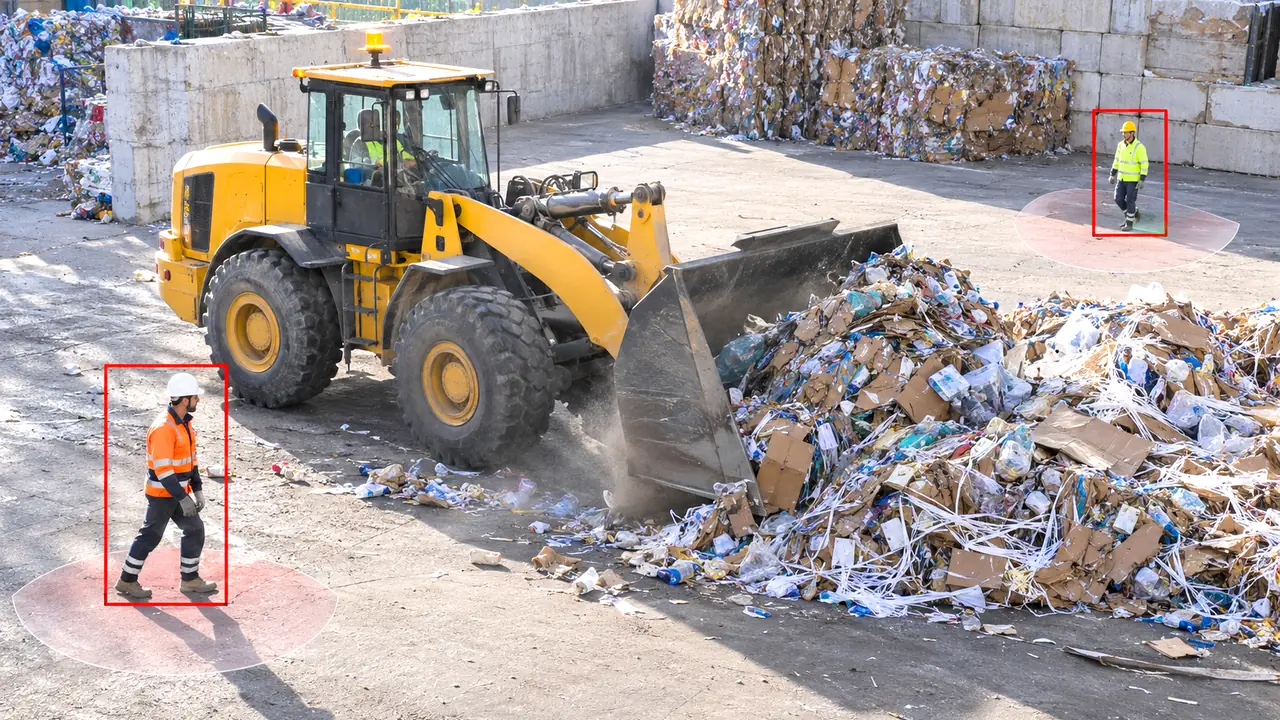
Recycling yard pedestrian detection uses AI cameras on each machine to recognize people from 0 to 5 meters away and alert the operator in under 400 milliseconds. On RioV360, four IP69K cameras cover every side of the machine, a 120 dB external beacon warns people on foot, and continuous onboard recording captures every shift for incident review.
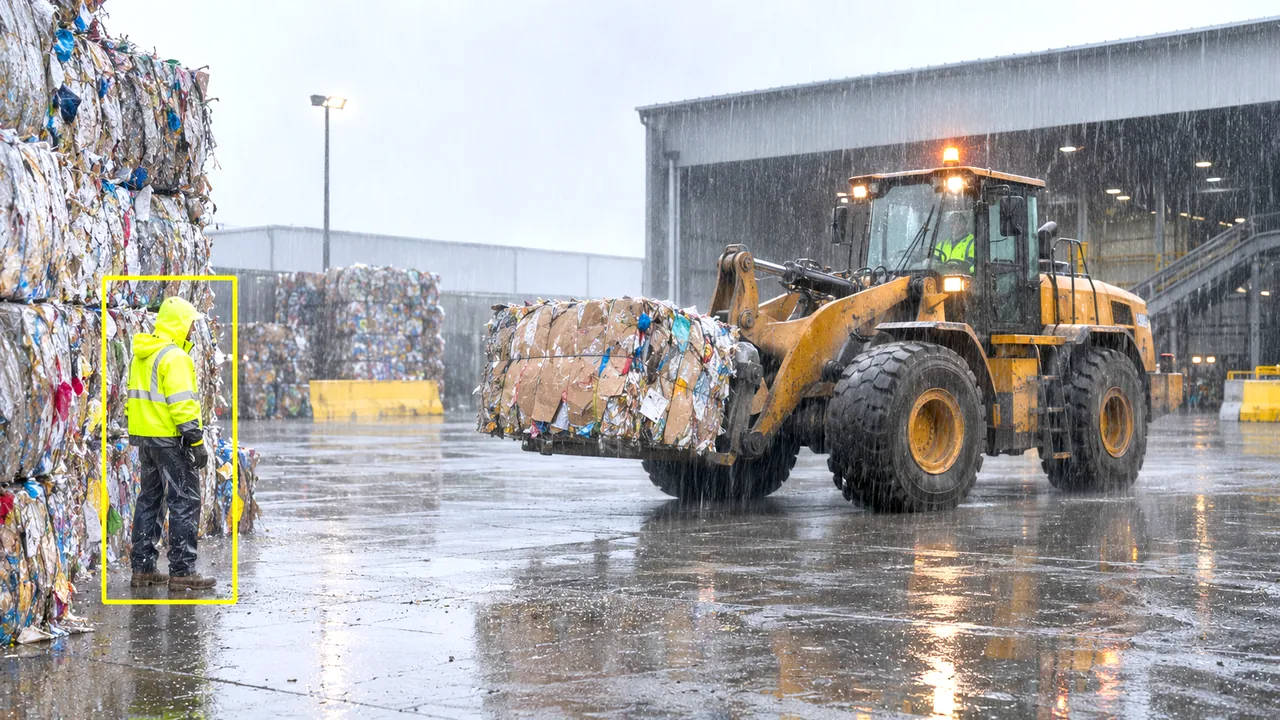
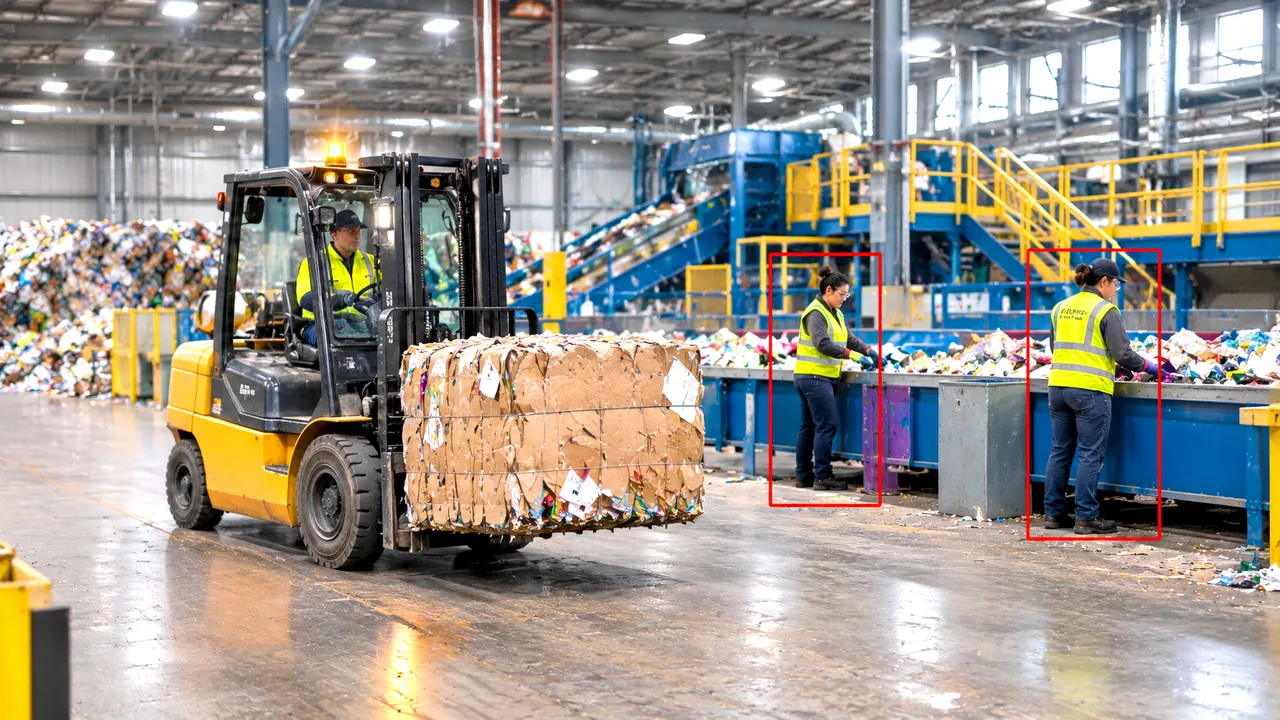
Recycling yards are hard on people and hard on machines. Loaders reverse all day. Skid steers spin in tight spaces. Pickers, spotters, mechanics and drivers walk the same ground the iron works.
The numbers back up what crews already feel. In 2024, the Bureau of Labor Statistics recorded a fatal injury rate of 37.4 per 100,000 full-time workers for refuse and recyclable material collectors, with 36 deaths, against 3.3 for all workers. Inside the fence the risk continues: recent BLS data reported by Resource Recycling put the injury rate at 5.8 per 100 workers in material recovery facilities, compared with 2.3 across all private industry.
Why Recycling Yard Pedestrian Detection Is Harder Than Warehouse Detection
A warehouse has painted aisles and predictable traffic. A recycling yard doesn’t.
The piles move every day. Haul trucks come and go on their own schedule. At scrap yards, walk-in customers end up near the scale and the loader lanes. Backup alarms run so constantly that people stop hearing them.
None of that is new. SWANA found that for post-collection workers, being struck by waste trucks and yellow iron accounted for half of all fatalities in 2021. After a scrap yard worker was killed by a front-end loader in 2017, New York’s FACE program recommended that employers consider technologies such as proximity sensors to reduce heavy equipment and pedestrian hazards.
That’s the core problem recycling yard pedestrian detection has to solve. The operator can’t see everyone, and people on foot can’t keep track of every machine.
“In a yard where the ground changes every day, the only constant is the blind spot.”
What the Hardware Has to Survive
Dust, wash-down, vibration and impact. Every spec on the list matters in this environment.
- Cameras: IP69K sealed, IK06 impact rated, 1920x1080 resolution, 130° field of view
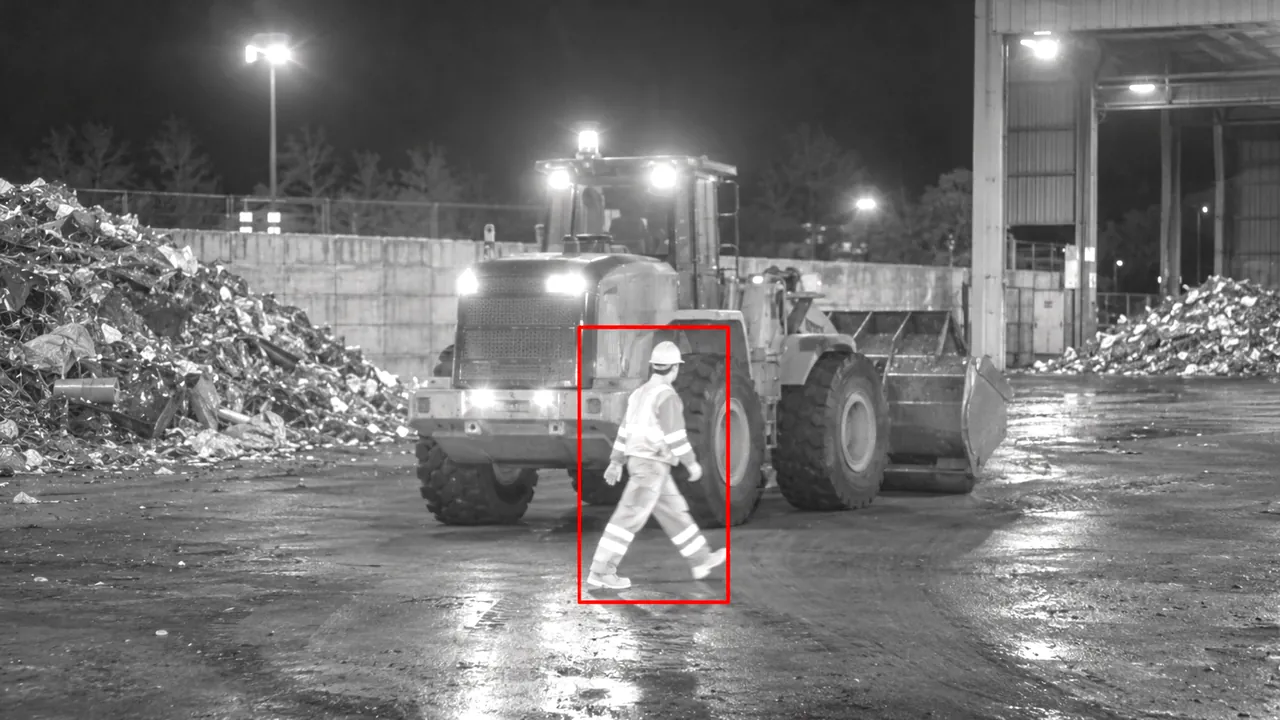
- Low light: 0 lux with IR, so detection keeps working in dark bays and on night shifts
- Detection range: 0 to 5 m, adjustable by camera and by zone
- Alert speed: under 400 ms from detection to alert
- Alerts: in-cab monitor alarm plus a 120 dB external beacon with voice alert
- Recording: 4-channel 1080p, about 30 hours on the 256GB card or about 60 hours on the 512GB upgrade
- Fit: installs on any machine, any make or model, and most teams finish an install in under 2 hours
What we see across facilities is that dust ends up being the real test, not range. Wiping the lenses belongs in the operator’s daily walkaround, along with the mirrors and lights. Plan camera positions with the fitment guide.
How the System Decides Who Gets an Alert
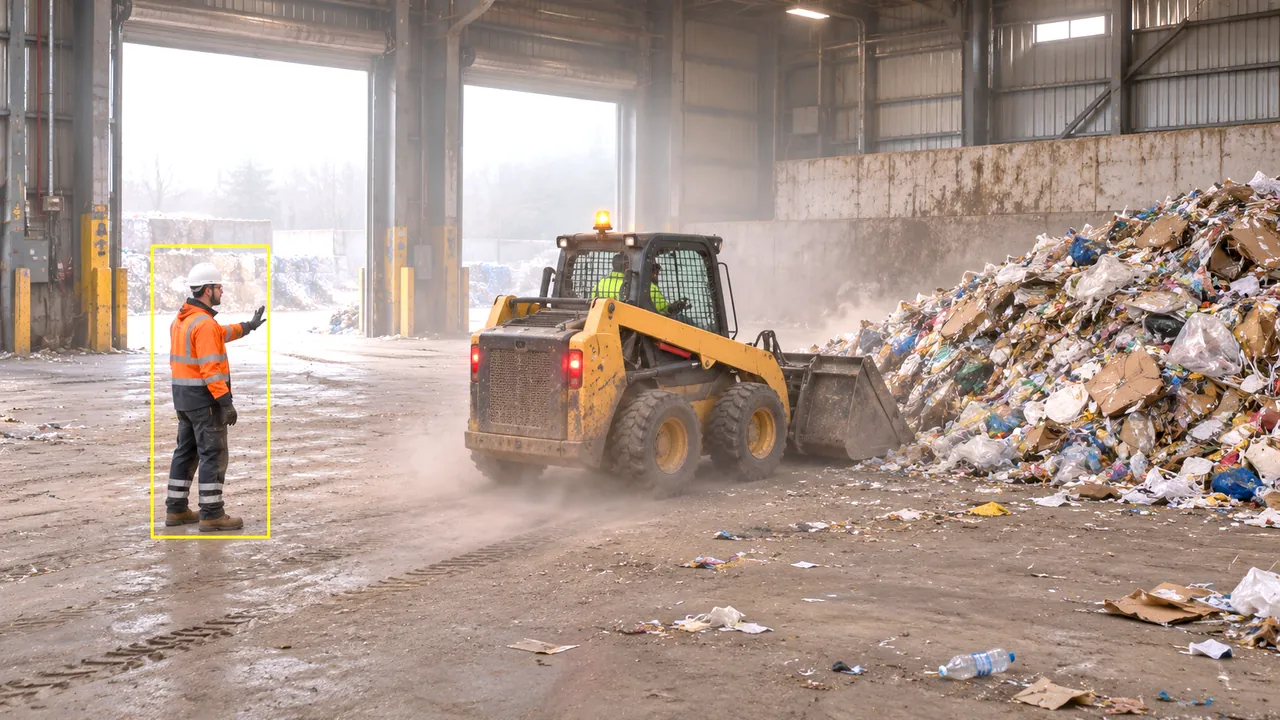
The AI is trained to recognize people, including people who are standing, crouching, kneeling or partly hidden behind a bin or a bale. That last case matters in a yard. Half the time, the person at risk is half behind something.
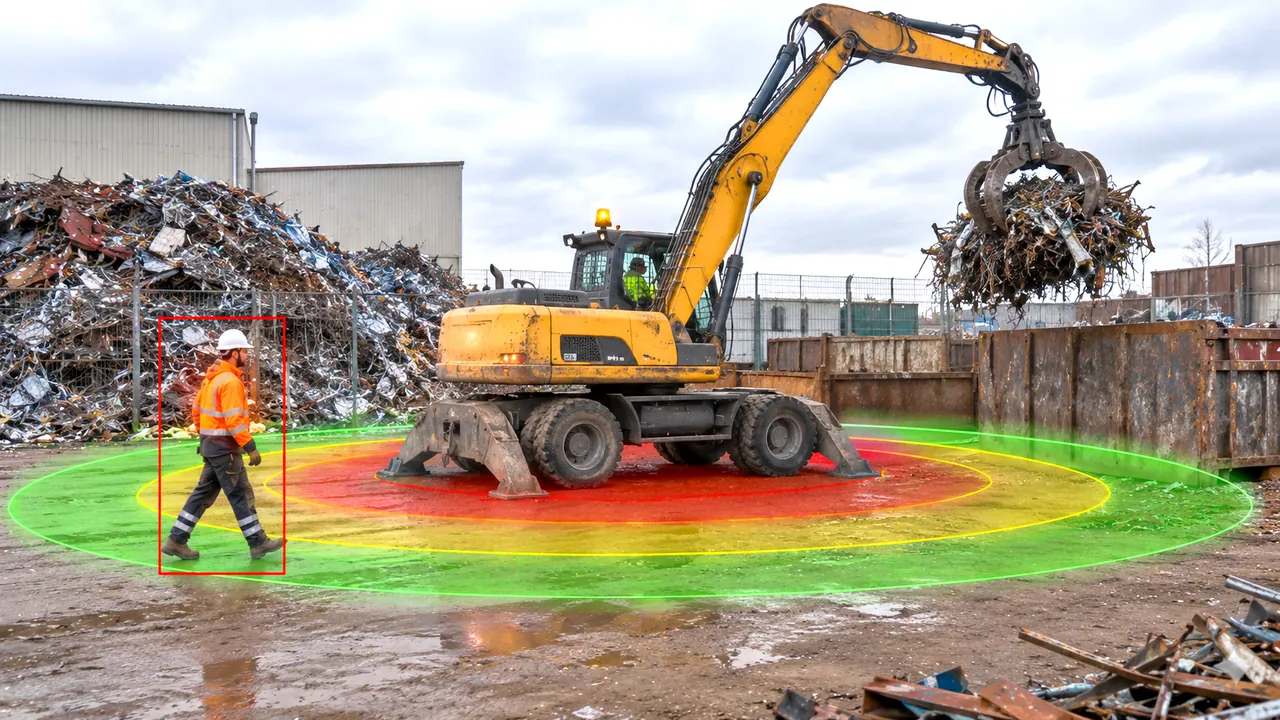
You choose the detection mode: people only, people plus objects, or people plus objects and vehicles. You also set the zones on each camera:
- A single red zone
- Red and yellow zones
- Graduated red, yellow and green zones
Sensitivity can also be adjusted, which is how you cut nuisance alerts without shrinking the zone around the machine.
Why does this matter? Operators stop trusting a system that alarms at every pile. Zone setup is where a yard either keeps the system or rips it out, so take the time to get it right.
Recorded Video Changes the Investigation
Here’s the part most yards underrate. When something happens, the first question is always what actually happened.
With 360° recording on every machine, you don’t need to piece the answer together from three conflicting statements. Every detection writes its own event file to the SD card. Pull the card, watch the event, and the investigation that used to take days takes an hour.
Think of it as the machine’s black box. It records continuously, alerts in real time, and holds the footage until you need it. No software subscription, no Wi-Fi and no IT project.
“The best investigation is the one where everyone watches the same video.”
Recycling Yard Pedestrian Detection Limits to Plan Around
Every system has limits. Know these before you roll it out.
- Range is 0 to 5 m. This is close-in protection for the zone where people get struck, not long-range traffic control.
- It alerts. It doesn’t brake. The operator still has to react.
- Lenses need cleaning. Heavy dust and mud will degrade any camera. Build cleaning into the daily check.
- Park suppresses the alarm. When the machine is in park, the alarm system stays quiet. That’s by design.
- It doesn’t replace your traffic plan. Pedestrian walkways, exclusion zones and spotter rules still matter. Detection is the layer that catches the moments when the plan breaks down.
Field Checklist for a Recycling Yard Pilot
- Pick the machine with the most pedestrian exposure, usually the tipping floor loader or the yard skid steer.
- Map where people actually walk, not where the paint says they should.
- Set zones and sensitivity on day one, then review alerts after the first week.
- Add a lens wipe to the pre-shift inspection.
- Pull the SD card after any near miss and review the event with the crew.
- Ask operators what bothers them, then adjust zones rather than turning the system off.
From the Field
I’ve spent about thirty years around machine control, precision positioning and industrial safety, and the pattern doesn’t change much from site to site. The tools that last on a machine are the ones operators stop noticing until the moment they matter. The ones that get torn out are the ones that cry wolf.
Recycling is about as tough as it gets. When a waste operator tells me they want to test units in the trash because it’s one of the worst places to run equipment, I take that as the right instinct. Prove it where it’s hardest.
Start With One Pilot Unit
Don’t buy a fleet on a brochure. Put one pilot unit on your highest-exposure machine, run it under live conditions, and look at the real alert data and recorded video. Then decide whether to scale.
That’s how the RioV360 pilot program works. RioV360 is $1,795 per machine, less $500 through December 31, which brings it to $1,295 plus freight. Use the fitment guide to plan the install on your loader, skid steer or forklift. If you’d rather talk through your yard layout first, send us a message and we’ll set up a call or a Teams session.
Frequently Asked Questions
Does recycling yard pedestrian detection work in dust and wash-down?
Yes. The cameras are IP69K sealed and IK06 impact rated. Heavy dust and mud still need a lens wipe as part of the pre-shift check.
Do workers, drivers or customers need to wear tags?
No. The AI recognizes people by shape, so pickers, spotters, haul drivers and walk-in customers are detected without badges or vests.
Does the system stop the machine?
No. RioV360 alerts the operator in the cab and warns the person on foot with a 120 dB beacon. The operator still controls the machine.
Conclusion
Recycling yards will never be tidy, and they don’t need to be. They need machines that see people when the operator can’t, and video that settles the question when something goes wrong. Start with one machine, prove it in the dust, and let the data make the case.
“Prove it where it’s hardest, and the rest of the fleet takes care of itself.”
About RioDatos
RioDatos is an Arizona-based industrial safety technology company specializing in AI pedestrian detection for forklifts and heavy equipment. Since 2019, we have helped safety teams stop struck-by incidents before they happen.
Our flagship, RioV360, is a 360° AI pedestrian detection camera system. It recognizes people around the machine and alerts the operator in the cab. No tags. No vests. RioV360 works on forklifts, heavy-duty forklifts, telehandlers, wheel loaders, excavators, skid steers, dump trucks, and scrapers.
What we deliver:
- RioV360 AI pedestrian detection with 360° vision
- Forklift and heavy equipment safety cameras
- Proximity warning systems
- CCTV safety analytics for site-wide visibility
Industries we protect:
- Construction
- Mining and quarries
- Manufacturing
- Ports and industrial yards
- Lumber, steel, and recycling
Every system is sold, configured, and supported directly from Arizona, with domestic inventory, direct pricing, fast U.S. shipping, and support by phone, email or Teams call.
Start with one RioV360 pilot unit on one machine. Prove it under live conditions. Then scale across your fleet.
Statistics sources: U.S. Bureau of Labor Statistics, Census of Fatal Occupational Injuries, rate and number of fatal work injuries in selected occupations, 2024; Resource Recycling, “Safety in focus, part 1” (March 2, 2026); SWANA, “SWANA Reports Dramatic Decrease in Worker Fatalities in 2021” (March 24, 2022); New York State FACE, Case 17NY023, Metal Recycling Worker Run Over by a Front-End Loader at a Scrap Yard.
Pilot One Unit: $500 Off
Test RioV360 AI pedestrian detection on your highest-risk machine before a fleet rollout. In-stock units ship from Arizona in 2 business days.
More Articles
November 6, 2026
Wheel Loader Pedestrian Detection for Waste Transfer Stations
Wheel loader pedestrian detection for waste transfer stations: 360° recorded video, AI alerts from 0 to 5 m, and a one-machine pilot for your tip...
Read more →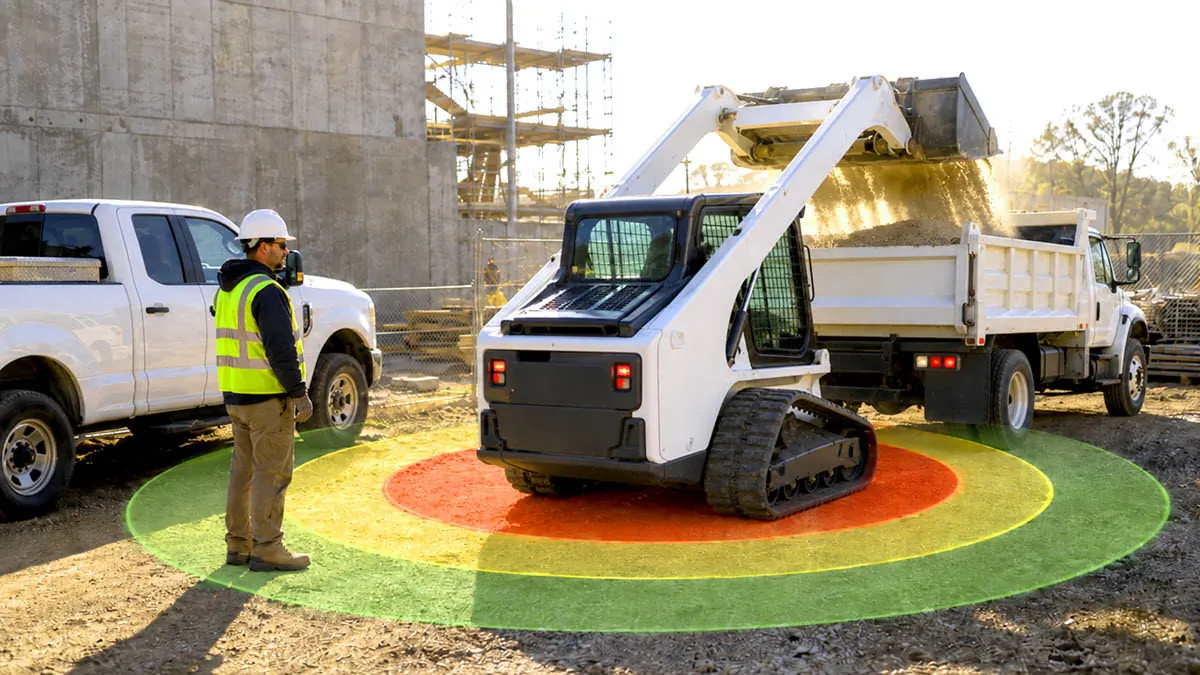
August 3, 2026
Skid Steer Safety Camera System for the Pivot Zone
A skid steer safety camera system has to watch the pivot zone the operator cannot see. Why the compact machine hides the most people, and how to...
Read more →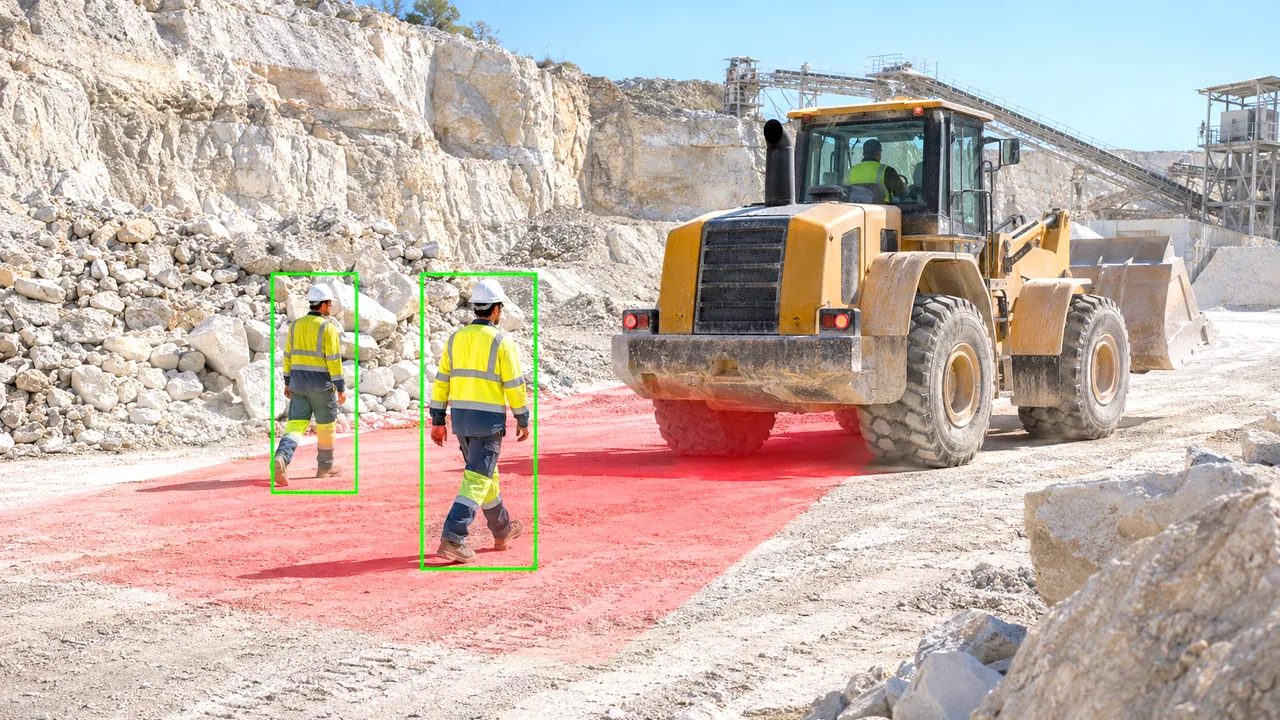
November 19, 2026
Heavy Equipment Blind Spot Detection: Match It to the Machine
Heavy equipment blind spot detection works when zones match the machine. Setup guide for loaders, excavators, skid steers, telehandlers and...
Read more →